Spiritual Unity of the Turkic World: Scholarship, Heritage, and the Voice of Youth
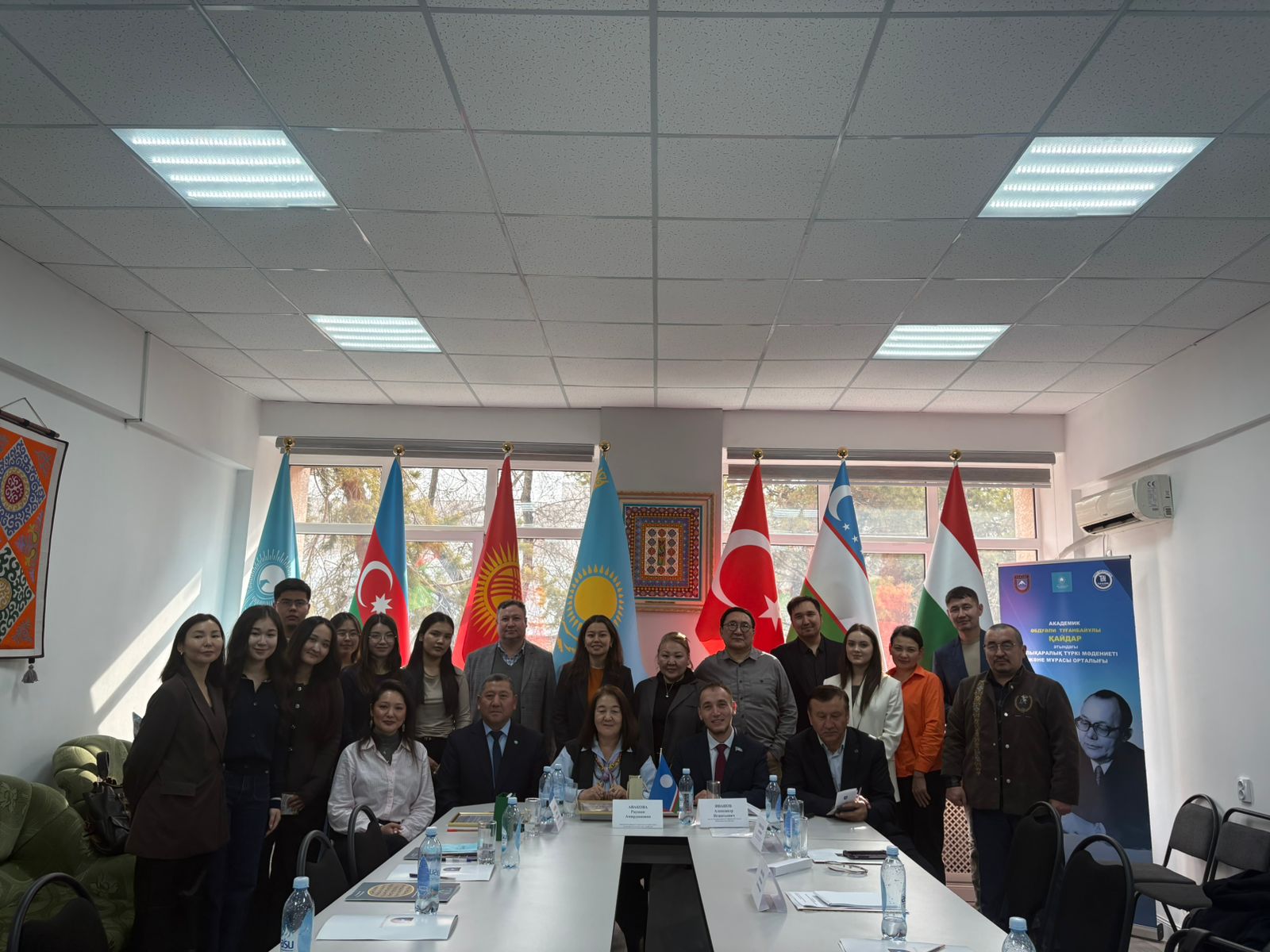
An interactive seminar entitled “Sustainable Development of the Turkic World: Cultural Heritage, Education and the Role of Youth” was held at Al-Farabi Kazakh National University under the International Center for Turkic Culture and Heritage named after Academician A.T. Kaydar. The academic gathering brought together faculty members, researchers, students, and international guests, fostering a shared intellectual platform.
Professor R.A. Avakova opened the seminar by outlining the Center’s strategic priorities and the future prospects of Turkic studies. Professor A. Tilvaldy delivered a historical and linguistic analysis of the transition from Old Turkic script to the Arabic alphabet, emphasizing its broader civilizational significance. Participating professors stressed that comprehensive research of the shared spiritual heritage of Turkic peoples, the digitization of archival materials, and support for young scholars remain key priorities in contemporary academia. E. Espenbetov, President of the public foundation for the study and promotion of Turkic runic writing, culture and history “Turk Tengri,” presented a report on the Old Turkic runic alphabet, highlighting its structure, historical importance, and role in shaping national identity.
Doctoral candidates and students majoring in Turkology — Avalieva A., Eren A.M., Tabanova E.Zh., Kozhakeldiyeva Z.R., and Kes-ogly A.A. — introduced research projects demonstrating modern approaches to promoting and preserving Turkic heritage.
The distinguished guest, Deputy of the State Assemblyof the Republic of Sakha (Yakutia) Alexander Ivanov, expressed appreciation for the systematic study of the Sakha language and culture in Kazakhstan and reaffirmed his commitment to strengthening academic cooperation. He noted that scholars and students from Kazakhstan are always welcome in Sakha (Yakutia) and presented Professor R.A. Avakova with a commemorative award.
The seminar concluded with the performance of the traditional kuy compositions “Adai” and “Er Turan,” symbolizing cultural continuity and the enduring spiritual unity of the Turkic world.
Senior Lecturer of the Department of
Turkology and Language Theory, Daulet A.U.
Other news