Social, Economic and Family Consequences of Drug Addiction
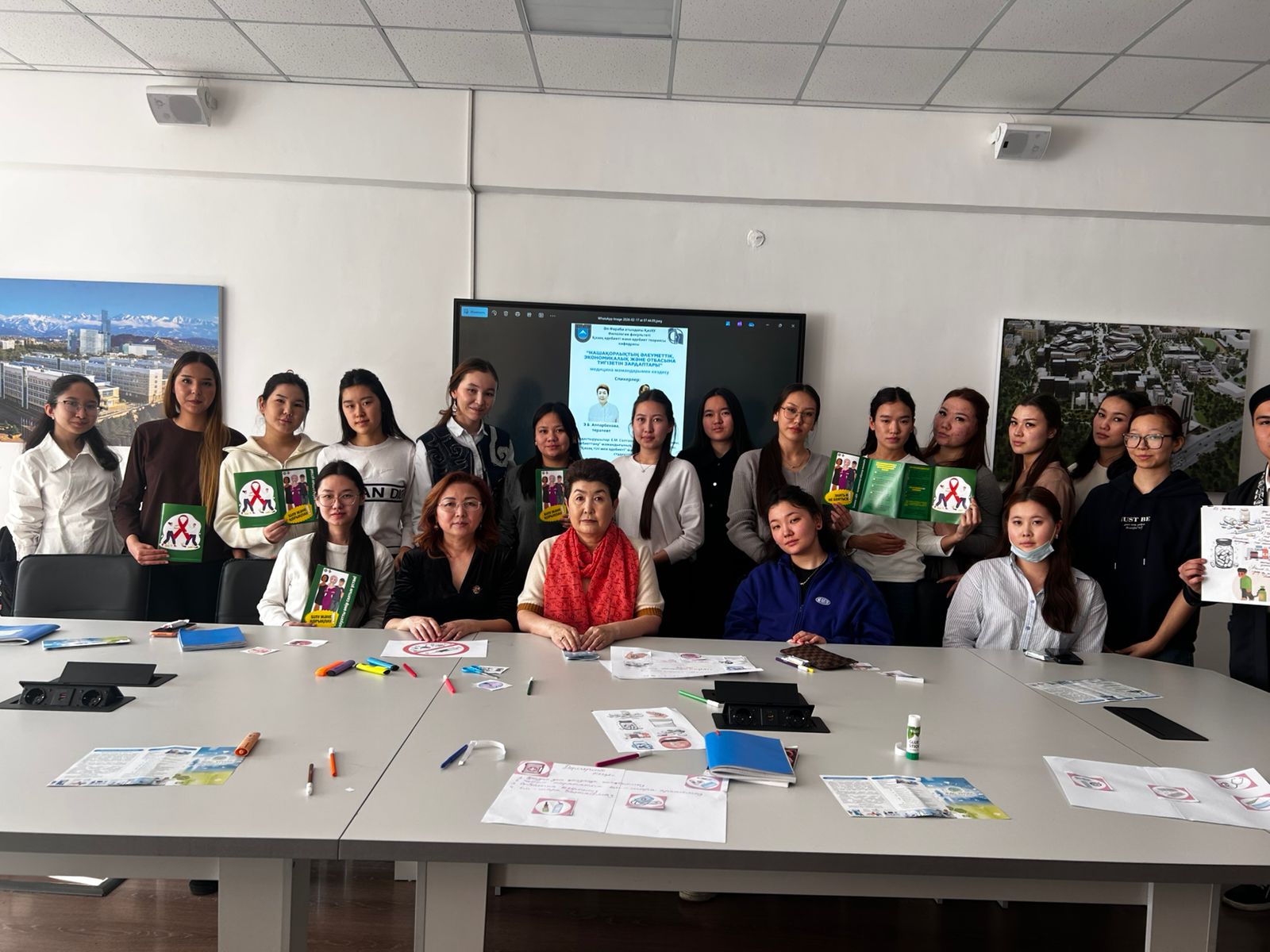
Within the framework of Sustainable Development Goal No. 3, “Good Health and Well-being,” on February 19, 2026, at the initiative of Candidate of Philological Sciences, curator-advisor E.M. Soltanayeva, a meeting with medical specialists was held among students and master’s students of the Faculty of Philology of Al-Farabi Kazakh National University on the topic “Social, Economic and Family Consequences of Drug Addiction.”
The main idea of the event was to explain to young people and members of society the negative impact of drug addiction on human health, social status, family stability, and the country’s economy, as well as to demonstrate ways of preventing harmful habits, promote a healthy lifestyle, and foster a responsible life position.
Through professional consultations provided by medical specialists, participants were given the opportunity to receive scientifically grounded information about the effects of psychoactive substances on the human body, the early identification of risk groups, and the importance of strengthening preventive work.
The event was attended by therapist E.B. Apparbeqova and psychologist S.Zh. Akhmetova from City Polyclinic No. 4, who delivered informative presentations based on medical data and practical experience on the prevention of drug addiction and its consequences. Students asked questions and received comprehensive answers to the issues of their interest.
During the meeting, video materials demonstrating the negative impact of drug addiction on society were shown. Participants shared their opinions and exchanged views. The specialists emphasized the importance of preventing harmful habits and adhering to the principles of a healthy lifestyle. Overall, the event was held in an open dialogue format and provided everyone with the opportunity for free discussion.
At the end of the evening, master’s students of the “Literary Studies” program — Zeberkhan A., Yesekesh A., and Aigazinova G. — organized interactive activities aimed at receiving feedback from students.
The event was also attended by members of the teaching staff, master’s students, undergraduate students, and other interested participants.
E.M. Soltanayeva
Other news