- Main
- News
- Senior Lecturer of the Department of the Far East of Al-Farabi Kazakh National University Delivered a Lecture on Sustainable Development at the Kazakh National Women’s Teacher Training University
Senior Lecturer of the Department of the Far East of Al-Farabi Kazakh National University Delivered a Lecture on Sustainable Development at the Kazakh National Women’s Teacher Training University
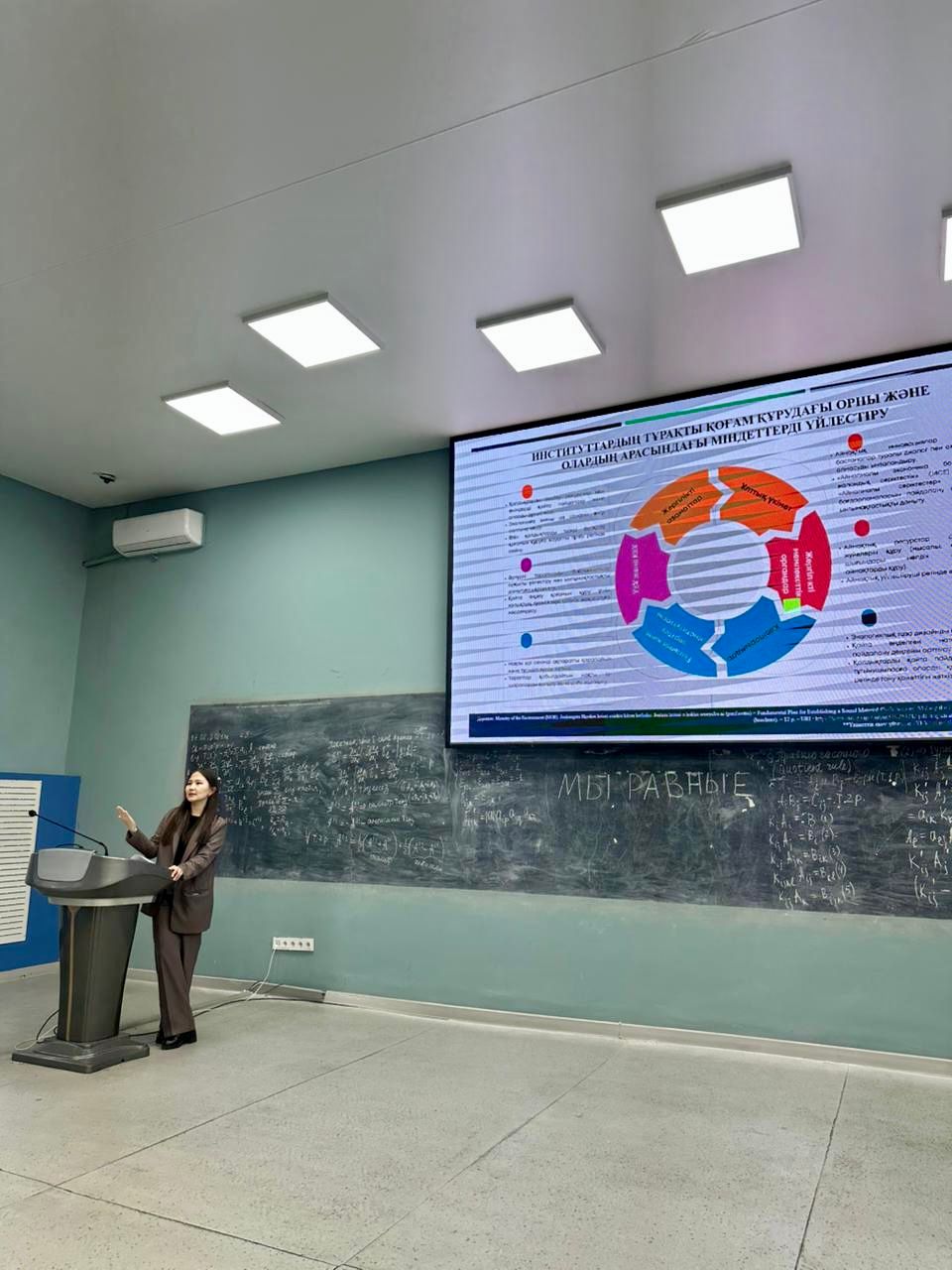
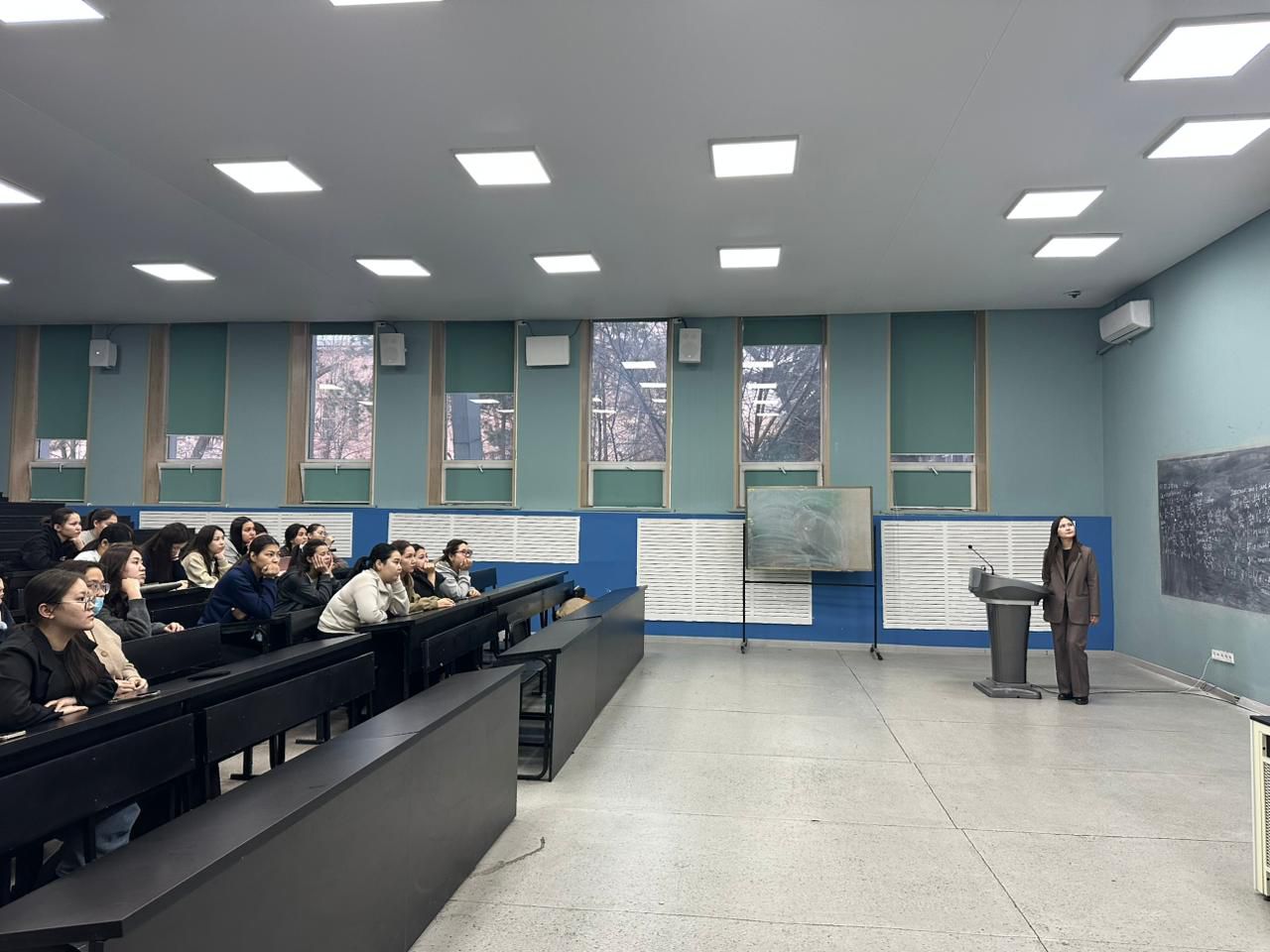
On February 17, 2026, Madina Moshkal, PhD, Senior Lecturer of the Department of the Far East at the Faculty of Oriental Studies of Al-Farabi Kazakh National University, delivered a guest lecture at the Kazakh National Women’s Teacher Training University. The lecture focused on current issues of sustainable development and the implementation of the United Nations Sustainable Development Goals (SDGs) in international practice.
During the lecture, the conceptual foundations of sustainable development were examined as a model of balanced interaction between economic, social, and environmental factors. Particular attention was given to institutional mechanisms for ensuring sustainability, the role of public policy, as well as the importance of social and cultural factors in shaping environmentally responsible behavior (SDGs 4, 11, 12, 13, 17).
The lecture covered the following topics:
- the United Nations Sustainable Development Goals and their integration into national strategies;
- the concept of the circular economy and the 3R principles (Reduce, Reuse, Recycle);
- international experience in waste management and improving resource efficiency;
- a comparative analysis of the practices of Japan and Kazakhstan in the fields of environmental policy and environmental education.
A separate section of the lecture was devoted to the role of educational institutions and youth in achieving the Sustainable Development Goals. Examples of the implementation of government programs and public initiatives aimed at promoting environmental culture and developing sustainable consumption patterns were presented.
The lecture was held in an interactive format and included discussions with students on the adaptation of international experience to national contexts, as well as on the personal responsibility of each individual in shaping a sustainable future.
Such inter-university events contribute to strengthening academic cooperation, expanding scholarly dialogue, and fostering a comprehensive understanding among students of the global sustainable development agenda.