KazNU PhD Candidate Conducts Research on Cinema and Media in the USA
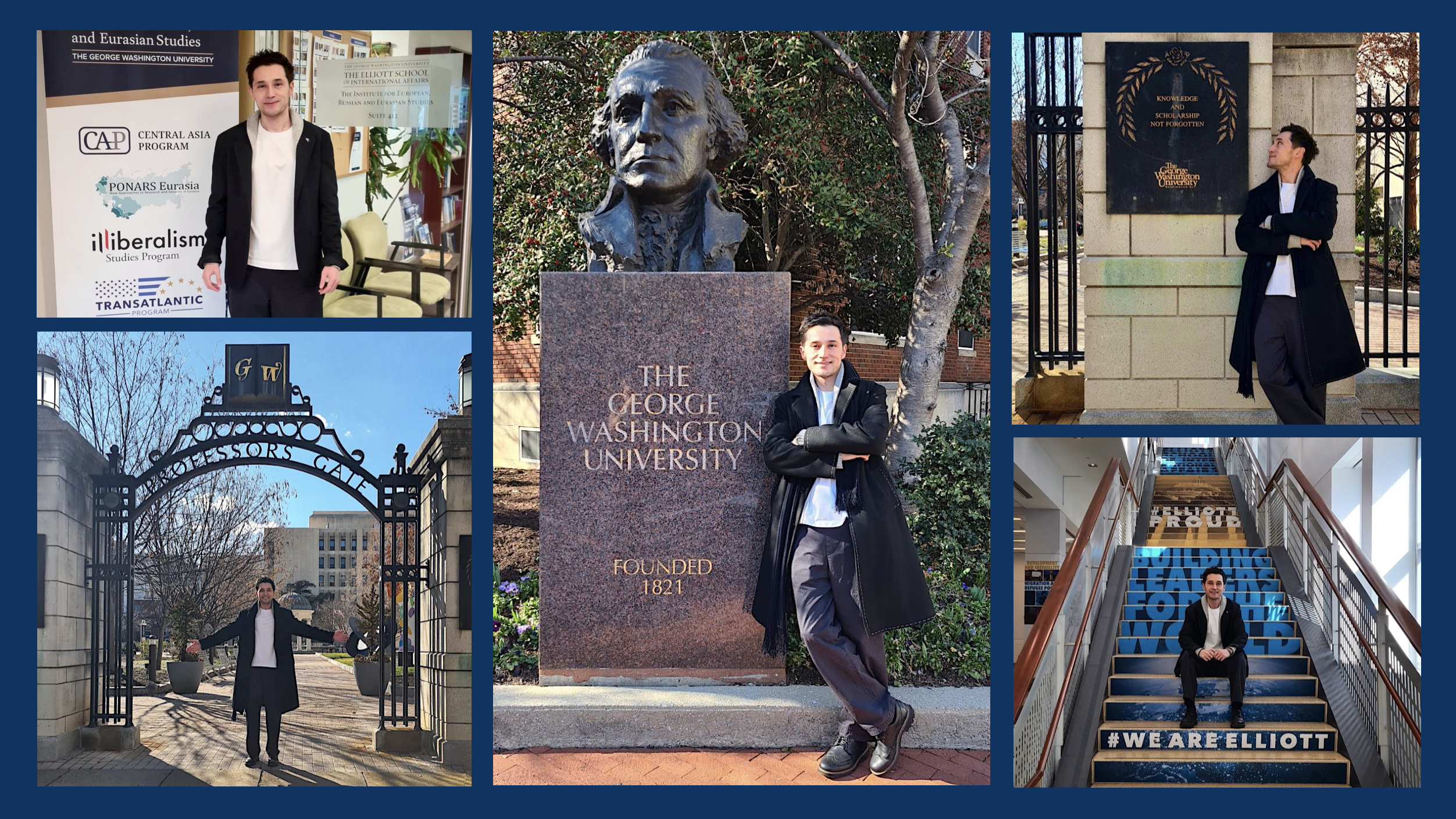
SDG-17 PhD candidate Dias Azimzhanov of KazNU is currently undertaking an international research internship at George Washington University (GWU) in Washington, D.C., United States. The internship is carried out within the framework of expanding international academic cooperation and aims to broaden the research base of his doctoral dissertation in the fields of cinema, media, and communication studies. The research is conducted under the supervision of Professor Peter Rollberg, a recognized specialist in film and media studies and international affairs. The primary portion of the research takes place in the university’s research library, as well as within the Washington Research Library Consortium (WRLC), which unites major academic libraries in the U.S. capital region and provides access to a wide range of scholarly, archival, and audiovisual materials. Azimzhanov’s research focuses on cinema, media, and communication studies, with particular attention to international approaches that examine how audiovisual works reflect, shape, and preserve the collective and sociocultural memory of societies. During the internship, contemporary methods and research practices used in the academic community are being explored, particularly those applied to the analysis of audiovisual works and media systems as instruments for representing historical experience and broader social transformations. The internship program also includes participation in academic seminars, scholarly events, and research discussions organized by the university. These platforms provide opportunities for professional dialogue with scholars from various countries, the exchange of research perspectives, and discussions on current developments in media and communication studies. According to Dias Azimzhanov, working within an international academic environment significantly expands the theoretical and empirical foundations of his research: “Access to the university’s library and research resources, as well as the opportunity to exchange experiences with colleagues from different countries, creates important conditions for a deeper study of how cinema and media influence the formation of collective and sociocultural memory.” This scientific internship contributes to the professional growth of the young researcher and the significant expansion of his academic network. Such mobility programs strengthen international scholarly ties and facilitate new opportunities for research collaboration between universities in Kazakhstan and the United States.
We wish Dias Azimzhanov continued success in his research and further academic achievements in the fields of cinema and media communications.