Educational training for GES students on the course «Financial Literacy»
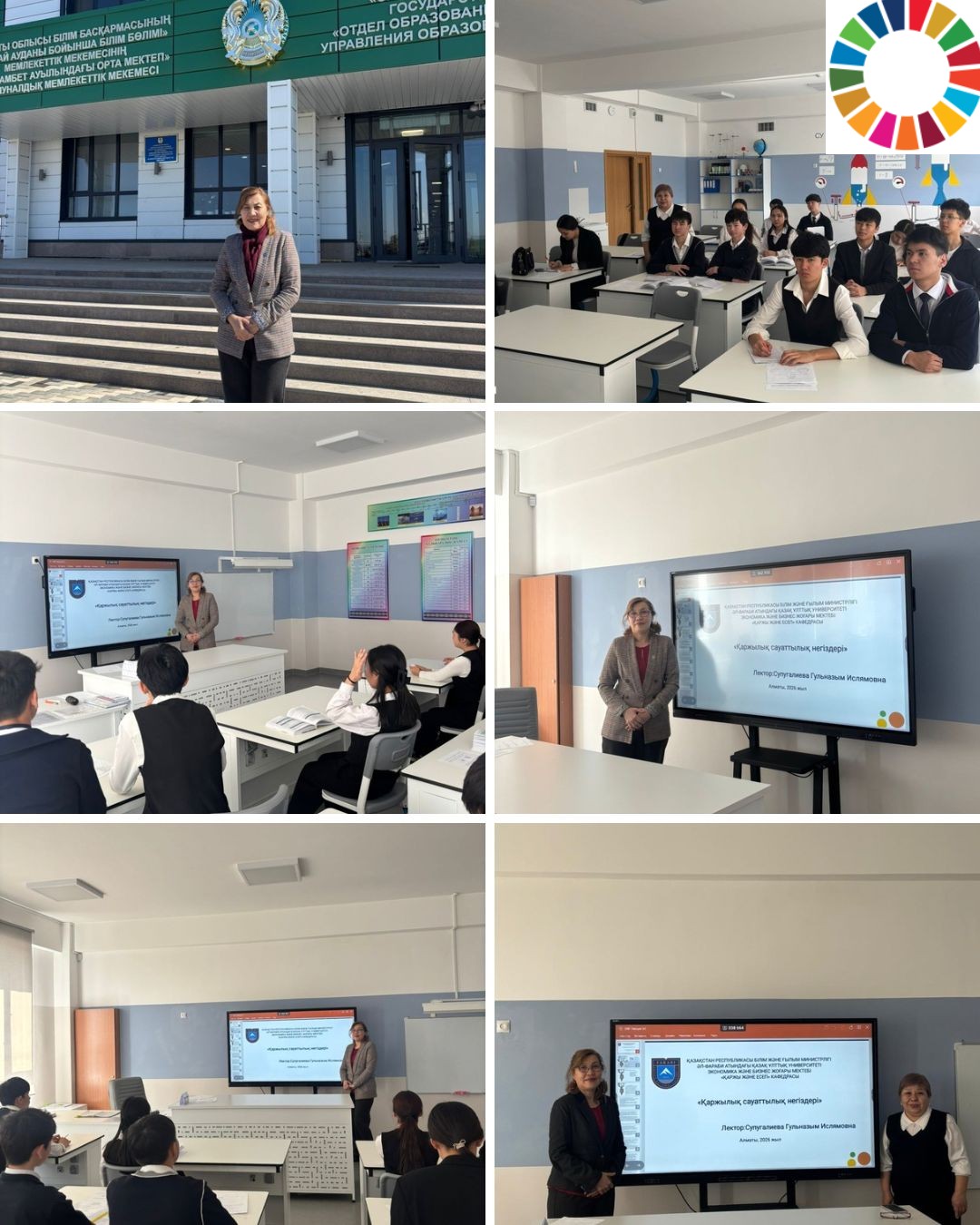
On March 13, 2026, G.I. Supugalieva, senior lecturer of the Finance and Accounting Department at the Higher School of Economics and Business, conducted a training session on the topic "Financial Literacy" for schoolchildren from the SOE “Comfortable School in Koshmambet Village”, a state institution of the Education Department for the Karasai District of the Almaty Region Education Department. The training was organized in line with Sustainable Development Goal 8, "Decent Work and Economic Growth," which aims to ensure sustainable economic development, increase employment, and create conditions for decent work. The goal of this training is to teach schoolchildren financial literacy from an early age, which lays the foundation for future stability and informed decision-making, and to foster a responsible approach to financial matters in future economically active citizens.
One of the objectives set out in the President's Address is to explain financial literacy to schoolchildren as part of the educational program, as the project aims to improve financial literacy as part of the "Debt-Free Society" initiative. The President intended to instill financial literacy in the population, in particular to address the problem of overcoming debt addiction. Therefore, improving financial literacy in schools is an important step that meets modern needs and aims to teach future generations financial stability. Now, children will learn not only to spend money, but also to systematically increase it, set financial goals, and accurately calculate ways to achieve them.
The training was conducted in an interactive format, including practical examples, discussing real-life situations, and engaging the students in discussions. This increased their interest in the topic, developed analytical and critical thinking, and developed practical skills. The main objectives of the training are to develop students' skills and abilities in saving and preserving money; to teach them how to spend money effectively; to provide schoolchildren with a good understanding of their sources of personal funds (source of income, amount of savings, investments, loans, etc.); to include exercises on economic and financial matters, and to explain dubious financial institutions, their origins, structure, and operating mechanisms. Financial literacy is something parents should teach and develop in their children from an early age. Financial literacy for schoolchildren is an important skill that will help them develop a healthy relationship with money in the future. Schoolchildren learn how money works, how to earn and save it, and how to make sound financial decisions. A financially literate schoolchild understands that money isn't just a means to buy food or things, but also a means to achieve goals. They know how to manage their finances wisely to avoid large debts and loans later in life. Knowledge of economics helps a person become serious and independent in the future, when they begin working and living independently.
Teaching financial literacy in schools is important because it teaches children how to manage money: budgeting, saving, and spending it responsibly. This knowledge helps create a healthy and financially stable society.
Other news