- Main
- News
- Open Lesson on the Topic “Green Thinking: Environmental Issues on Campus” (within the framework of SDG 4 and SDG 13)
Open Lesson on the Topic “Green Thinking: Environmental Issues on Campus” (within the framework of SDG 4 and SDG 13)
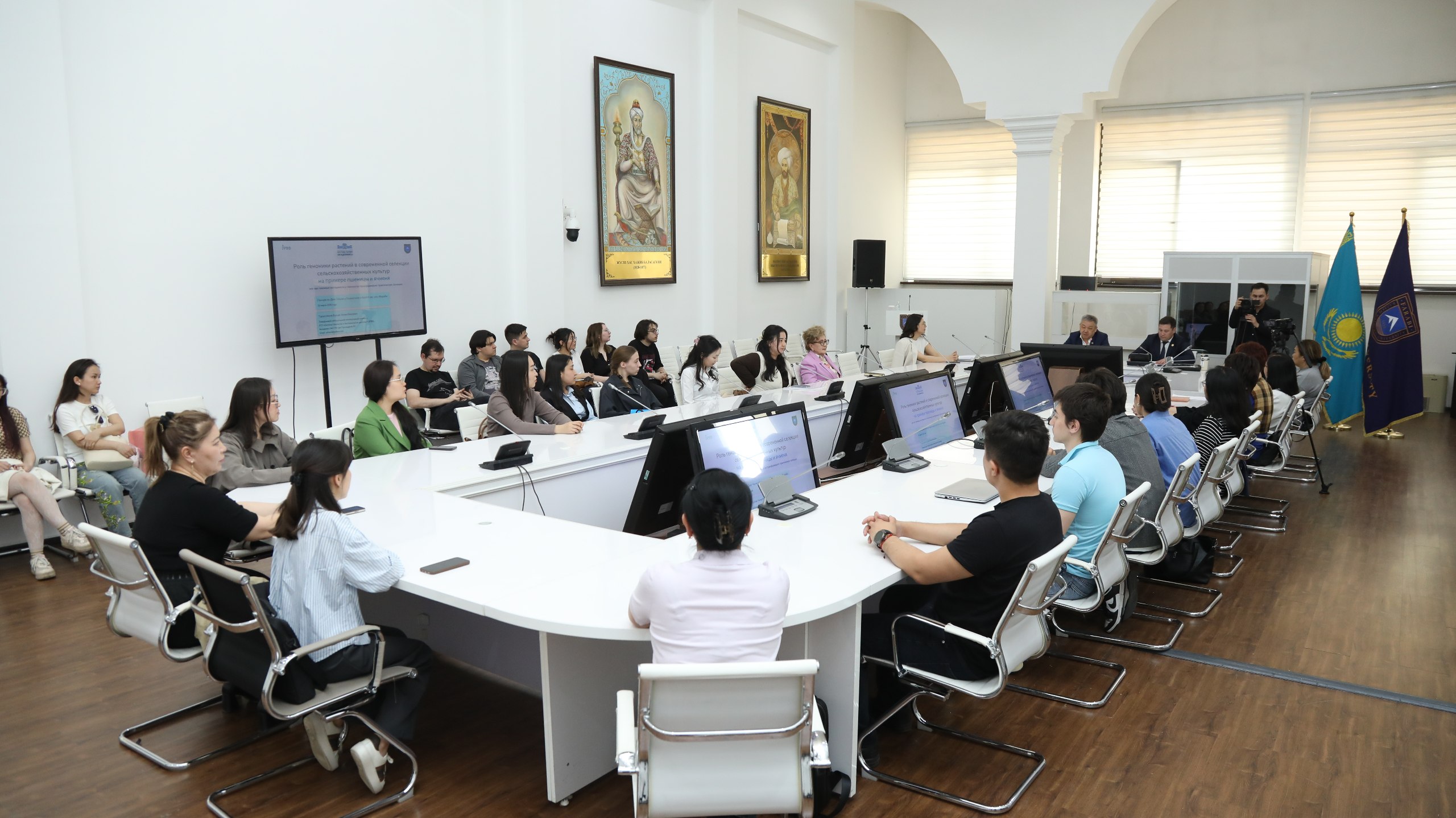
Today, at the Faculty of Physics and Technology of Al-Farabi Kazakh National University, a meaningful open lesson on the topic “Green Thinking: Environmental Issues on Campus” was held. The event was organized by a lecturer of the Department of Theoretical and Nuclear Physics, Ayzhan Orazymbet, among first-year students of the educational program 6B05304 – Physics. The lesson was based on Sustainable Development Goals (SDGs) 4 (Quality Education) and 13 (Climate Action) of the United Nations.
The main purpose of the open lesson was to develop students’ environmental culture, foster a responsible attitude toward nature, and identify current environmental issues on the university campus while exploring effective solutions. Today, environmental issues are no longer limited to the field of science but have become a global concern for all humanity. Therefore, improving environmental literacy among young people is one of the most important tasks, as the future development of society directly depends on their conscious actions.
During the lesson, Ayzhan Orazymbet comprehensively explained the relevance of environmental problems at both global and local levels. In particular, issues such as climate change, air pollution, depletion of natural resources, and waste management were discussed in detail. Special attention was also given to specific problems within the university campus. These included the lack of waste sorting, the excessive use of plastic, and the inefficient use of energy and water. It was emphasized that these problems could lead to serious environmental crises in the future.
In the practical part of the lesson, students were divided into several groups and developed their own projects based on the given topic. Each group presented specific proposals aimed at improving the environmental situation on campus. For example, some groups highlighted the need to introduce a waste sorting system and promote recycling, while others suggested reducing plastic usage and encouraging the use of reusable items. Additional proposals included energy-saving measures, efficient use of lighting, expansion of green areas, and the organization of environmental campaigns. Some students even proposed creating a special environmental club or conducting awareness campaigns.
The interactive format of the lesson increased student engagement. They freely expressed their ideas and exchanged opinions with one another. This, in turn, contributed to the development of their critical thinking and encouraged them to be more conscious of environmental issues. Moreover, during group work, students developed skills in collaborative decision-making, communication, and shared responsibility.
The lesson also emphasized the personal responsibility of each student, highlighting that environmental protection begins with everyday actions. It was explained that even simple actions—such as saving water, properly disposing of waste, or reducing plastic use—can lead to significant positive changes.
At the end of the lesson, the instructor summarized the key points and noted that knowledge plays a crucial role in implementing the principles of sustainable development. Students were also given practical recommendations on adopting environmentally friendly habits in their daily lives and were encouraged to remain active in this direction in the future.
In conclusion, this open lesson not only deepened students’ environmental knowledge but also played an important role in shaping their attitude toward nature. Such meaningful activities contribute to the development of future physicists not only as professionals but also as socially responsible and conscious individuals committed to contributing to sustainable development.