Debates for students of the 2nd year of the Accounting and Audit Program
 (1).jpg)
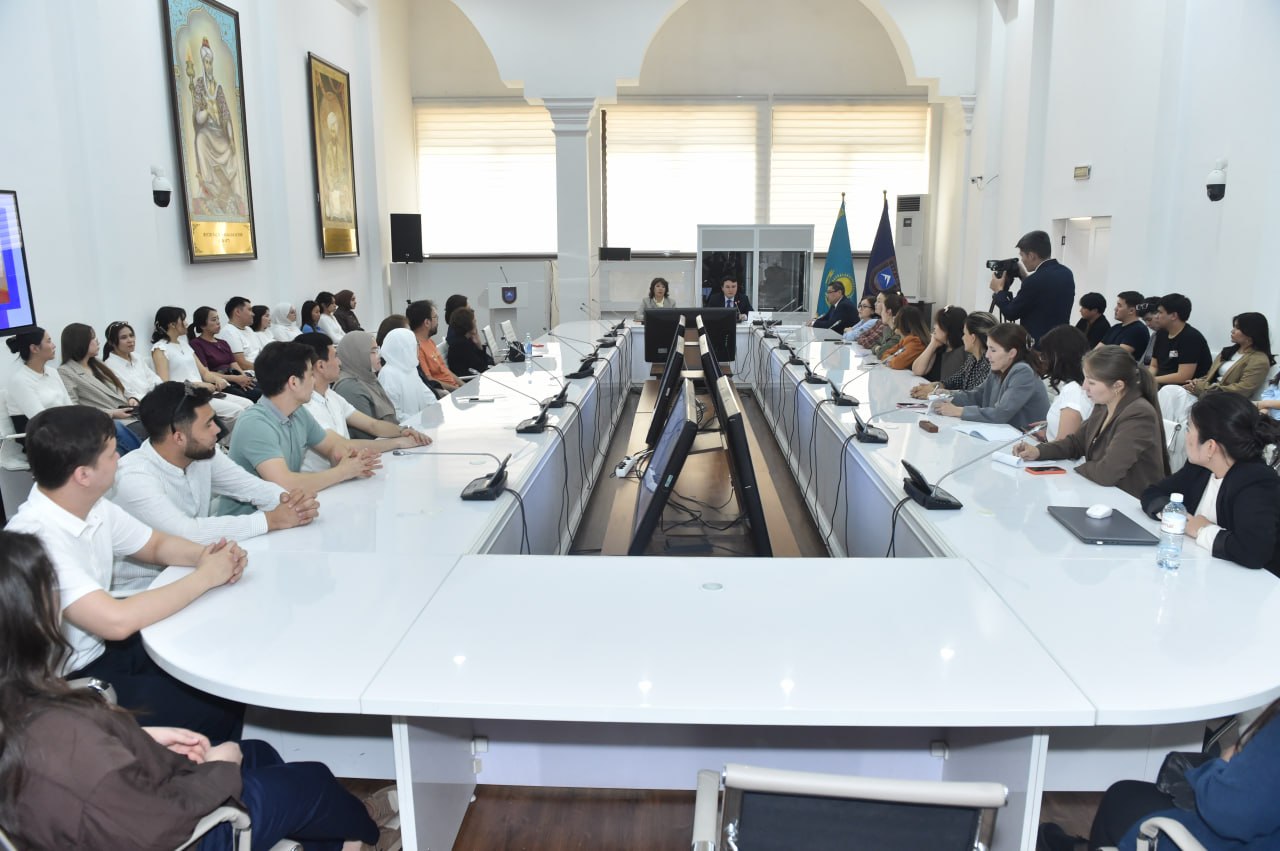
In an era of rapid technological acceleration, higher education must move beyond traditional lecturing to prepare graduates for a labor market. At the Higher School of Economics and Business of Al-Farabi Kazakh National University, an academic debate for second-year Accounting and Audit students was held as part of a pedagogical internship. Aligned with the United Nations’ Sustainable Development Goal 5 on Gender Equality, the debate explored a question: Are new technologies – artificial intelligence and automation – a threat or an opportunity for the labor market?
The topic is especially relevant to the financial sector, where the Fourth Industrial Revolution is reshaping accounting, auditing, and valuation. The debate aimed to cultivate a professional outlook, strengthening critical thinking, argumentation, and the ability to assess socio-economic transformation. Students formed two teams, each presenting a perspective on technology’s impact.
The Optimists portrayed technology as a catalyst for productivity, not a substitute for human talent. They argued that AI and Robotic Process Automation can liberate human potential by handling repetitive, data-heavy tasks, reducing errors, and enhancing transparency in financial reporting. They also linked digitalization to SDG 5: cloud platforms enable remote work and flexible schedules, helping women integrate professional growth with personal responsibilities. By lowering traditional barriers to entry, digital tools can narrow the gender pay gap and expand access to well-paid, tech-enabled roles across finance.
The Skeptics offered a cautious view. They warned that technological displacement can outpace job creation, with automation targeting entry-level roles often held by recent graduates and women, deepening inequality. They cautioned that an algorithmic economy might widen social divides if education fails to keep pace. Ethical concerns included algorithmic bias and the absence of human intuition in high-stakes decisions. In auditing – where professional skepticism and ethical judgment are central – machines cannot fully replicate human moral responsibility, posing risks to corporate governance.
The debate concluded with a balanced consensus: technology is neutral, and its outcomes depend on public policy, corporate responsibility, and individual commitment to lifelong learning. The accountant’s role is evolving from data recorder to strategic advisor and data analyst. For KazNU students, developing hybrid skills that blend financial expertise with digital literacy is essential, not optional. Such initiatives foster competitive, socially responsible professionals prepared not merely to witness the future but to shape it. Ultimately, the fusion of technology and human intellect offers a viable route to advancing global sustainability goals.
The organizers of the event were: Senior Lecturer, PhD in Economics Askarova Z. A., and first-year master’s students Kudaibergen K. and Kuralbai G..
Other news