What is hidden under the metropolis?
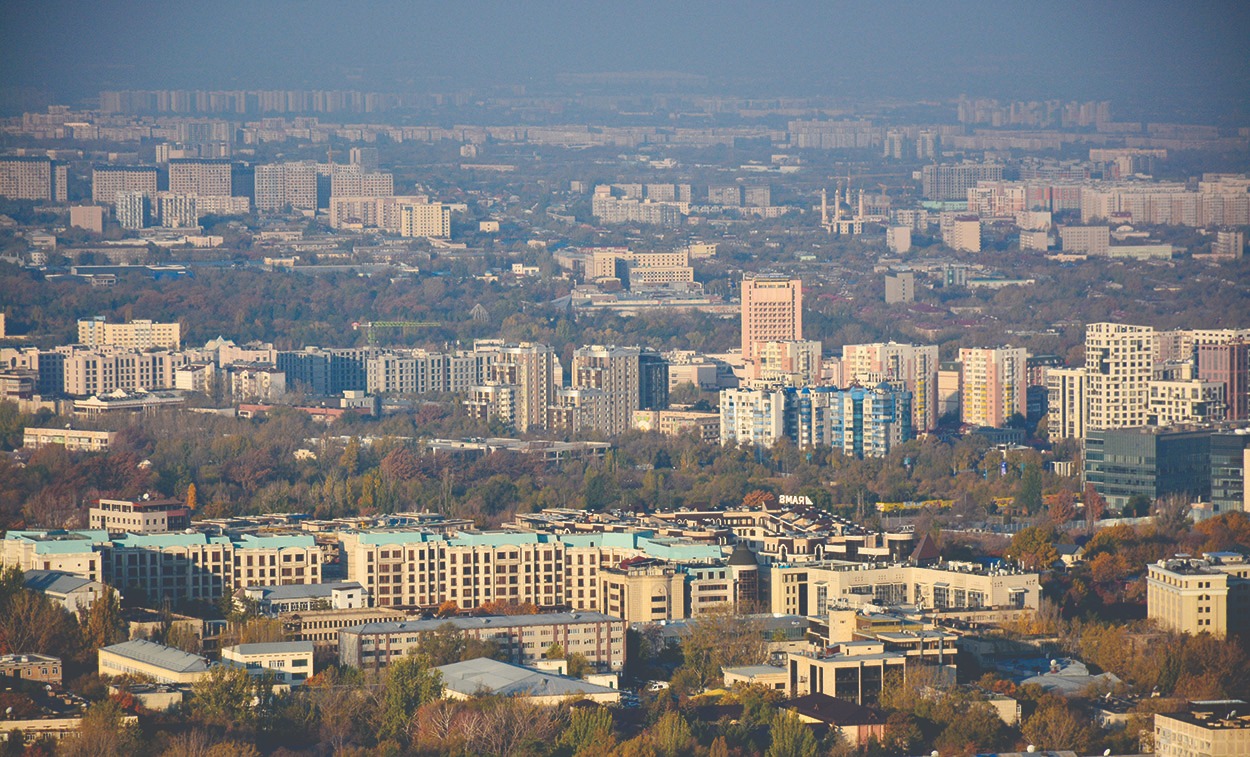
Almaty is a city that is not just growing, but literally transforming before our eyes. New residential areas crowd green areas, highways entangle neighborhoods, and the population is rapidly increasing. Unfortunately, all this dynamic has its price. The soil under a megalopolis is not just a foundation, but a complex and vulnerable system that requires careful attention. Investing in her health is an investment in the sustainable future of our cities and the well–being of their residents. For a long time, urban soils were perceived only as a building foundation, and not as a living component of the ecosystem. However, modern research shows that urbanized soils play a critically important role: they filter water, regulate the water regime, participate in nutrient cycles, serve as a habitat for many microorganisms and insects, and are also a key link in urban landscaping.
In the conditions of rapid growth of Almaty, when the city is expanding and the population is increasing, the load on these soils increases many times. The biggest challenge to soil health in a rapidly developing city like Almaty is the rapid and often uncontrolled expansion of urban areas and the consolidation of buildings. Construction, industrial emissions, exhaust gases – all this settles in the soil, changing its composition and properties. This leads to increased surface runoff, erosion in some places, and waterlogging or, conversely, desiccation of soils in others, disrupting the natural water balance. The more people, transport, and industry there are, the more sources of pollution there are. Heavy metals, petroleum products, and construction waste all accumulate in the soil, especially in densely built–up areas where there are not enough green spaces to filter them.
The scientific work with the important title AR26199673 "Ecological assessment of technogenic pollution of the Almaty city soil cover using GIS technologies" won the prestigious grant competition organized with the support of the Committee of the Ministry of Foreign Affairs of the Republic of Kazakhstan. This ambitious scientific project is aimed at a comprehensive assessment of the state of urban soils, which is crucial for shaping the sustainable future of the metropolis. Thanks to the grant received, a team of scientists from KazNU named after Al-Farabi from the UNESCO Department of Sustainable Development, headed by the scientific supervisor G.Mukanova and with the participation of responsible executors B.Shimshikov, T.Bazarbayeva, Z.Tukenova, B.Tusupova, K.Kyrgyzbai and A.Oshakbai, is now provided with all the necessary resources to conduct in–depth and full–fledged research. The scientists of this project emphasize that the goal is not just to state the facts, but to provide the city with specific data and recommendations for making managerial decisions. After all, sustainable development is not only about economic growth, but also about preserving a favorable environment for future generations. The research that has begun shows that the quality of the soil in our city requires close attention, and that is why important scientific work has begun to study this issue.
The first stage of the work was to study the current state of urbanized soils in Almaty based on literature data, which will form a solid theoretical basis and identify already known problem areas. Studies have shown that as a result of active urbanization and anthropogenic activities, significant changes in the soil cover occur. This affects both the physical and chemical properties of soils, which in turn affects ecosystems and public health.
The second important and most important step was the identification of local man-made pollution sites by priority pollutants in urbanized areas. The project participants have already made visits to these potentially problematic areas, where a detailed map of man-made sites has been compiled. Soil samples were taken from this map. These samples have already been transferred to accredited laboratories for accurate determination of heavy metal content. In the future, soil sections will be laid at these key sites, which will allow studying pollution at different depths and obtaining the most complete picture of the soil condition.
The third aspect of the study will focus on the study of morphological, physico-chemical and biological properties of urbanized soils. In particular, special attention will be paid to the mesofauna of soils, which plays a key role in maintaining ecosystem functions, it is one of the best indicators of its health, and it is extremely sensitive to changes in the soil environment. Its quantity and diversity can tell a lot about the quality of the soil. Observations confirm that the diversity and abundance of mesofauna in urbanized areas are significantly reduced, which indicates the negative impact of anthropogenic factors on biological diversity.
One of the most urgent tasks was to determine the content and distribution patterns of heavy metals such as lead (Pb), cadmium (Cd), arsenic (As), zinc (Zn), copper (Cu), molybdenum (Mo), cobalt (Co), manganese (Mn) and others in the soil cover. Preliminary studies show that the concentration of these metals exceeds acceptable standards in a number of areas of the city, which poses a serious threat to public health and the ecosystem as a whole.Preliminary studies have revealed that in industrial zones of Almaty, such as the Industrial Zone in the Alatau district, as well as the historically industrial Turksib and Zhetysu districts, the concentration of these metals exceeds acceptable standards. A similar situation is observed in the area of the Northern Ring and adjacent territories, where large transport arteries, wholesale markets, warehouses, car service stations and small industries are located. This poses a serious threat both to the health of the citizens and to the ecosystem as a whole. The results of this study will become the foundation for the development of scientifically sound recommendations for the management of Almaty's soil resources. They will help the city authorities to make more effective decisions in the field of urban planning, ecology and land use.
The project is a vivid example of how science can serve practical purposes, ensuring not only economic prosperity, but also environmental safety. After all, clean, healthy soil is not just a comfort factor, it is the basis for a sustainable life and well–being for every inhabitant of our beautiful city.
Zulfiya TUKENOVA,
Associate Professor, Academician of the Academy of National Sciences of the Republic of Kazakhstan
UNESCO Chairs of Sustainable Development