Leadership lecture by Professor Bayan Umirbekovna Dzholdasbekova
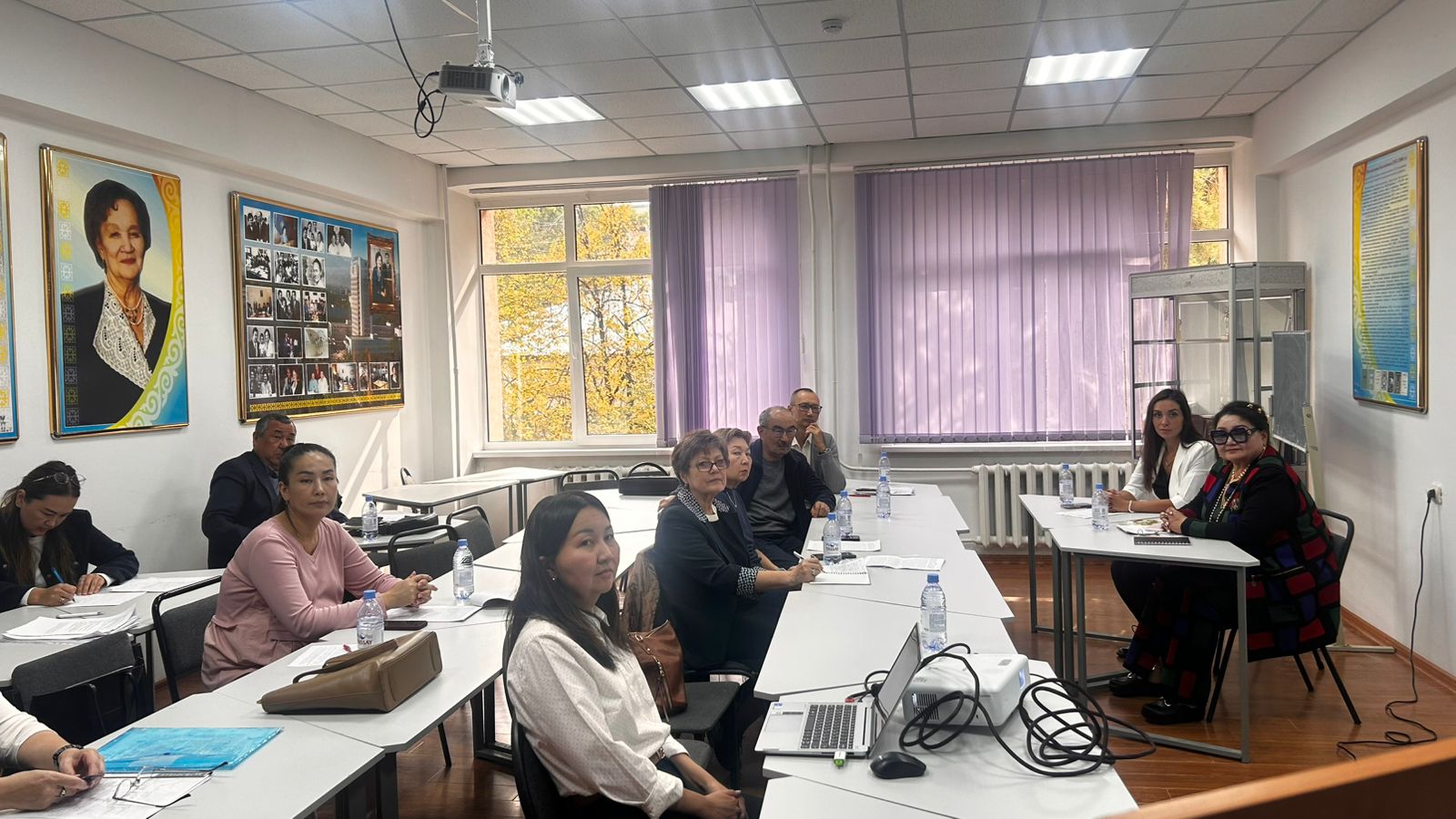
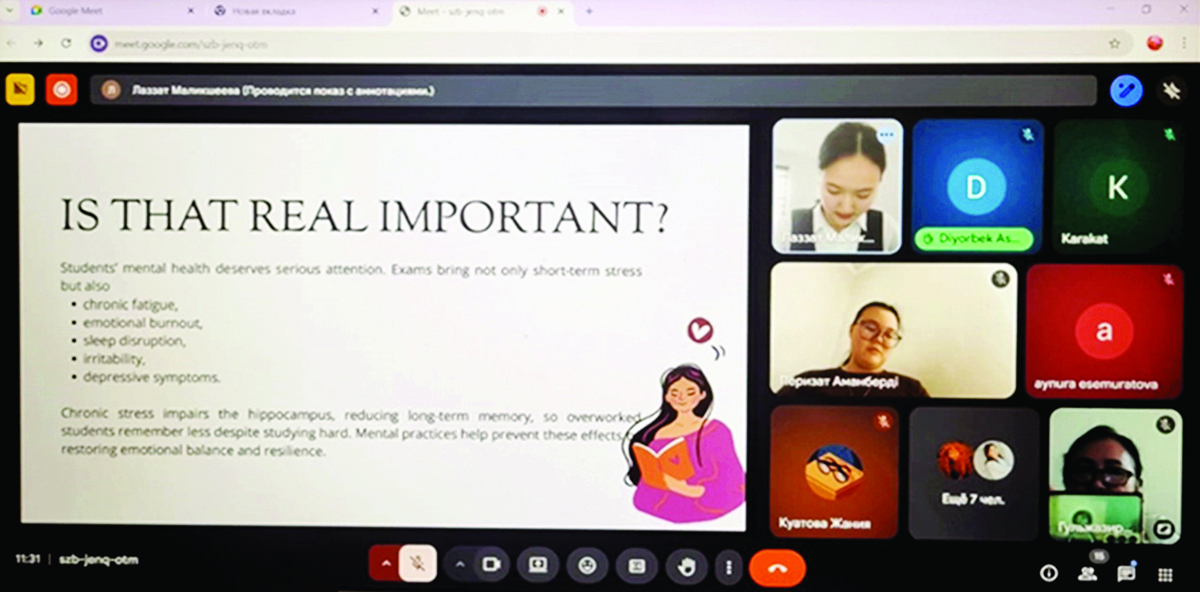
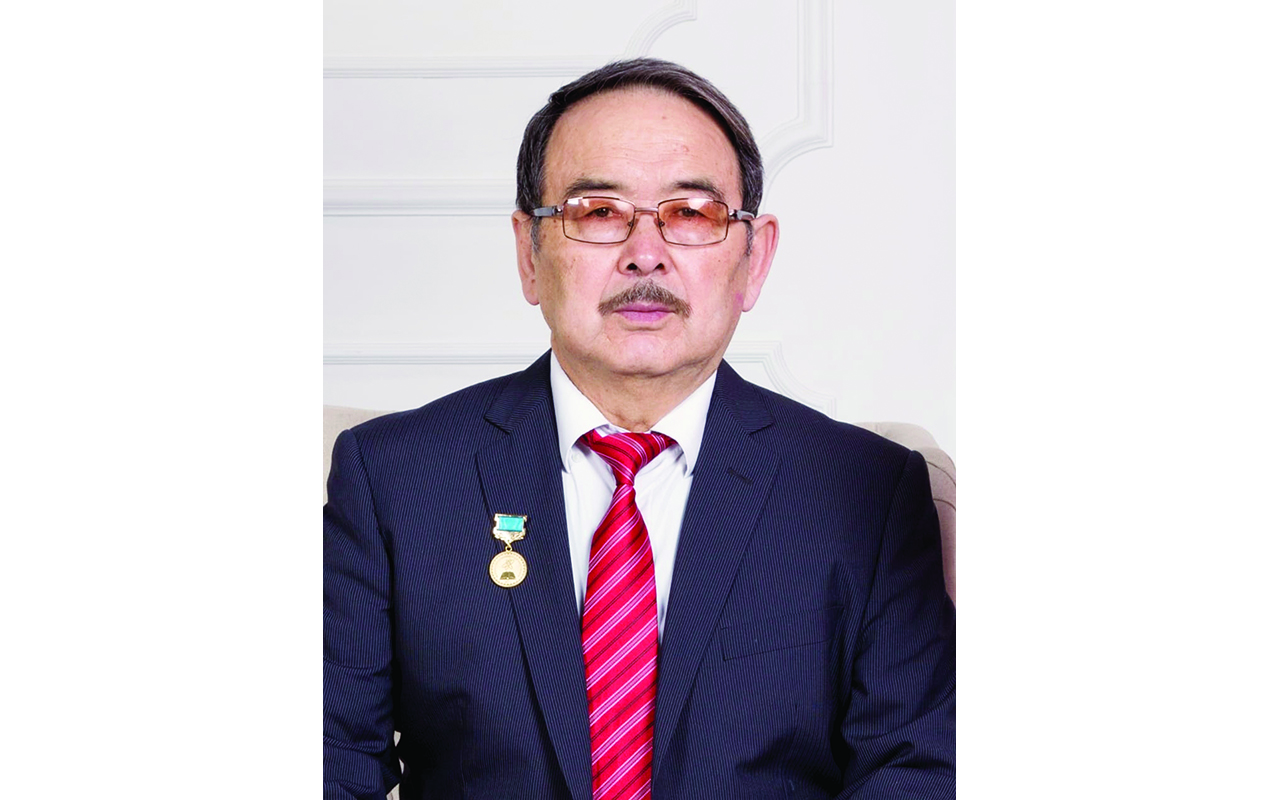
On 7 October 2025, within the framework of implementing AR19679652 "Modern Russian prose of Kazakhstan: leading trends, genre studies, plot, hero" grant project of the Science Committee of the Ministry of Science and Higher Education of the Republic of Kazakhstan the project leader Bayan Umirbekovna Dzholdasbekova, Doctor of Philology, Professor, gave an demo leadership lecture with elements of scientific discussion, presentation of original research, and interactive dialogue with students and young researchers.
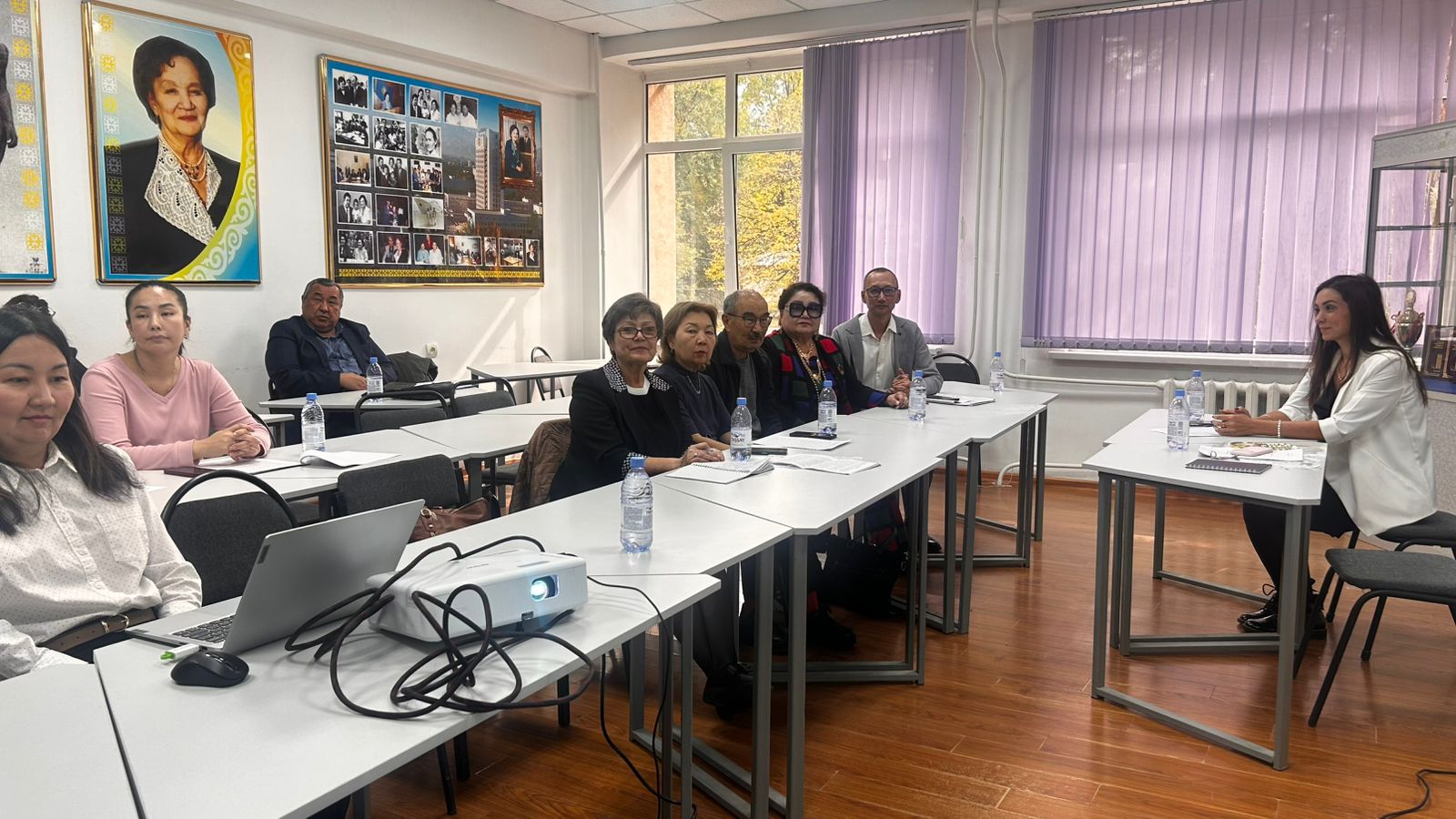
The objectives of the lecture were:
- to introduce the audience to the main vectors of the development of Russian-language prose in Kazakhstan in the 21st century;
- to demonstrate the genre and plot diversity of contemporary literature;
- to analyse the image of the contemporary hero in the context of Kazakhstan's cultural and linguistic diversity;
- to develop students' analytical and interpretative skills.
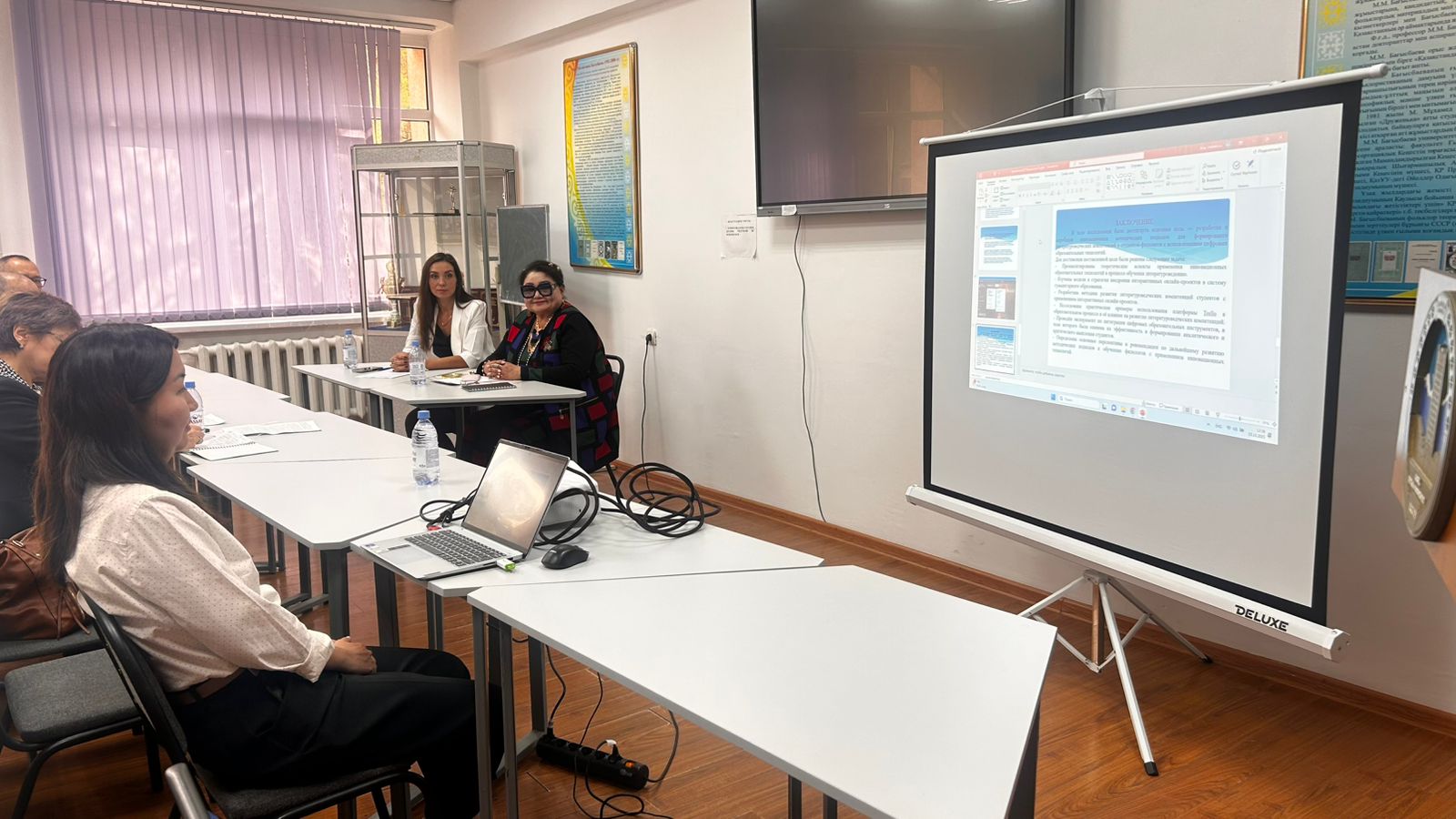
The leadership lecture focused on current issues in the development of Russian prose in Kazakhstan in recent times. The lecturer highlighted key trends in the themes and styles of contemporary prose, drawing attention to genre transformations and plot structure features, as well as the image of the hero in the literary field of post-Soviet Kazakhstan.
The lecture examined the main trends in the development of Russian prose in Kazakhstan in the late 20th and early 21st centuries. The lecturer focused on the following aspects:
- Leading trends: multi-ethnicity, self-identification, transformation of memory, urbanisation, understanding of post-Soviet reality;
- Genre diversity: revitalisation of short prose (short stories, novellas), revival of essay writing, mixing of genres, documentary and artistic forms;
- Plot: the plot as a search for identity, traumatic experience, the chronotope of transitional times, the conflict between tradition and modernity;
- Image of the hero: the border guard, the migrant, the ‘little man’ in the context of globalisation, the character internally torn between cultures and languages;
- Linguistic specificity: use of Kazakh realities and expressions, elements of code-switching, reflection of plurilingual consciousness.
The lecture emphasised the significance of Russian-language literature in Kazakhstan as part of the national cultural space, as well as its contribution to the formation of post-Soviet literary identity. The lecture aroused keen interest among the audience. During the discussion, participants asked questions about multilingualism in literature, the self-identification of characters, and the interaction between Russian and Kazakh cultural traditions.
Other news