"How to create a safe educational environment?’

Currently, a significant part of the educational process has moved into the digital space. This, in turn, requires students to develop information literacy, form responsible online behaviour, and ensure a safe learning environment. In this regard, on 10 October 2025, the Faculty of Philology held an open curatorial hour on the topic:“How to create a safe educational environment?” . The main goal was to familiarise students with the importance of safety on the Internet and in the learning process, as well as with methods of restricting and controlling dangerous content.
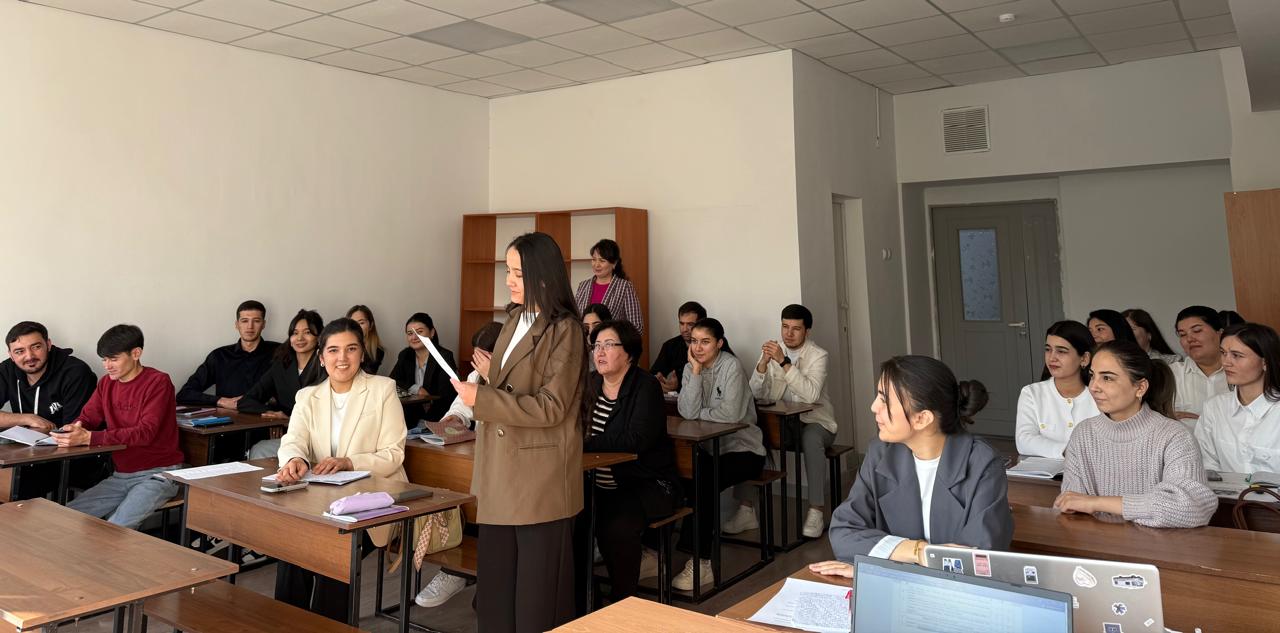
The relevance of the curatorial hour topics is due to the growth of digital dependence in society, unlimited access to information, and the insufficient level of culture of using the Internet among young people. Modern student should not be limited to academic knowledge, but should be an individual capable of protecting themselves and their health in the online environment. The curatorial hour was attended by third-year foreign students majoring in “Foreign Philology: Western Languages.” During the event, special attention was paid to three main areas:
1. Shaping online behaviour. Students were taught how to protect their personal information online, adhere to ethical standards on social media, and combat cyberbullying and the spread of false information. During the discussion, students shared their experiences and emphasised the importance of responsibility and respect for other participants in online communication.
2. Restricting and controlling dangerous content. Participants received information about the psychological and moral impact of harmful materials on the internet. Students were offered effective methods for setting up content filters, using reliable sources, and developing critical analysis skills.
3. Creating a safe educational environment and a culture of health preservation. During the curatorial hour, students came to understand that a psychologically and physically safe environment is important not only in the classroom but also in the online space. They were given recommendations on maintaining health during long periods of computer use, maintaining a balance of screen time, strengthening emotional stability, and forming a culture of digital rest.
At the end of the session, students provided feedback and shared their thoughts. Most participants noted that the event was relevant and useful. The topic of “responsible online behaviour” was of particular interest. Students reviewed their own online activity, realised the importance of protecting personal data and taking a critical approach to information.
The open curatorial hour became an effective form of educational work aimed at raising students' level of information literacy, developing their responsibility and creating a safe learning environment. The systematic implementation of such events contributes to the personal development of students, the formation of conscious digital behaviour, and the education of active, responsible citizens of society.
Senior Lecturer, Department of
Foreign Languages and Translation Studies, I.K. Azimbayeva
Other news