Askar Akayev spoke about the use of AI to analyze economic crises
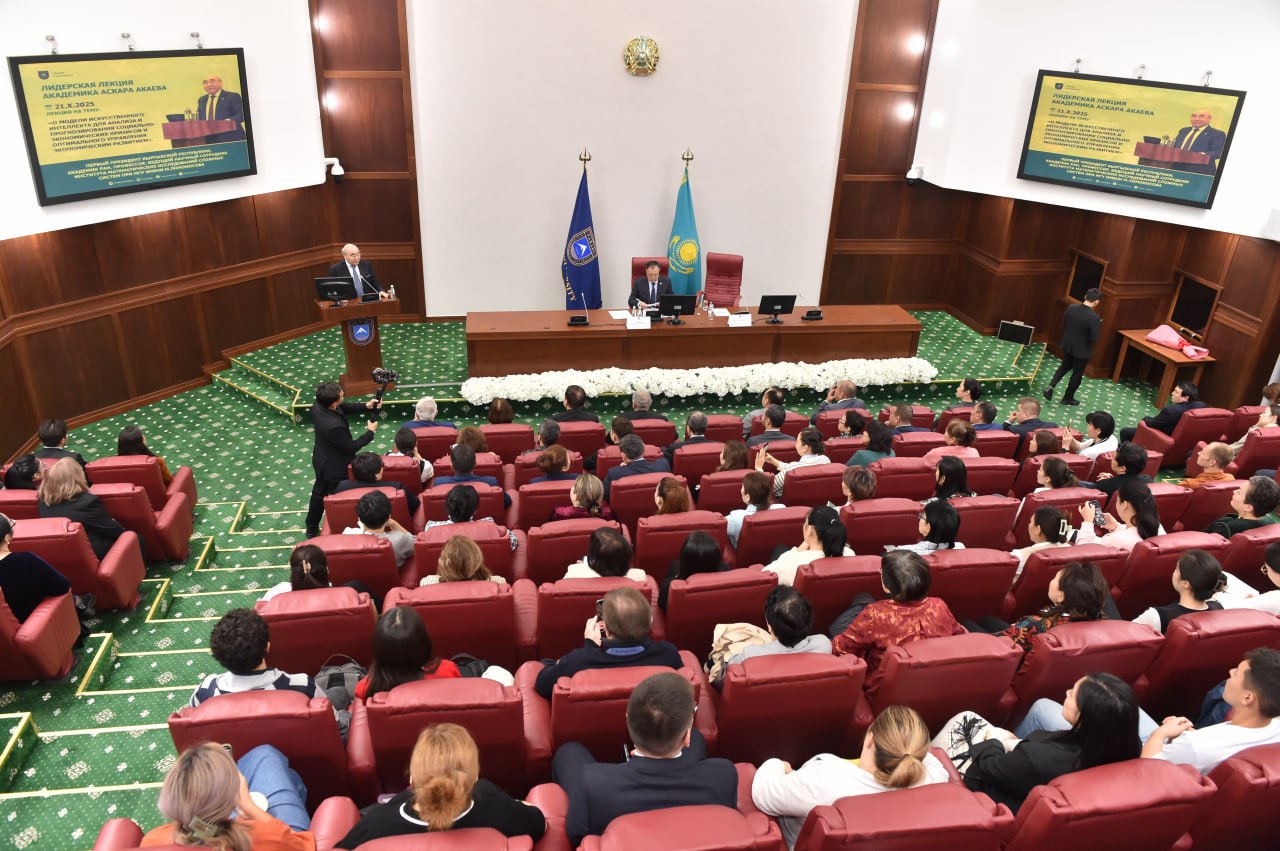
The first President of the Kyrgyz Republic, Academician of the Russian Academy of Sciences, leading researcher at the Institute of Mathematical Research of Complex Systems of Lomonosov Moscow State University, Professor Askar Akayev presented a lecture on "Optimal management of the artificial Intelligence model and economic development for the analysis and forecasting of socio-economic crises" to the attention of teachers, scientists and students of al-Farabi Kazakh National University.
Welcoming the guest of honor, Chairman of the Board – Rector of Al-Farabi Kazakh National University Zhanseit Tuimebayev stressed that, as an honorary professor of the University, renowned scientist, Academician of the Russian Academy of Sciences Askar Akayev is giving his second leadership lecture during this visit. The head of the university recalled the important theses of the first lecture, which dealt with technological, demographic and evolutionary singularities. Today, AI is not just a tool, but an intellectual force capable of transforming all spheres of life – economics, education, and science.
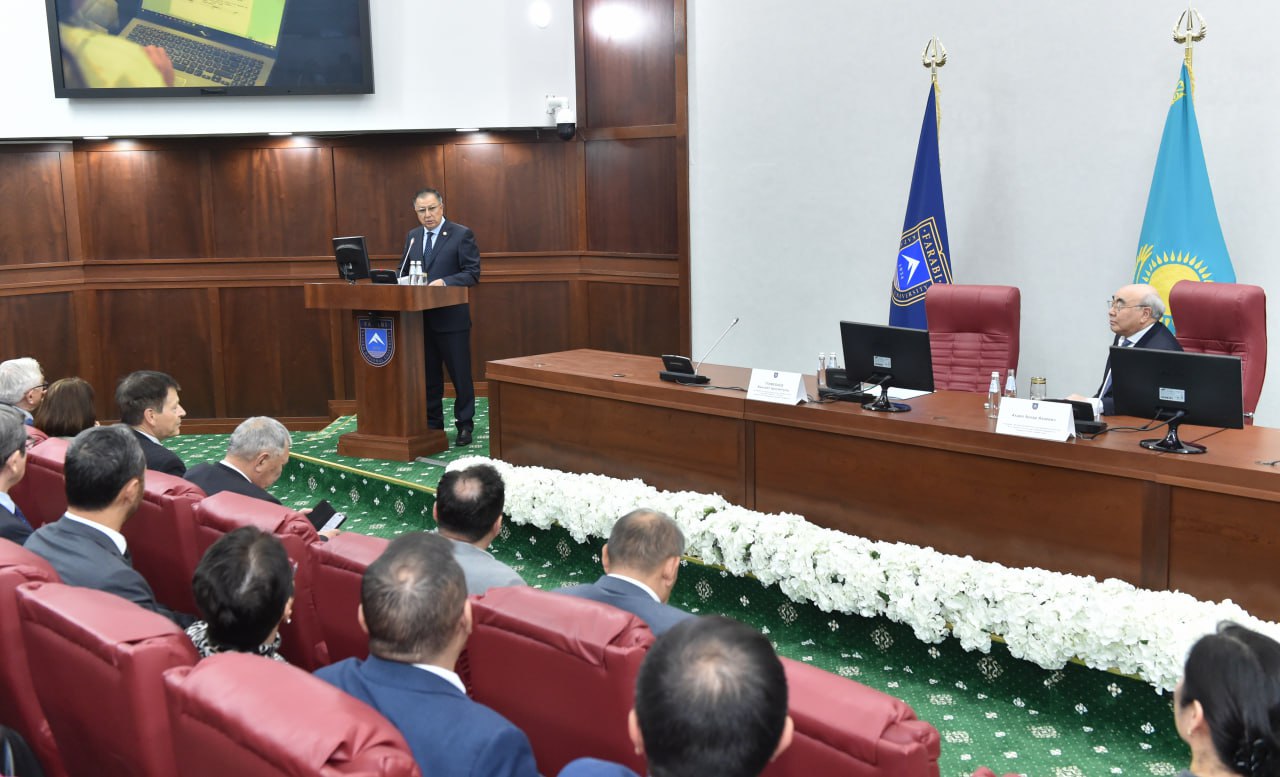
"We are witnessing accelerated biological and cultural human evolution. Thanks to the achievements of genetic engineering and synthetic biology, we are moving towards transhumanism, a new stage of human development", - said Zhanseit Tuimebayev. – Academician Akayev stressed that humanity is faced with the task of rethinking approaches to education and science management. It is necessary to create a global mechanism for cooperation and control in order to direct technological progress for the benefit of all mankind".
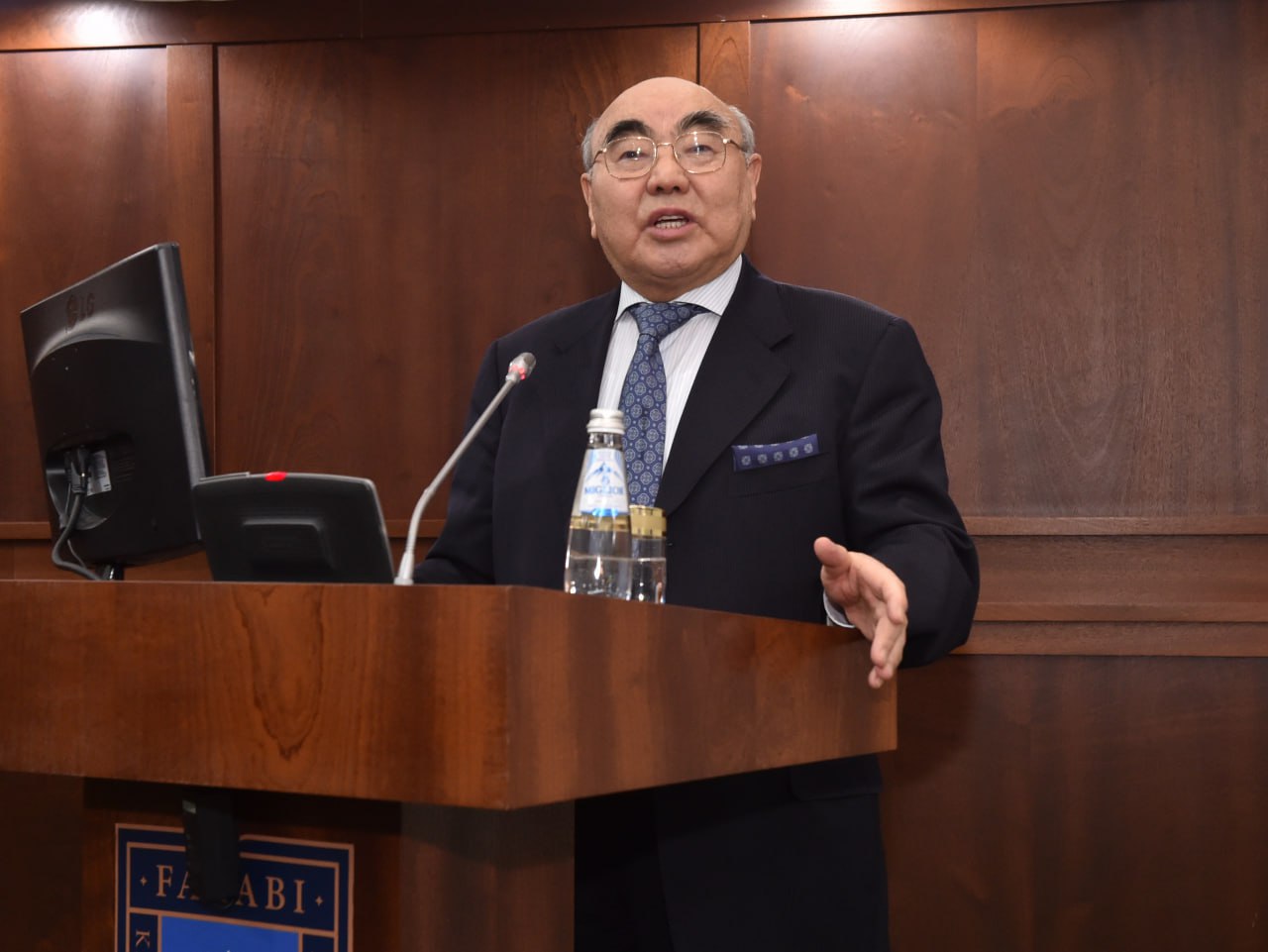
In his lecture, Academician Askar Akayev noted the rapid development of technology and artificial intelligence, where the United States and China are leading. For more than 10 years, Lomonosov Moscow State University has been using artificial intelligence for scientific and technological research and processing large experimental data. AI accelerates scientific progress in all areas related to big data processing: astrophysics, pharmaceuticals, the large Hadron Collider, analysis and forecasting of socio-economic, crisis phenomena and geopolitical conflicts.
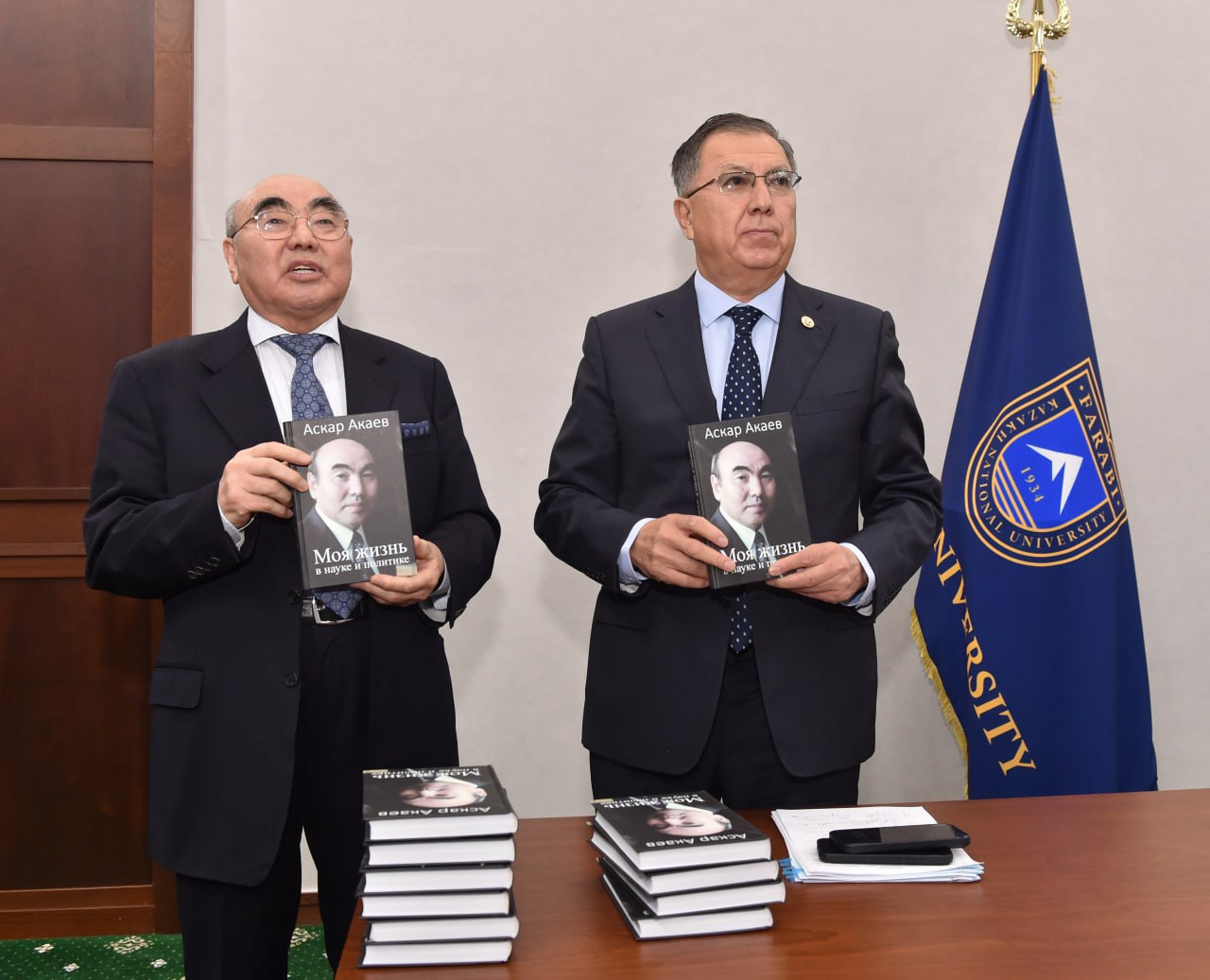
Considering AI development strategies, the lecturer cites the guiding principle of Professor Yu.Krivina: Only fundamental research aimed at explaining cause-and-effect relationships and identifying patterns can ensure sustained and profound progress.
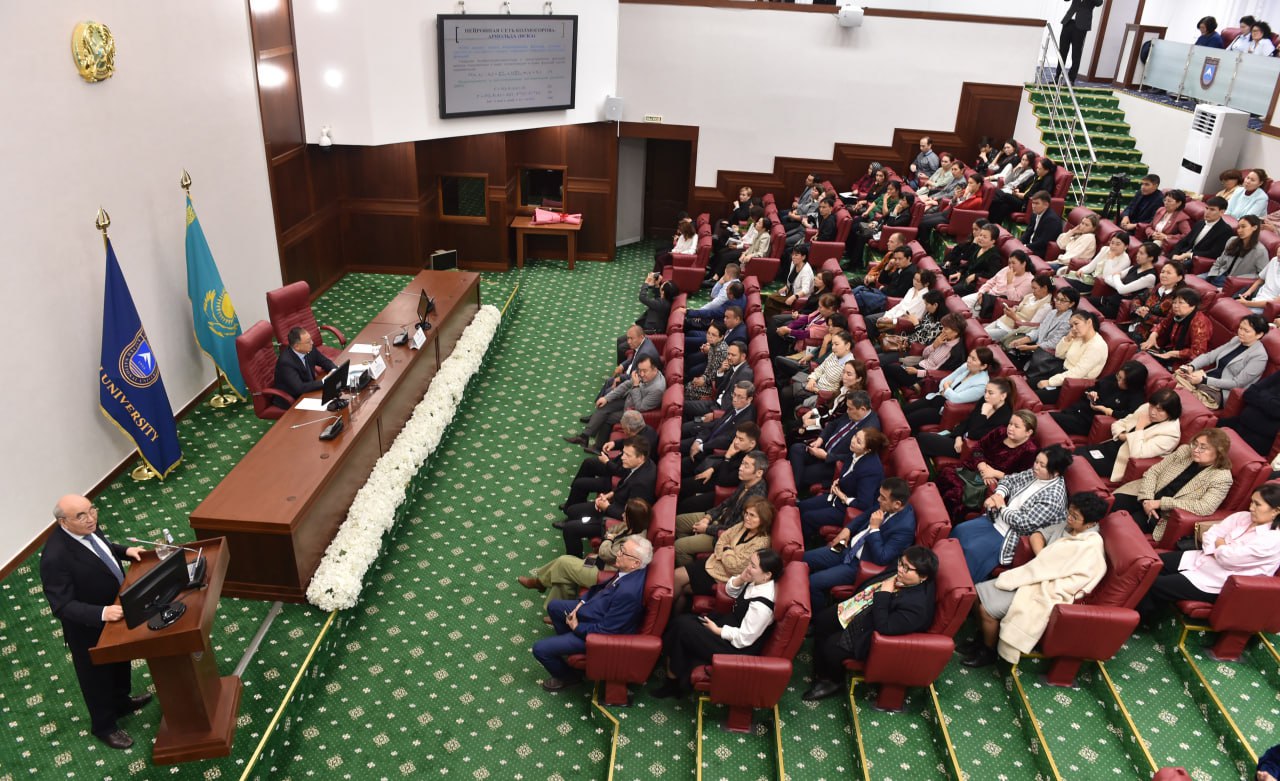
"Machine learning and data analysis are powerful tools that can accelerate scientific discoveries, but they should complement, not replace, traditional scientific methods", - said the scientist. "A hybrid model is most suitable for our field: mathematical verification models for calculating trend development trajectories, and crisis phenomena must be predicted using AI through deep machine learning".
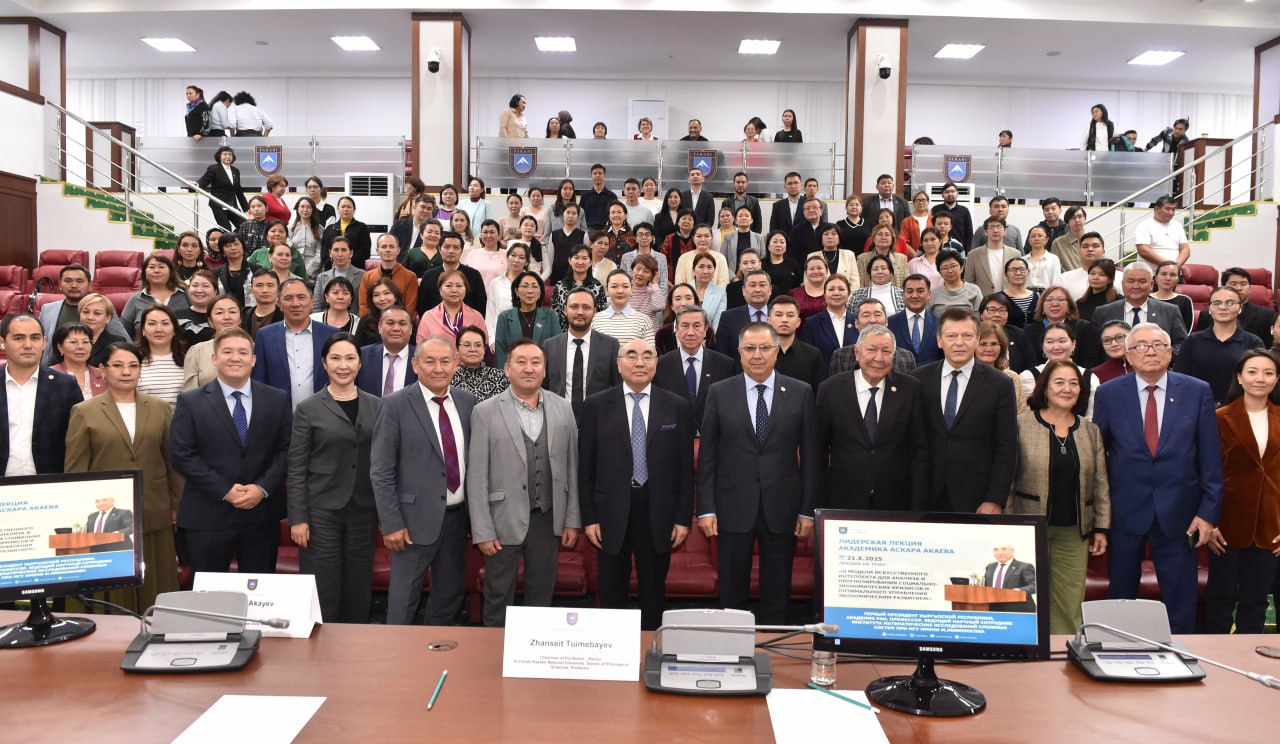
The event ended with a discussion, during which the audience was able to get answers to their questions.
Press-service of Al-Farabi Kazakh National University