- Main
- News
- KazNU and PolyU Continue Their Guest Lecture Series: Dr Emily Chen on How Big Data Reveals Patterns of Tourist Mobility
KazNU and PolyU Continue Their Guest Lecture Series: Dr Emily Chen on How Big Data Reveals Patterns of Tourist Mobility
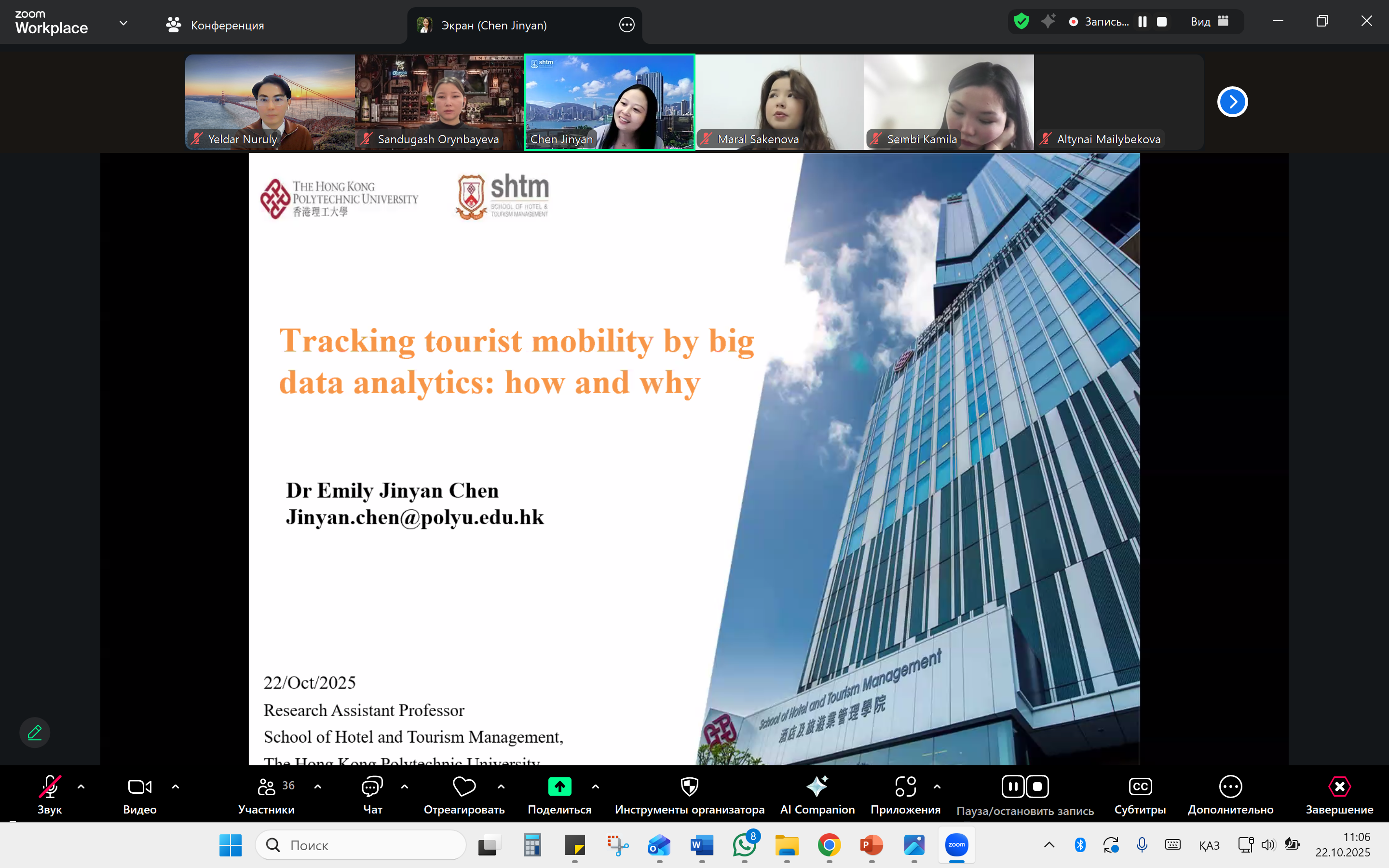
On 22 October 2025, Al-Farabi Kazakh National University hosted the third online session of the PolyU–KazNU Guest Lecture Series, jointly organised with the School of Hotel and Tourism Management (SHTM) of The Hong Kong Polytechnic University (PolyU).
The lecture, titled “Tracking Tourist Mobility by Big Data Analytics: How and Why”, was delivered by Dr Emily (Jinyan) Chen, Research Assistant Professor at SHTM PolyU and an expert in big data analytics in tourism.
The event was co-organised by the PolyU–KazNU Centre for Sustainable Development in Central Asia and the Department of Recreational Geography and Tourism of KazNU’s Faculty of Geography and Environmental Sciences.
The session was moderated by Yeldar Nuruly, Senior Lecturer of the Department and Administrative Assistant of the Centre. The lecture attracted strong interest from undergraduate and postgraduate students, PhD candidates, and academic staff eager to explore digital tools for tourism analysis.
Focus of the Lecture
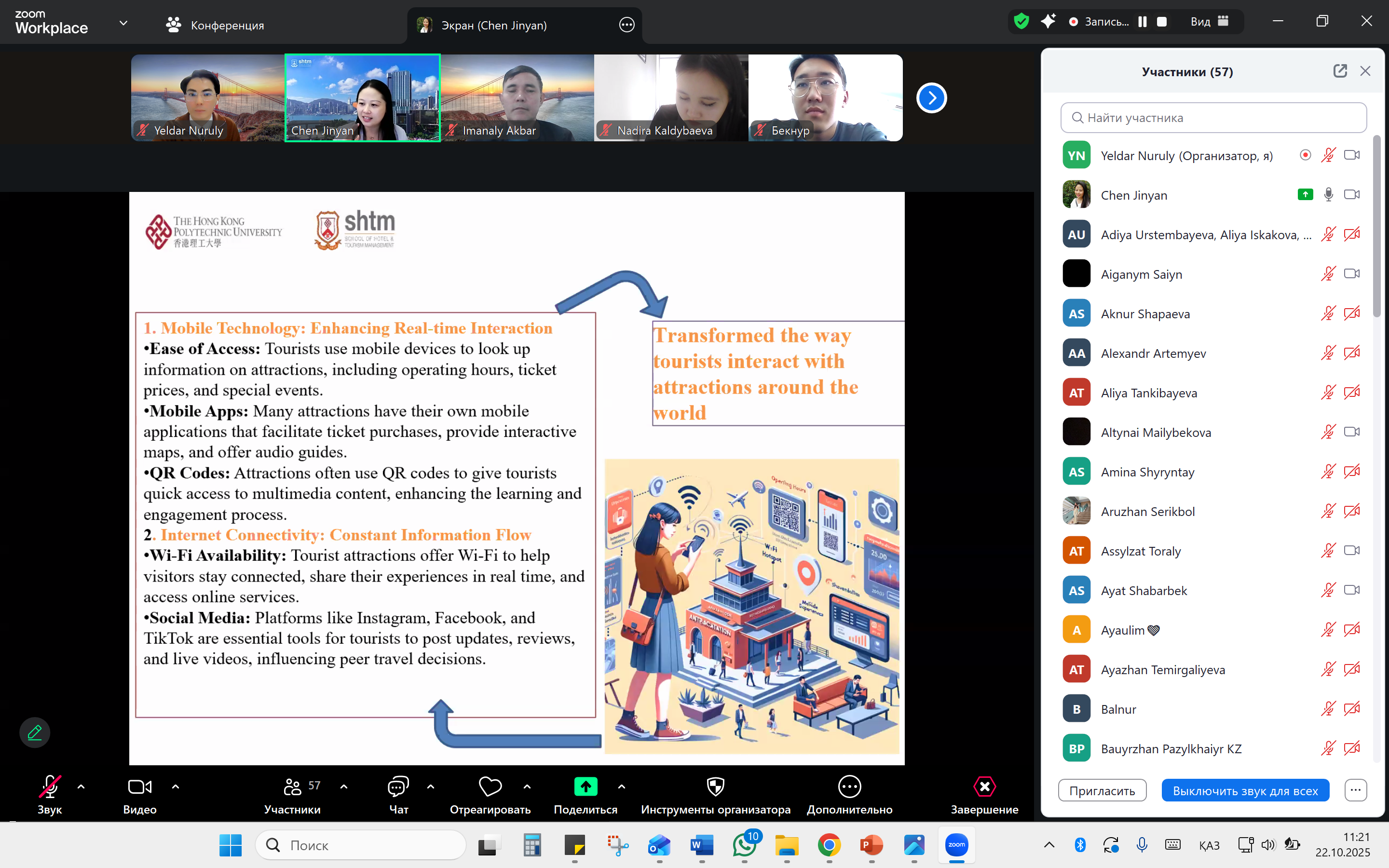
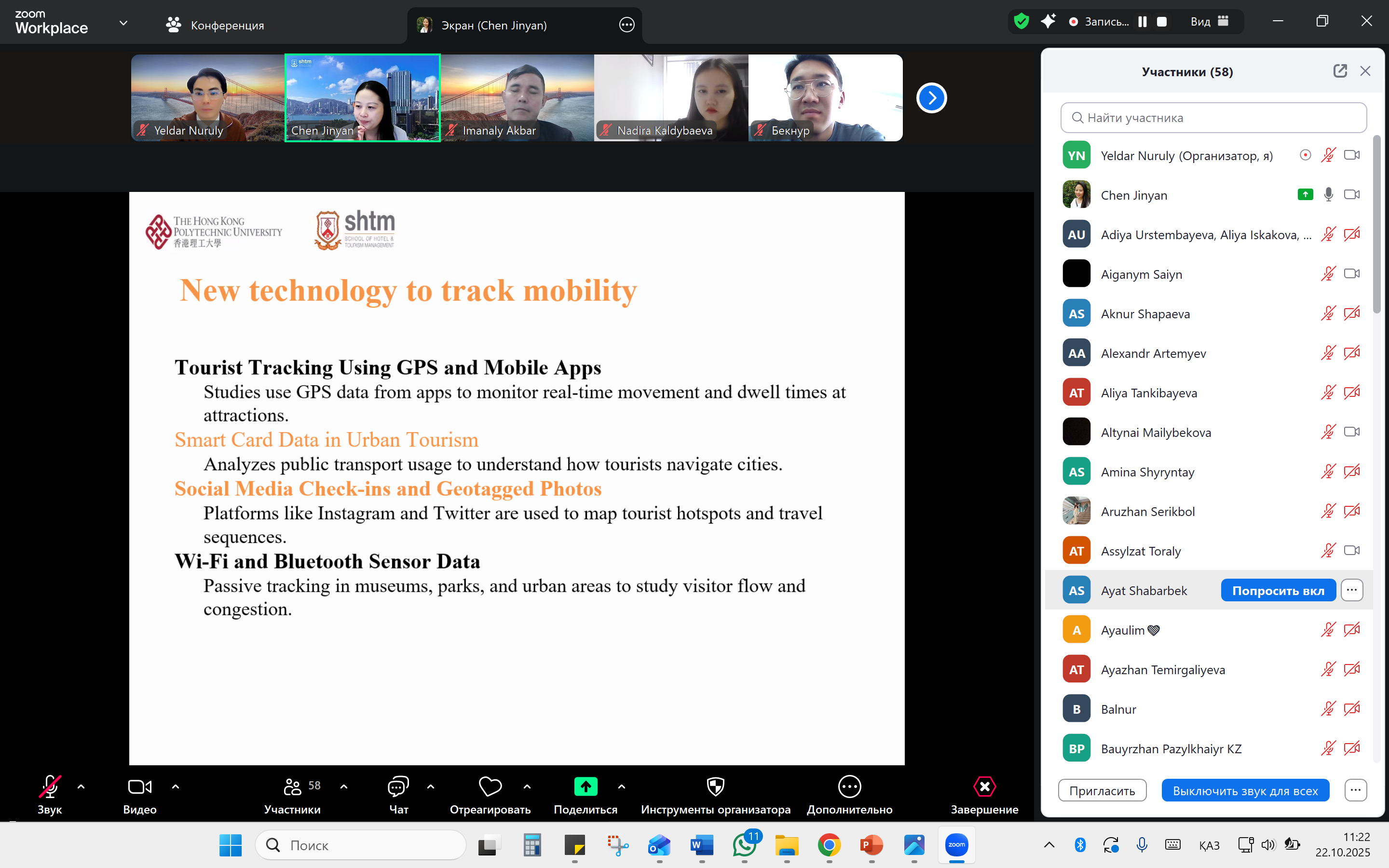
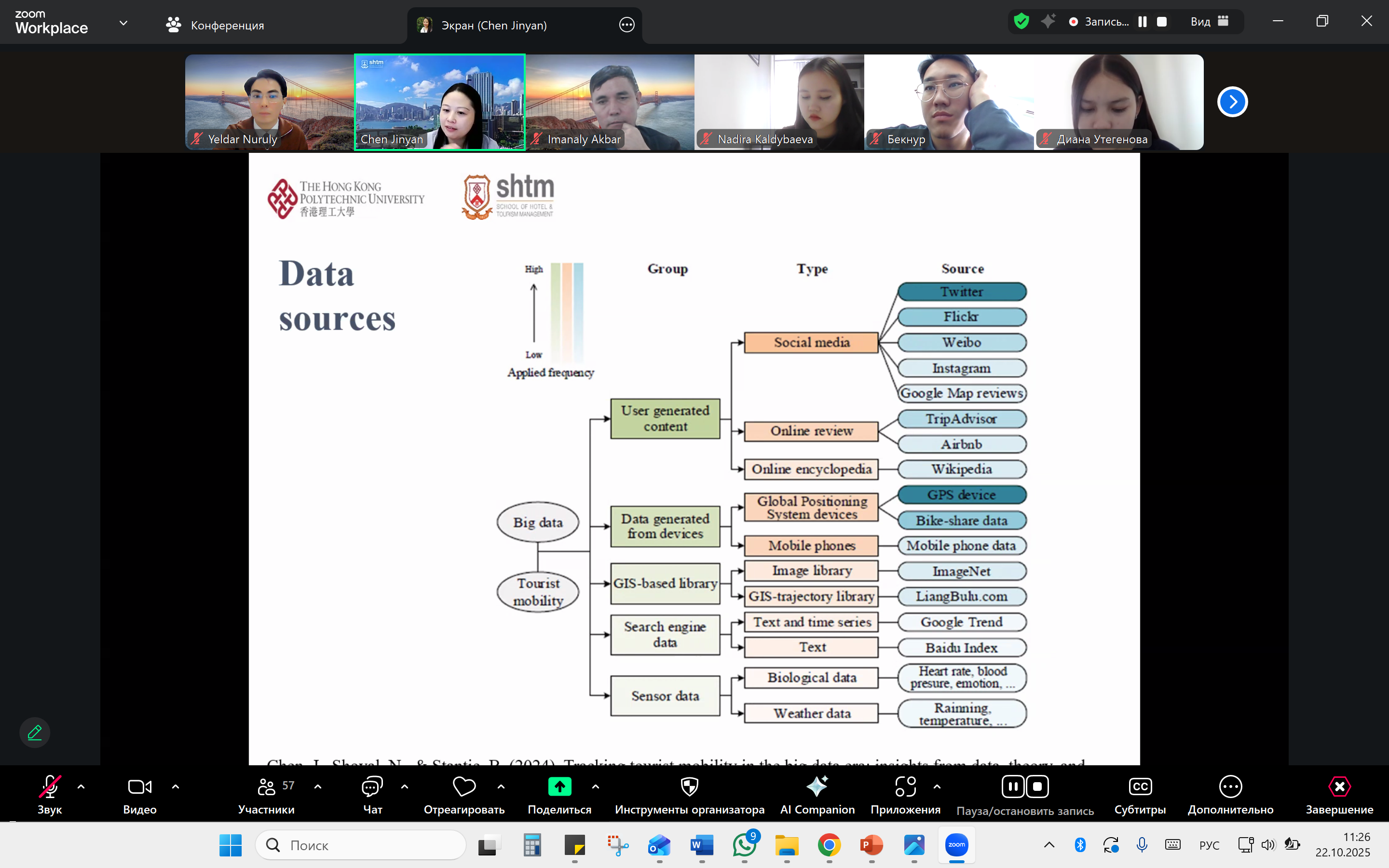
In her presentation, Dr Chen demonstrated how Big Data technologies are transforming approaches to understanding tourist mobility and destination planning. She explained how modern digital traces - from social media, GPS trackers, Wi-Fi sensors, payment systems, and transport apps - allow researchers to map spatial-temporal movements of travellers and uncover behavioural patterns.
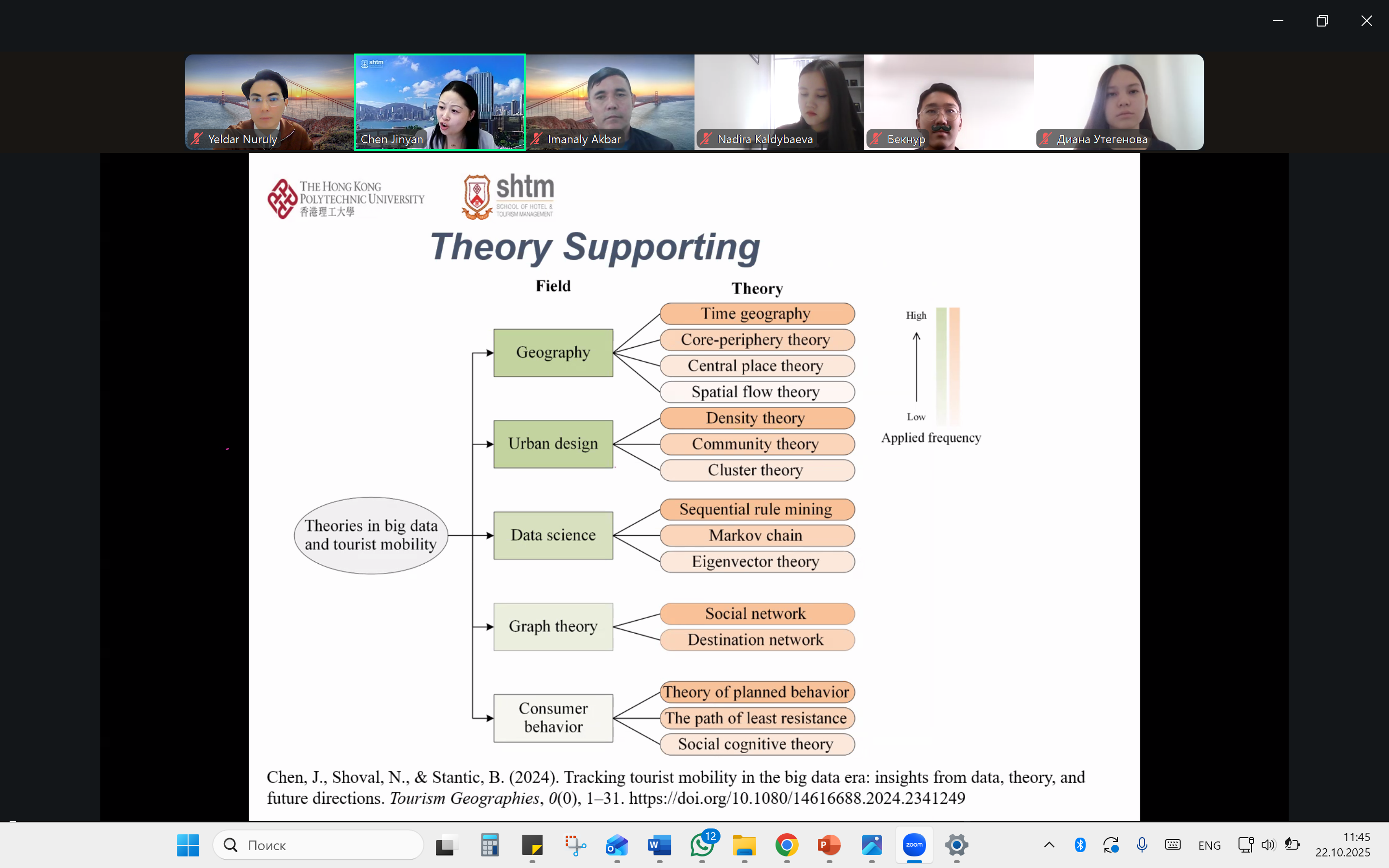
Special attention was given to theoretical foundations, including time geography, spatial flow theory, network analysis, and the theory of planned behaviour, as well as data visualisation methods that help identify travel flows, attraction nodes, and influencing factors in destination choice.
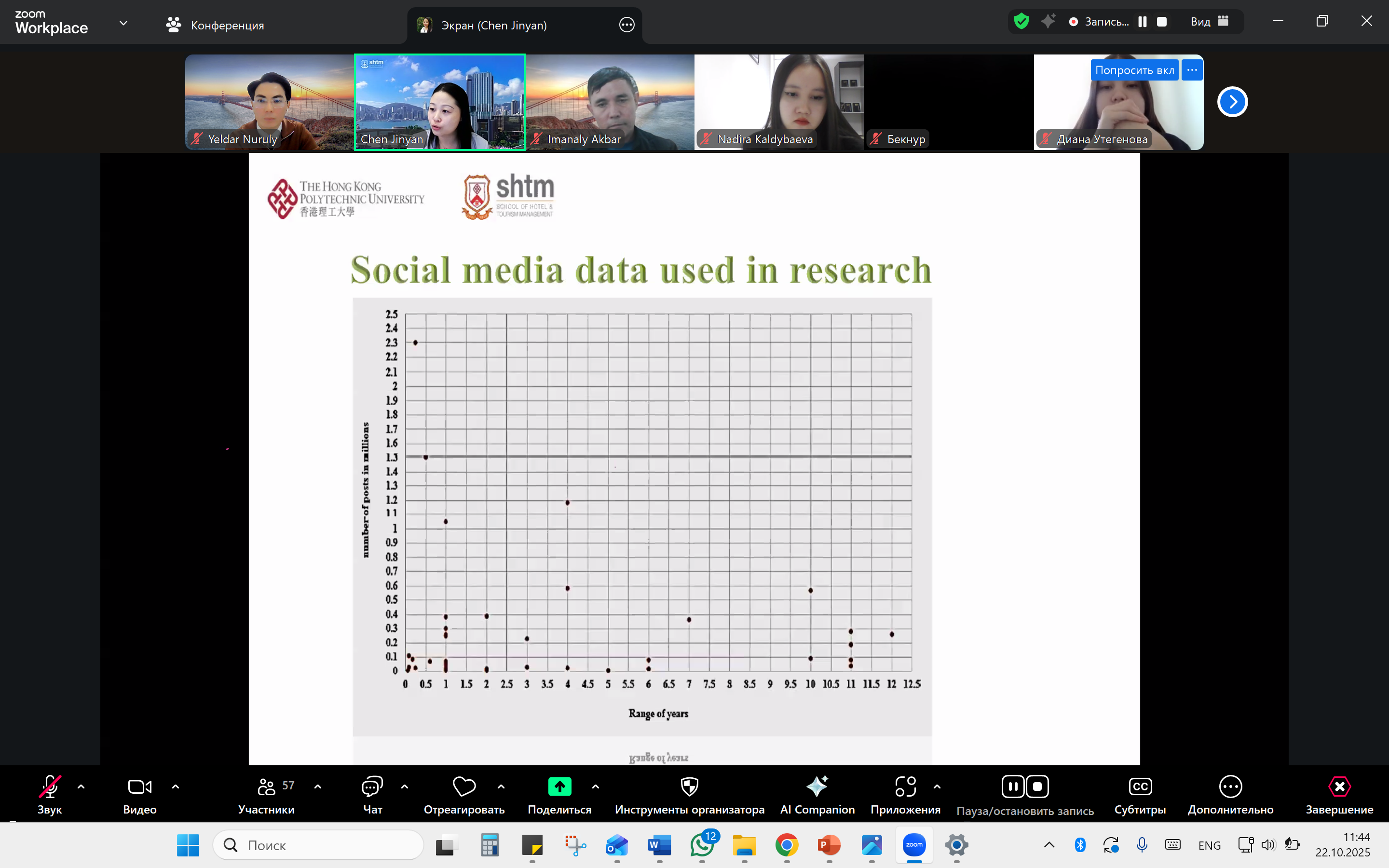
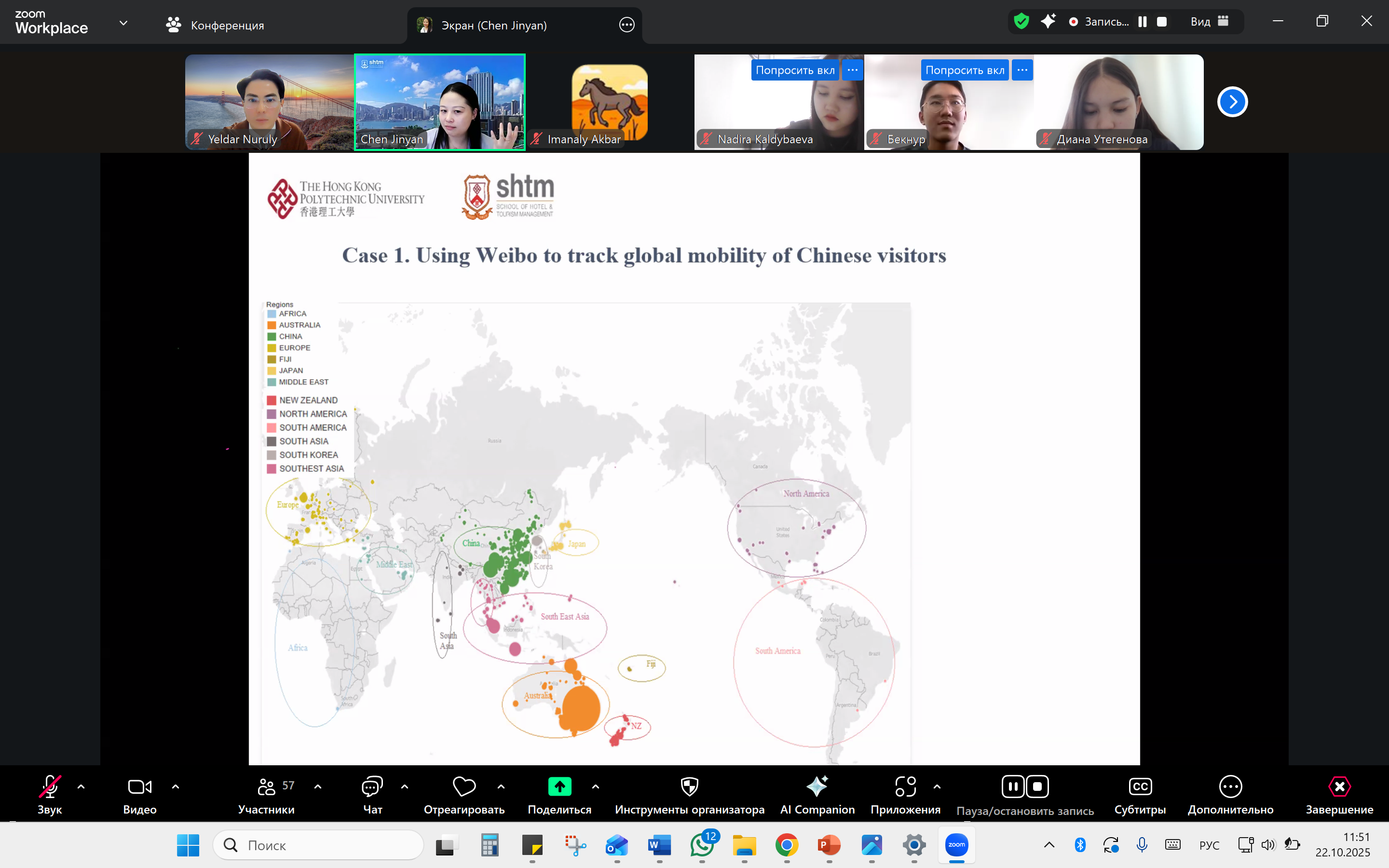
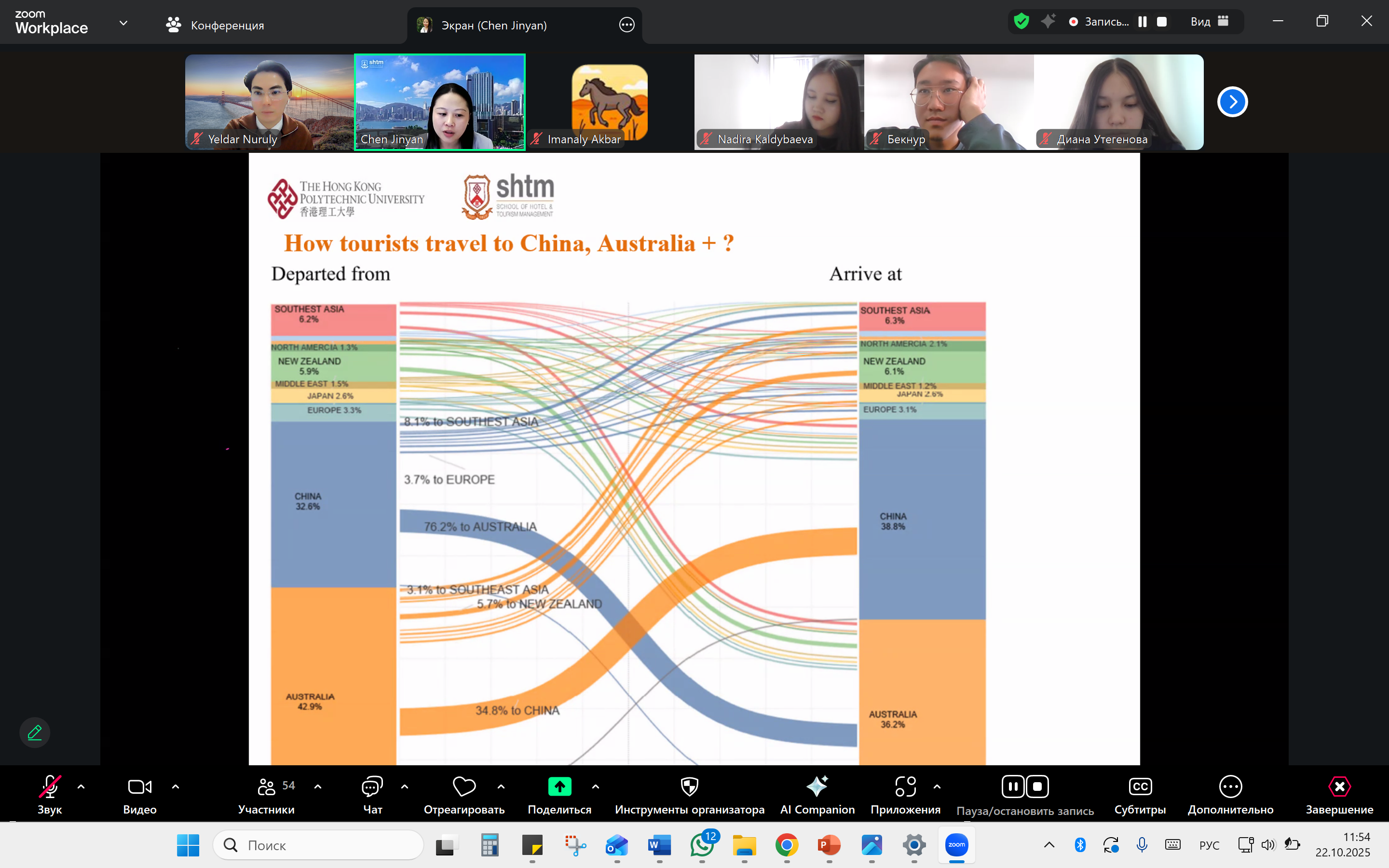
Using the example of Chinese tourists travelling in Australia, Dr Chen illustrated how data from Weibo can be used to reconstruct spatial flows, highlight key routes and hotspots, and reveal seasonal variations. This data-driven approach supports destination managers in improving visitor flow management, marketing strategies, and sustainable planning.
The lecture also touched upon challenges and limitations of big data research, such as incomplete or biased datasets, privacy and ethical issues, and the need to combine quantitative data with contextual insights into real travel behaviour.
Discussion and Q&A
During the Q&A session, students actively engaged with questions about the practical use of Big Data in analysing travel routes, the choice of tools and platforms, and the future of interdisciplinary research in tourism analytics. Dr Chen provided thoughtful and detailed answers, offering valuable advice for young researchers on starting with data analysis, visualisation, and programming.
Relevance for KazNU and the Region
Dr Chen’s lecture highlighted the importance of a data-driven approach in tourism management, particularly for developing regions where digital transformation is still emerging.
The lecture’s theme aligns with the United Nations Sustainable Development Goals (SDGs) — SDG 9 (Industry, Innovation and Infrastructure), SDG 11 (Sustainable Cities and Communities), and SDG 17 (Partnerships for the Goals).
The ideas presented hold significant relevance for Kazakhstan and Central Asia, where understanding mobility and spatial behaviour of tourists can serve as a key tool for strategic and sustainable destination development.
Acknowledgement
KazNU extends its sincere appreciation to Dr Emily Chen for her insightful and inspiring lecture, and to the School of Hotel and Tourism Management (SHTM) of The Hong Kong Polytechnic University for their continued support and collaboration within the PolyU–KazNU Guest Lecture Series.