The University of Szeged, founded by Emperor Franz Joseph in 1872, is notable for its rich history. Currently, the University, which has twelve faculties, admitted students to only four faculties in the first years of its foundation. This university is a glorious educational institution with the appearance of two equal Nobel Prize winners. The first Nobel laureate was Albert Saint – Gyerdi, a university professor in Physiology and medicine. The scientist was the first person to invent vitamin C. The winner of the second Nobel Prize is Kariko Katalin. A scientist who invented a vaccine against covid in 2023.
Several foreign languages are taught at Szeged university. We heard that along with foreign languages, Turkic languages are taught, including Kazakh. Ottoman Turkish is taught as a mandatory language for all Turkologists. The name of the world's altaists is inextricably linked with the Department of Altaology, which was opened at Szeged University.
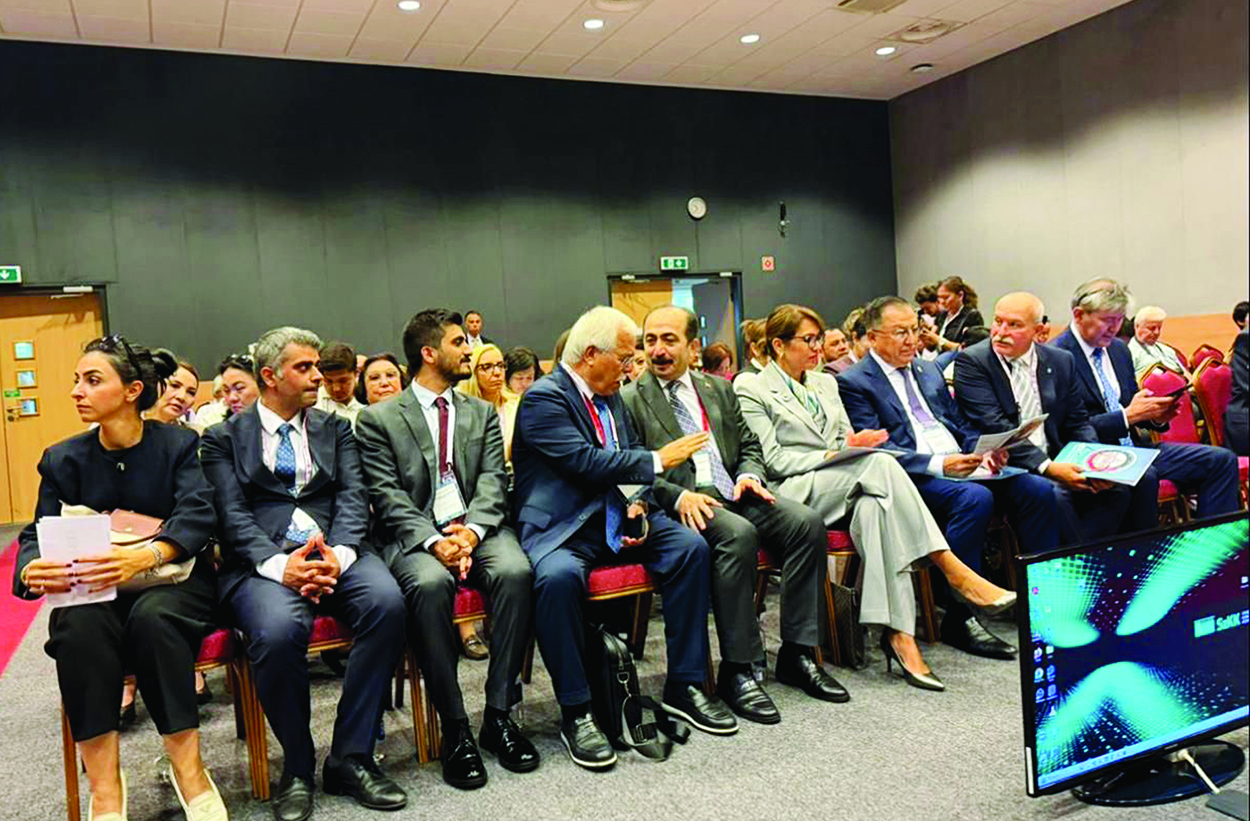
More than 115 scientists and applicants from four corners of the world took part in the symposium on the topic" name, rank, nickname". The solemn opening of the symposium was attended by the rector of Szeged university, the leadership of the Altay Studies Center, the head of the Turkish Historical Organization, the Turkish ambassador to Hungary Zhanseit Tuimebayev, the rector of the Al-Farabi Kazakh National University, Abzal Saparbekuly, the Ambassador Extraordinary and Plenipotentiary of the Republic of Kazakhstan to Hungary. At the opening of the symposium, Zhanseit Kanseitovich spoke, congratulated the participants and expressed warm wishes for the fruitful holding of the symposium. Honorary president of the International Association of altaiologists Zhanseit Kanseitovich spoke about the future work, directions and work done in altaiology.
The symposium was organized at a high level. People responsible for the meeting of sections diligently prepared salons A, B, C on time. Favorable conditions have been created for scientists to make reports. Reading from four reports in each section is probably one way that will not let people get bored. Watching the program, you had the opportunity to hear a report that aroused your interest. Topics are multifaceted. Sitting in distant Europe, we were very pleased with our foreign colleagues who were interested in the life of the Kazakh people, epic epics, naming culture and made reports on various topics related to the life of the Kazakh people.
The symposium was attended by several scientists from the National University. For our part, we presented a report on the topic" traditions of horse investigation in Kazakh culture". The audience listened with pleasure to the interesting aspects of this tradition and admired the existence of such a beautiful tradition of our people, the wisdom of the Kazakh brides, who still adhere to it. The tradition of respect and respect among the Kazakhs is still popular among scientists from all over the world.
On the second day of the symposium, the participants visited the Rare Book Fund of the University of Szeged library. Among the most ancient books, we were pleased to see the Holy Book of the Koran, The Shahnameh, as well as the article of the respected turkologist Berikbay Sagyndykuly, who lectured at the National University, and scientists from other Turkic states.
Bakhytgul KULZHANOVA,
Acting professor of KazNU