Guest Lecture on “Types of Liability for Committing a Corruption Offense”
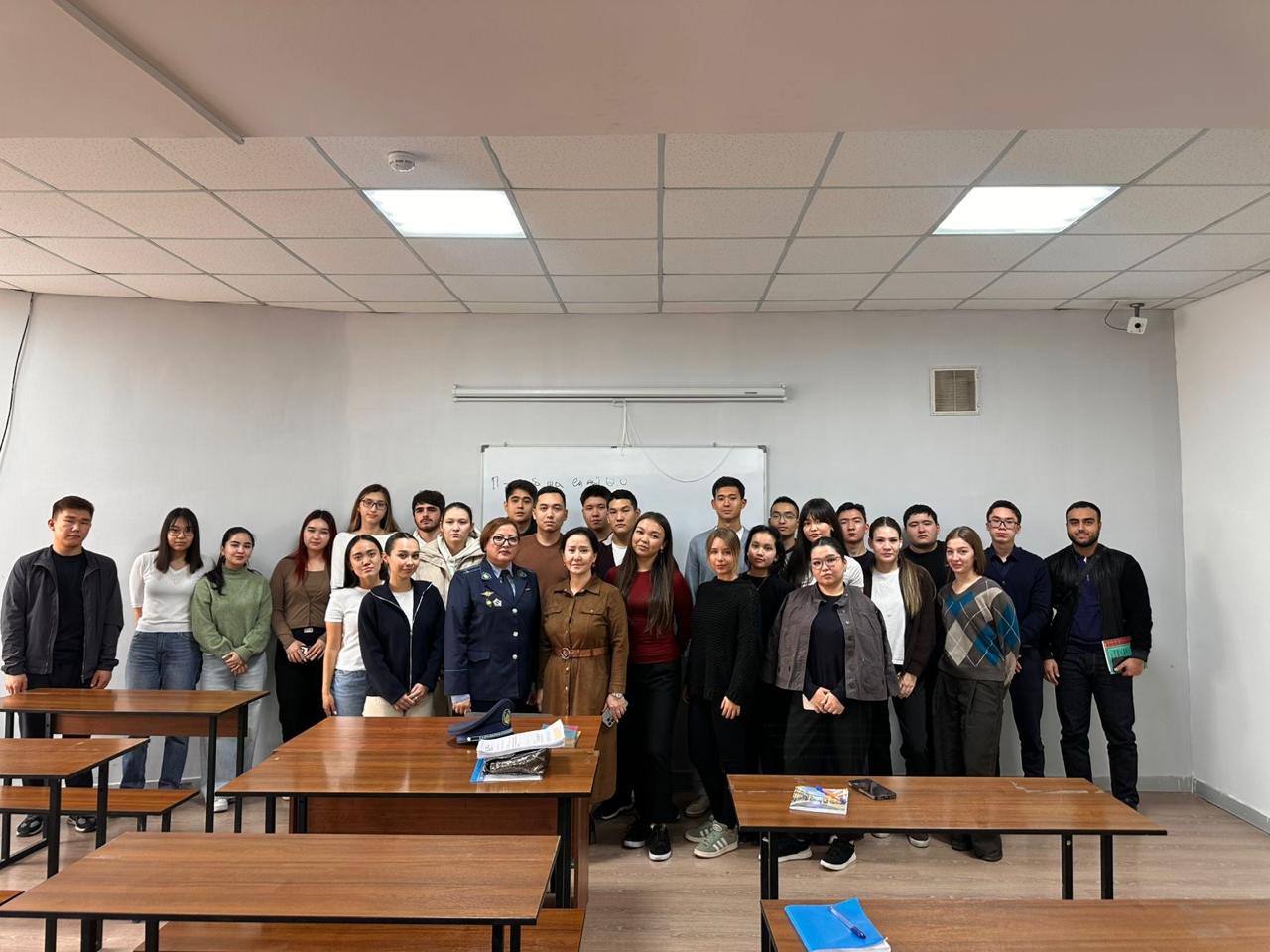
As part of the implementation of SDG 16 (Peace, Justice and Strong Institutions), a guest lecture on the topic “Types of Liability for Committing a Corruption Offense” was held for students of groups 308 and 309 of the Faculty of Law at Al-Farabi Kazakh National University.
The purpose of the event was to enhance students’ legal and anti-corruption literacy, foster an active civic position, and promote personal responsibility and zero tolerance toward any manifestations of corruption.
The meeting was attended by Police Lieutenant Colonel Gazhaip Alaidarovna Abdanbayeva, Senior Investigator of the Investigation Department of the Turkistan District Police Department of Almaty. In her presentation, she provided detailed explanations of the types of legal liability, the differences between administrative, criminal, and disciplinary offenses, and shared real examples from investigative practice.
The speaker placed special emphasis on the prevention of corruption among youth, the importance of knowing the law, understanding one’s rights and duties, as well as the necessity of upholding honesty and transparency in the future professional activity of lawyers.
During the lecture, students actively participated in the discussion, asking questions about Kazakhstan’s anti-corruption policy and the legal aspects of ethical behavior among civil servants. The open dialogue with a representative of law enforcement made the meeting especially engaging and insightful.
The event was held in a warm and informative atmosphere, contributing to the development of students’ legal culture, civic responsibility, and respect for the law.
The lecture was organized by the curator of Group 129 PC, Rosa Yergaliyevna Sagalbayeva, who emphasized that such meetings help students internalize anti-corruption values and foster professional ethics and commitment to the principles of legality in their future legal careers.\
Department of "Theory and History of State and Law, Constitutional and Administrative Law"
Other news