Educational Lecture on “Poverty and Inequality in the World”
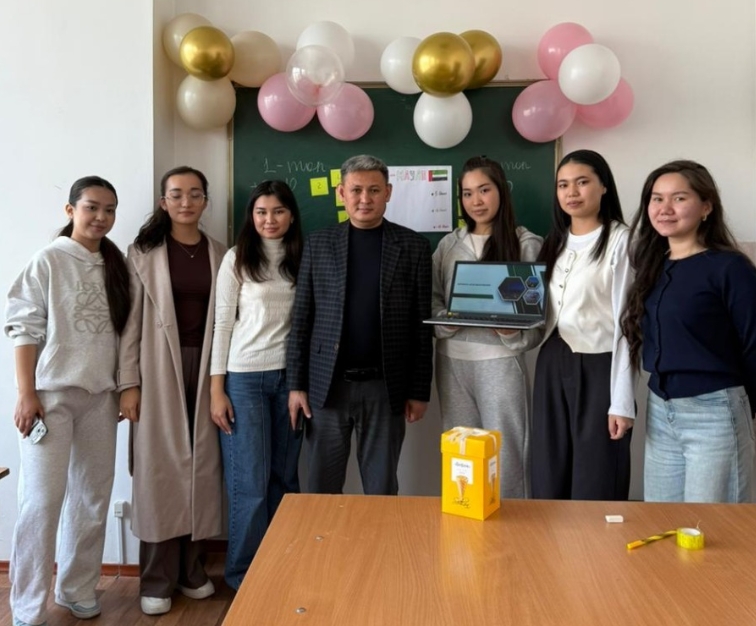
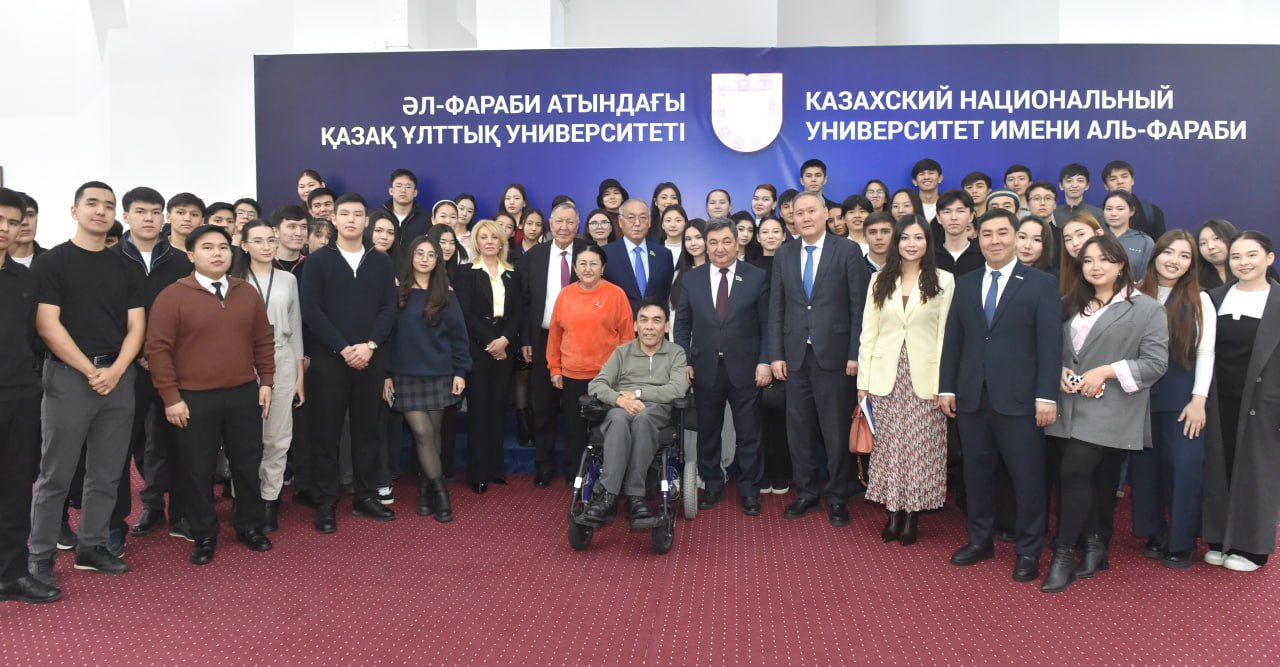
On October 17, 2025, Nurbol S Jetibayev, Kandidate of Law, Senior lecturer at the Department of Customs, Financial and Environmental Law, Al-Farabi Kazakh National University, gave an educational lecture "Reducing inequality within and between countries" for 4th-year students of the Cadastre (6B07304) educational program. During the lecture, the concept of poverty was given. Poverty is a process that relatively depends on the standard of living in a particular society and the distribution of public wealth. The main reasons for its occurrence are political, economic and demographic conditions, the political and economic crisis, unemployment, wages and pensions below the subsistence level, poor social security of the population. The complications of poverty can lead to mass poverty of the masses. Poverty and material absence turn into spiritual poverty. The consequences of this lead to various crimes in the country, debauchery. Poverty existed in all countries of the world before and exists now. The world's population has increased from 3 billion in 1960 to 6 billion at the beginning of the 21st century. Over the past 30 years, the proportion of people living in extreme poverty has halved. All over the world, most citizens have reached a state where they can provide for themselves and their family sufficiently. However, due to the increase in the population, the number of people living in need, despite bilateral and multilateral initiatives to combat poverty, remains unchanged - 1.2 billion people in the modern world, the nature of poverty is diverse: hunger, children suffering from lack of clean drinking water and basic sanitation, adults unable to provide their own a family. More than 1.2 billion people suffer from hunger from 800 million people who live on less than a dollar a day. The problem of poverty is becoming more and more complex due to the socio-political collapse of society based on the management of black intentions, political instability, conflicts, infectious epidemics and insecurity from natural disasters. Despite the fact that the poverty rate in many regions of the world decreased slightly in the 1990s, the opposite trend is observed in Africa (where 18 of the 20 poorest countries in the world are located). It is estimated that 435 million Africans may face food shortages by 2010. In 2000, the world community set a goal to reduce poverty by half by 2015. To achieve this goal, in 2005, the G8 countries made political commitments to allocate the resources needed by Africa. The poor South is a group of independent countries covering the Southern part of the Earth's continent (as a rule, south of the 30th parallel of the Northern Hemisphere) and lagging behind the industrialized countries in terms of socio-economic level. The event was held in an interactive format: participants exchanged views, expressed their opinions, and also got acquainted with the issues of combating poverty in Kazakhstan and the world. At the end of the lecture, the students considered the issues of combating poverty in the context of the ideas of global sustainable development, linking them with their lives.