Workshop on diagnostics based on various types of PCR methods
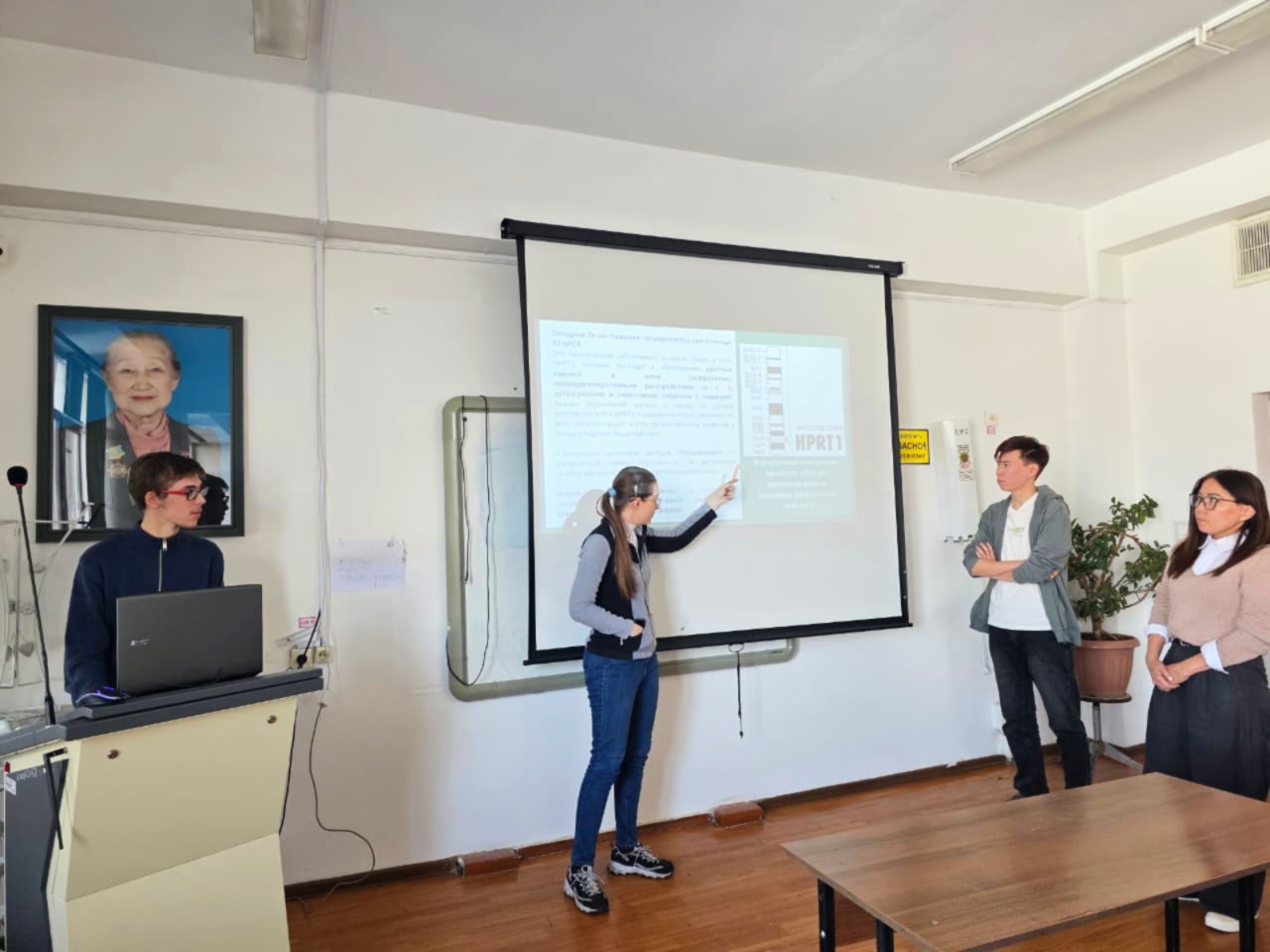
As part of SDG 3: Good Health and Well-Being, students together with lecturer A.A. Meldebekova organized a workshop on DNA-based diagnostics. The session introduced how modern molecular tools help detect diseases quickly and accurately.
Participants explored different PCR methods – from classical PCR for identifying pathogens to qPCR for measuring gene expression and RT-PCR for detecting RNA viruses. The workshop also highlighted how these techniques are used to quantify RNA and monitor infections in real time.
Students discussed the strengths of PCR technologies, including high sensitivity and fast results, as well as important limitations such as equipment needs and the careful handling required to avoid contamination. Real application examples were presented, including how viral load testing guides clinical decisions and helps track disease progression.
The event offered a look at how DNA-based diagnostics shape today’s healthcare. It strengthened students’ understanding of powerful molecular methods that support early detection, better monitoring, and improved public health outcomes.
Other news