Results of the Sustainable Development Survey Among University Students and Staff
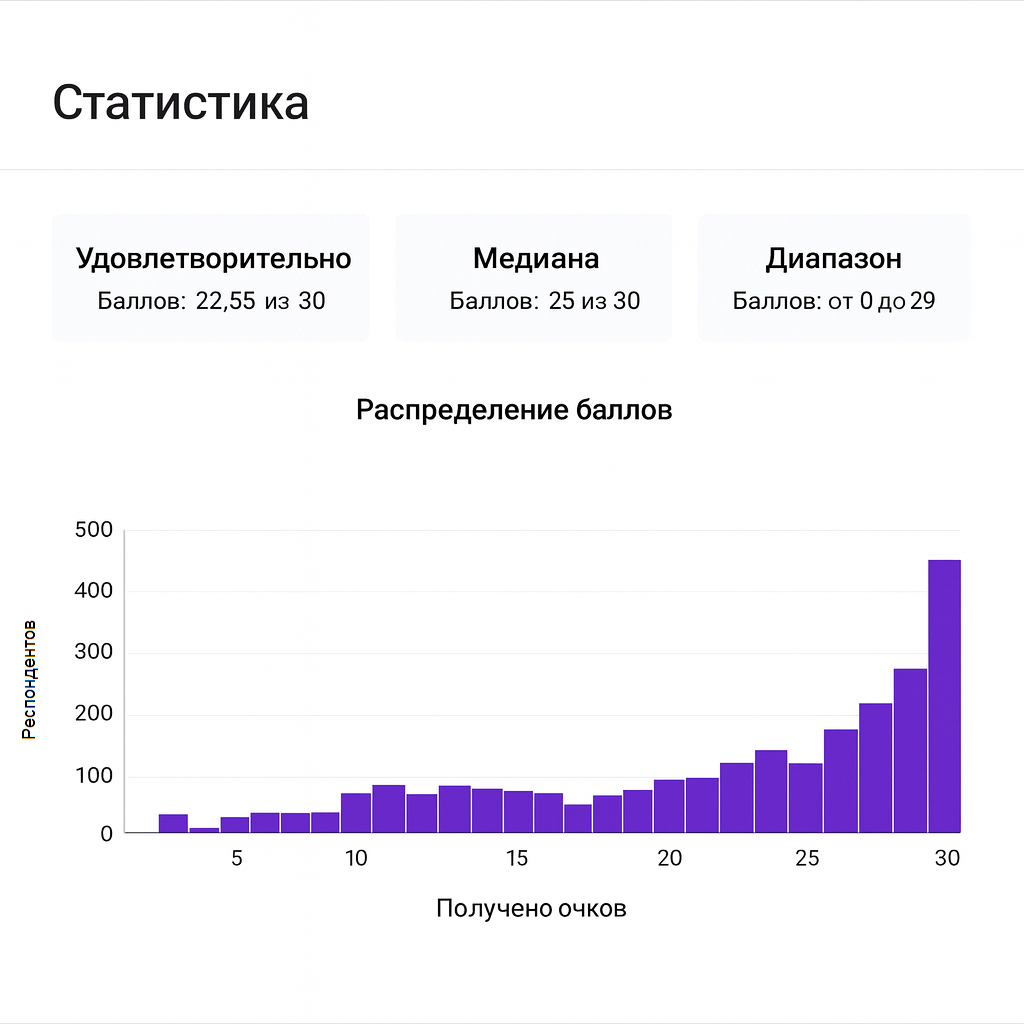
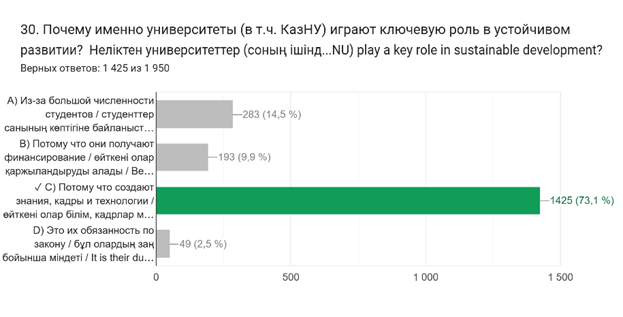
To assess the level of environmental literacy among students and faculty, and to analyze the perception of sustainable development principles within the academic environment, the university conducted a comprehensive survey consisting of 30 questions in Kazakh, Russian, and English. The multilingual format ensured high participation and provided representative data on the understanding of sustainability concepts.
 |
 |
 |
 |
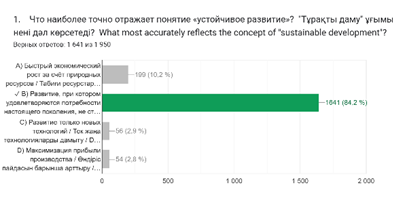
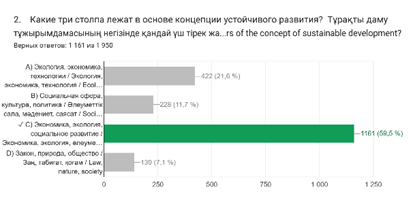
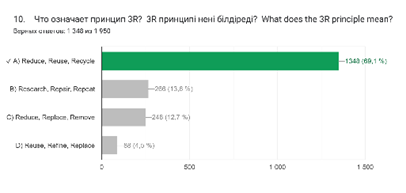
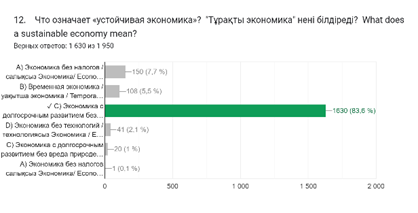
The results show that the majority of students and staff are well aware of the essence of sustainable development, defining it as meeting the needs of the present generation without compromising the ability of future generations to meet their own needs. Participants confidently identified the three key pillars of sustainability — economic, environmental, and social.
 |
 |
 |
 |
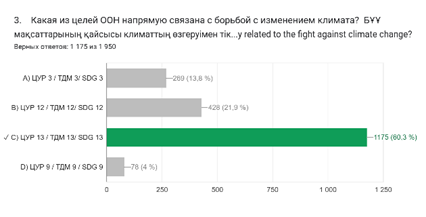
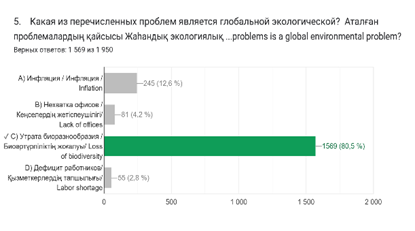
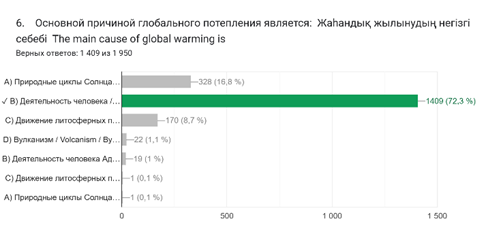
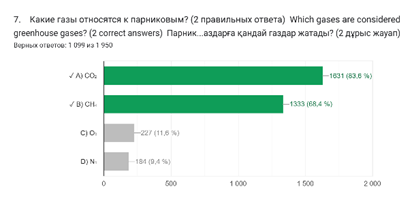
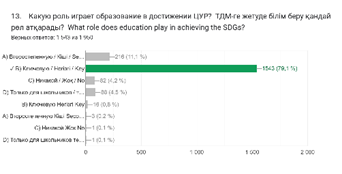
A high level of awareness was also demonstrated regarding the UN Sustainable Development Goals. Many respondents correctly identified SDG 13 “Climate Action” and recognized the anthropogenic causes of global warming, such as emissions of greenhouse gases including CO₂ and CH₄.
 |
 |
 |
 |
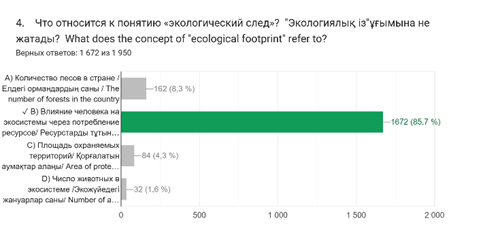
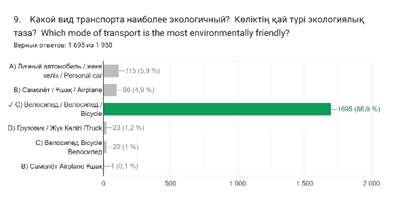
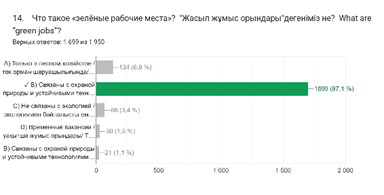
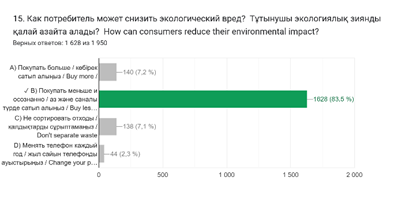
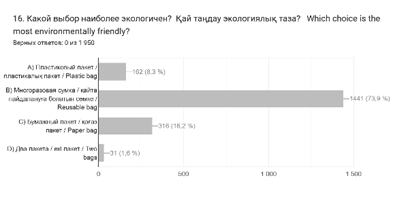
Regarding environmentally responsible behavior, most participants emphasized the importance of reducing consumption, using reusable bags, sorting waste, and choosing eco-friendly modes of transport, especially bicycles. This indicates strong support within the university community for “green campus” initiatives.
 |
 |
 |
 |
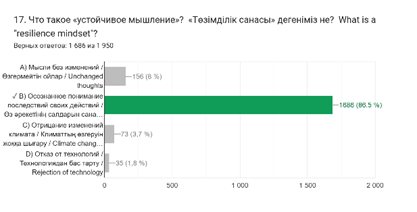
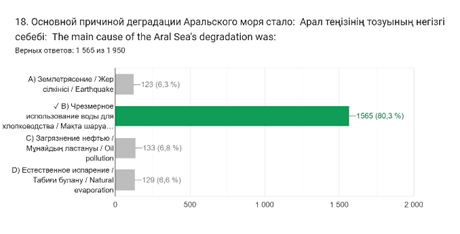
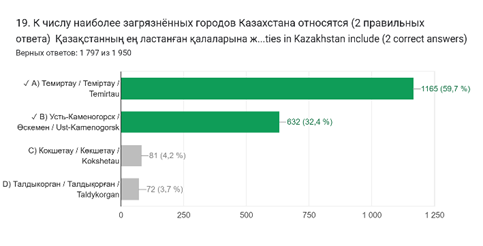
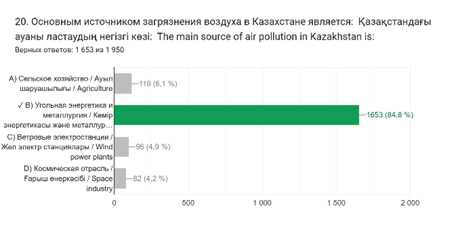
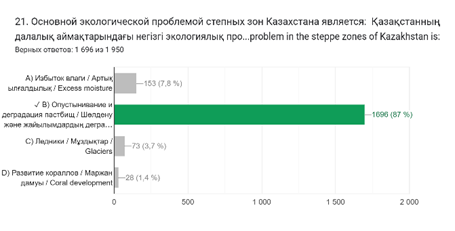
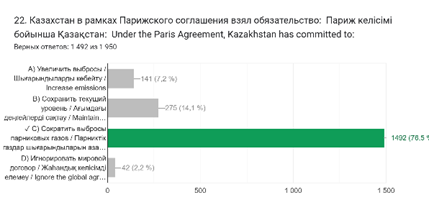
When answering questions related to Kazakhstan, respondents highlighted the country’s most pressing environmental challenges: air pollution in major industrial centers, degradation of pastures, desertification, and the Aral Sea crisis caused by excessive water withdrawal. Many also demonstrated an understanding of Kazakhstan’s international commitments to reducing greenhouse gas emissions.
 |
 |
 |
 |
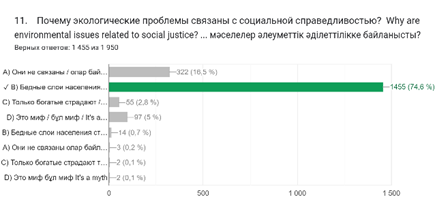
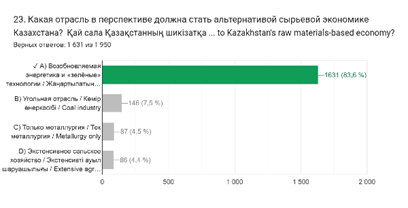
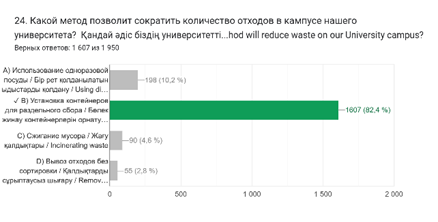
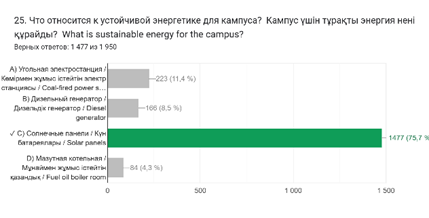
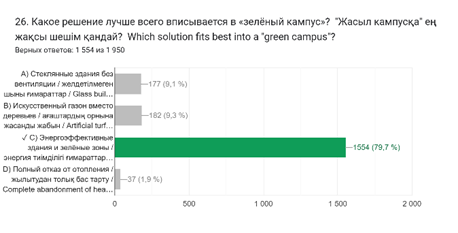
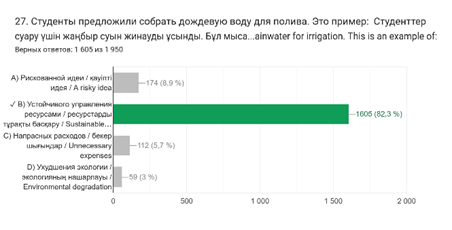
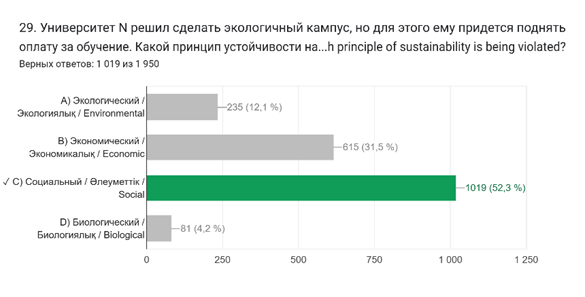
In the block devoted to sustainable campus practices, respondents expressed support for waste sorting, installation of solar panels, development of energy-efficient infrastructure, creation of green zones, and systems for collecting rainwater for irrigation. At the same time, most noted that financing environmental projects through increased tuition fees would contradict the social dimension of sustainability.
 |
 |
 |
 |
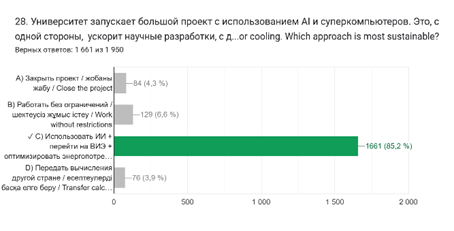
In the digital sustainability section, respondents were presented with a case involving the use of AI and high-performance computing. The majority chose the most balanced approach — integrating digital technologies with a transition to renewable energy and energy consumption optimization.
 |
 |
 |
 |
Overall, the survey results confirm a high level of environmental awareness among students and staff, a solid understanding of sustainability principles, and readiness to participate in campus greening initiatives. The collected data will be used to develop educational modules on sustainability, improve environmental initiatives, and shape the university’s long-term strategy for sustainable and “green” campus management.
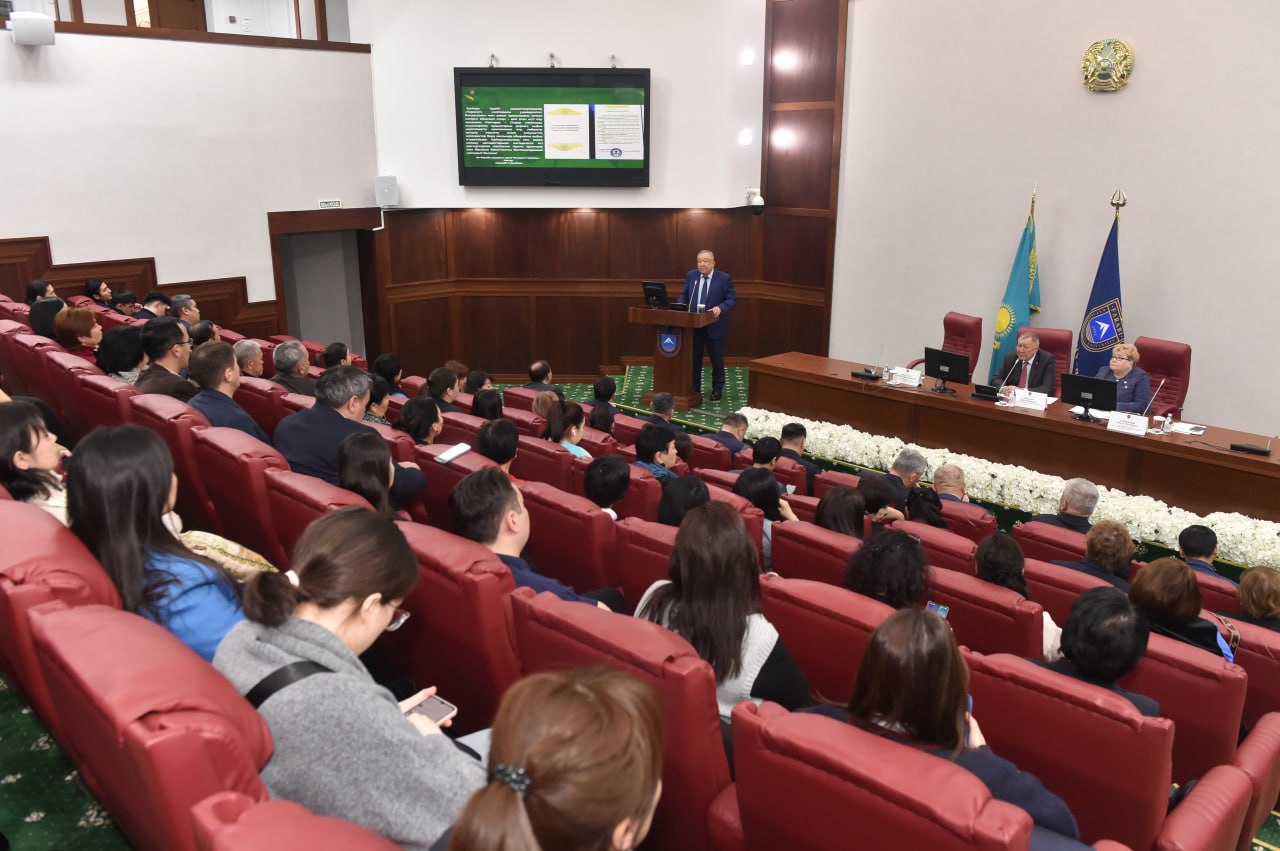
The study represents an important step in the university’s systematic work to integrate sustainable development principles into education, research, and campus management.