- Main
- News
- А lecture-seminar was held on the topic: "The role of biotechnology in eliminating hunger. Genetically engineered products. Biosafety"
А lecture-seminar was held on the topic: "The role of biotechnology in eliminating hunger. Genetically engineered products. Biosafety"
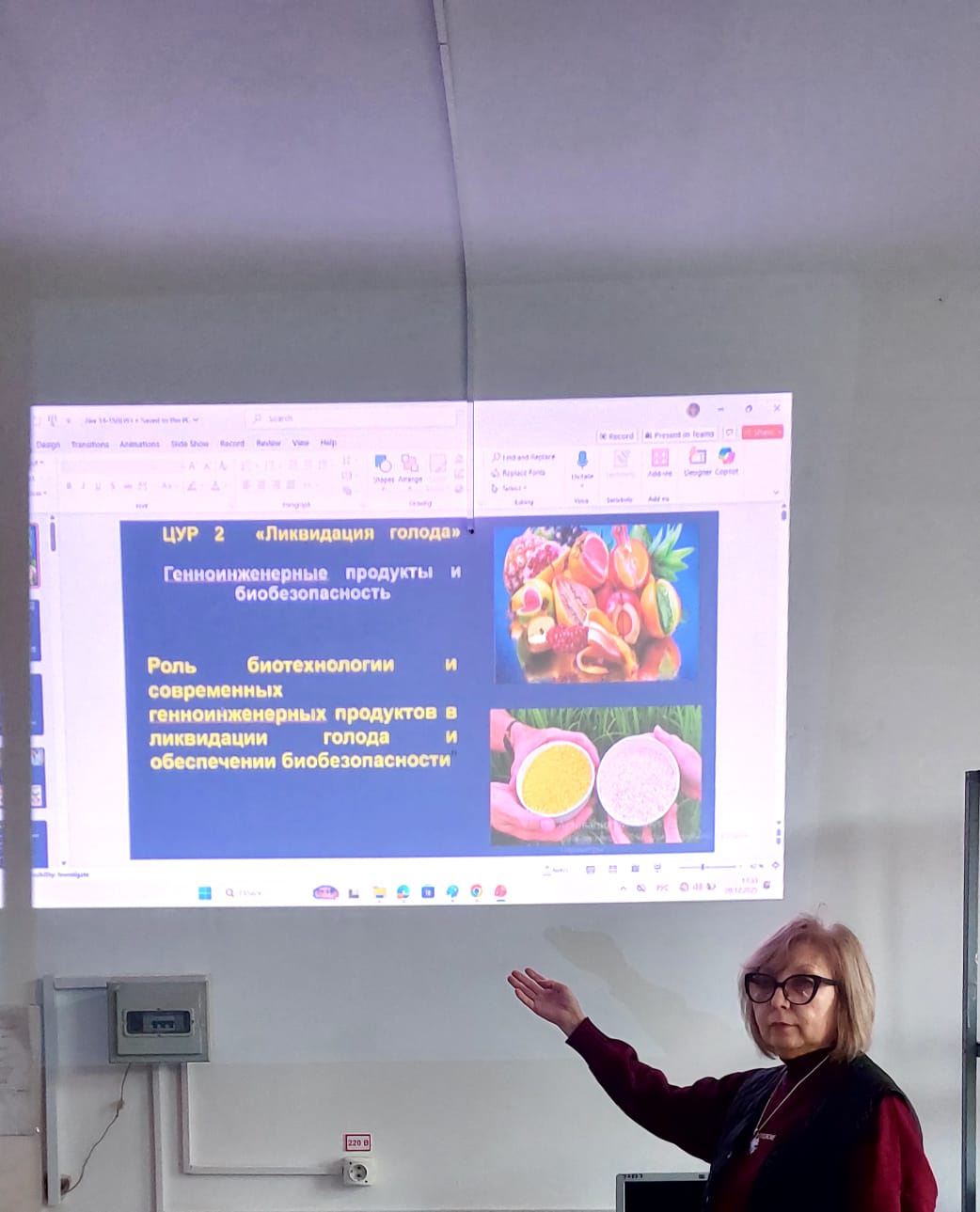
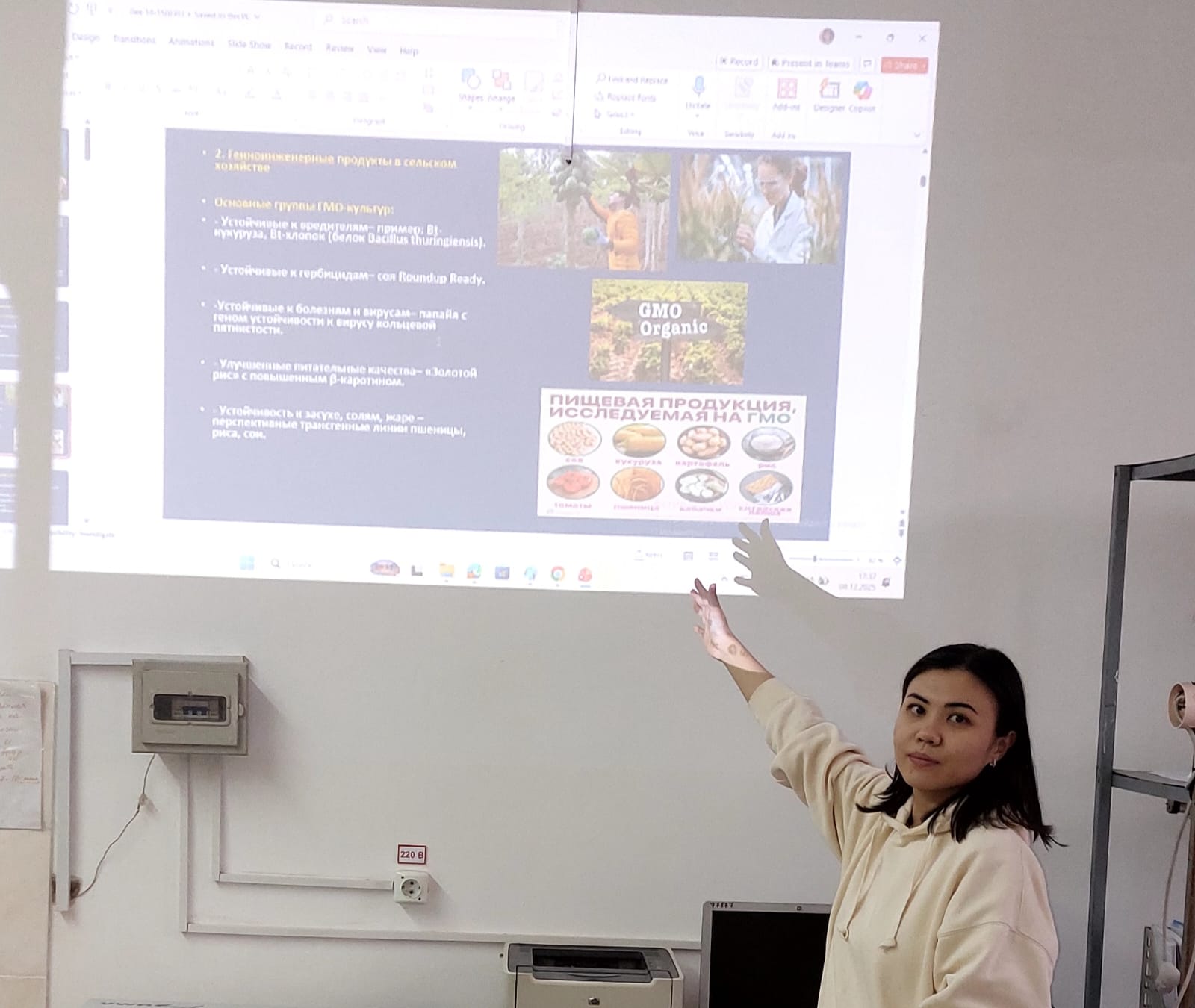
On December 8, 2025 at 2 p.m. in room 414. As part of the implementation of SDG 2 "Eliminating hunger", a lecture-seminar was held on the topic: "The role of biotechnology in eliminating hunger. Genetically engineered products. Biosafety", organized by professors of the Department of Biotechnology and doctoral students of the specialty "Biotechnology".
Organizers: professors of the Department of Biotechnology Atabayeva S.D., Asrandina S.Sh., Shoinbekova S.A., Kenzhebayeva S.S. and doctoral students of the 1st year group, specialty “Biotechnology".
The purpose of the event: To provide students with a comprehensive understanding of SDG 2 "Eliminating Hunger", to show the role of modern biotechnologies and genetically engineered products in ensuring food security, as well as to reveal key aspects of biosafety and GMO regulation in global and national contexts.
The lecture discussed the global problems of hunger and malnutrition around the world, the importance of SDG 2 in the context of global challenges — population growth, food shortages, climate change and land degradation. It is emphasized that biotechnologies play a key role in the formation of sustainable food systems. Special attention was paid to the fact that biotechnology is today one of the key tools for the formation of sustainable food systems, increasing yields and adapting agriculture to climate change. The main objectives of SDG 2 are considered and the role of various areas of biotechnology in their implementation is considered. Examples of biologics, resistant plant varieties, cellular and molecular breeding technologies used to increase crop yields and stress resistance, their use in medicine, and the principles of obtaining GM crops, including methods of transgenesis and genome editing (CRISPR/Cas). The students were presented with examples of genetically modified plants, such as Bt+crops, “golden” rice, and drought-resistant varieties, as well as their possible contribution to the fight against hunger, micronutrient deficiencies, and crop losses. A separate part of the lecture was devoted to biosafety issues. The issues of potential environmental and food risks, the need for a rigorous scientific assessment of the safety of GMOs, and international regulatory approaches, including the Cartagena Protocol, were discussed. The students also discussed the social and ethical aspects of the introduction of genetic engineering technologies.