Open Educational Lesson on the Topic “How Did the Kazakh People Predict the Weather?”
In education, it is important to combine science and upbringing while respecting cultural traditions. One striking example of such an integrative approach is an open educational lesson on the topic of “Weather and Signs” conducted by first-year doctoral students for first- and third-year students majoring in meteorology as part of their teaching practice.
The aim of the lesson was to expand the professional knowledge of future meteorologists and to foster a respectful attitude towards the folk wisdom accumulated by generations of nature observers. Particular attention was paid to the signs of the Kazakh people — a unique layer of ethnocultural heritage closely linked to the characteristics of the climate and traditional way of life.
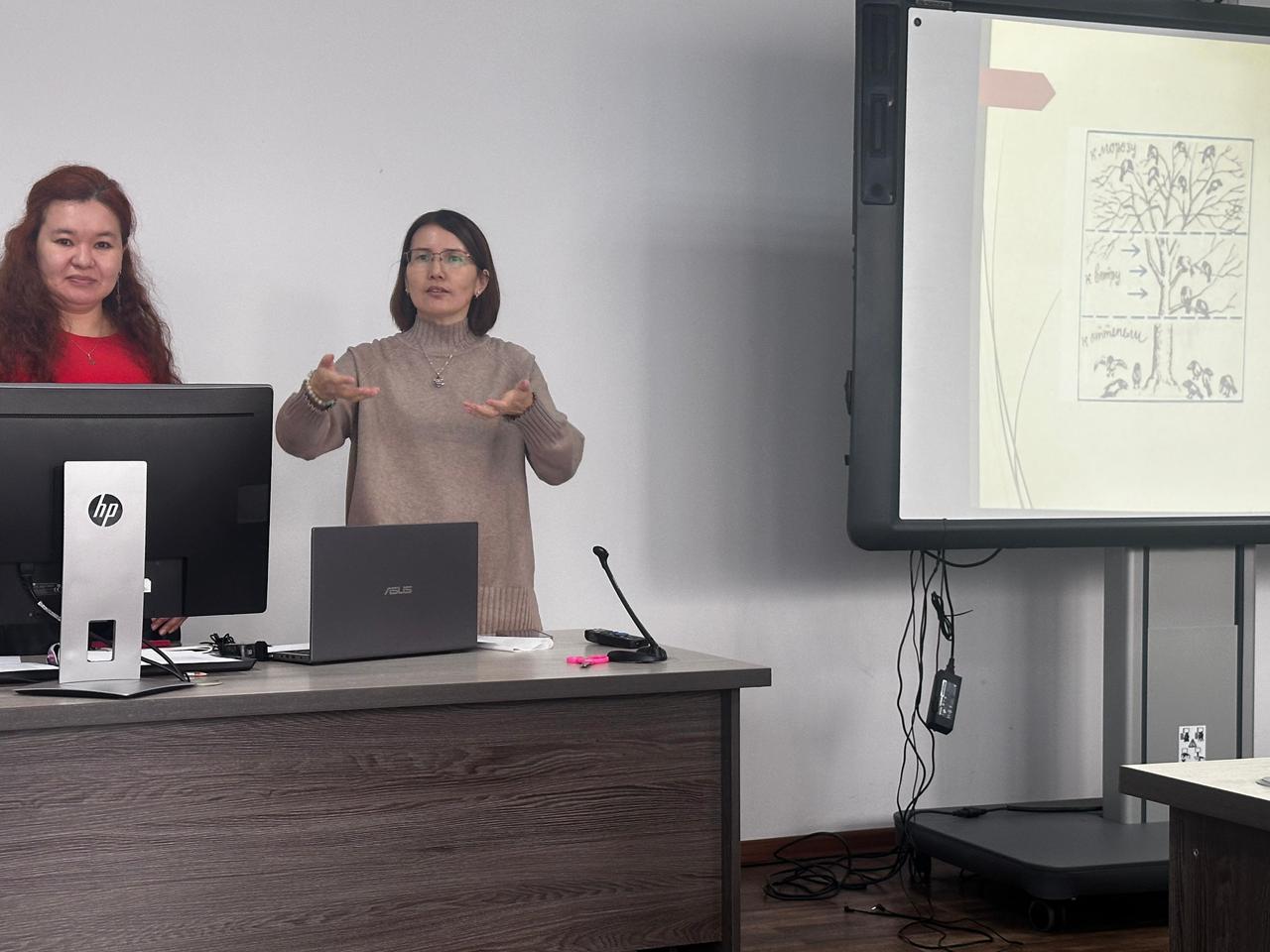
Students learned about signs based on observations of the sky, animal behavior, seasonal changes in winds, and the state of vegetation. Each sign was examined through the prism of modern meteorological science: where folk observations are confirmed by scientific data, and where they require rethinking. This comparative analysis not only enlivened the learning process, but also demonstrated the importance of integrating traditional knowledge into professional training.
The lesson was interactive, featuring riddles and rebuses, games (“I believe/I don't believe in omens,” “Come up with your own omen”), and discussions. The students actively participated in the work, shared family stories, and recalled superstitions familiar from childhood.
For the doctoral students, conducting the lesson was a significant step in the development of their teaching skills. They managed to create an atmosphere of trust and intellectual curiosity, demonstrating the importance of intergenerational and intercultural knowledge exchange. The students, in turn, broadened their horizons and gained the opportunity to look at their future profession from a new angle—through the combination of science and folk wisdom.
The open lesson demonstrated that traditional knowledge can not only harmoniously complement modern science, but also inspire young professionals to make deeper observations of nature and its patterns.
Other news