- Main
- News
- Within the Framework of the Sustainable Development Goals: Al-Farabi Kazakh National University and Sofia University Jointly Held the Ethnocultural Practice “Kazakhstan: History and Culture”
Within the Framework of the Sustainable Development Goals: Al-Farabi Kazakh National University and Sofia University Jointly Held the Ethnocultural Practice “Kazakhstan: History and Culture”
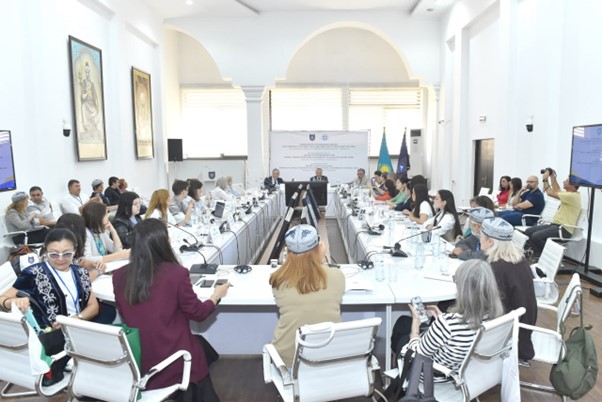
Based at the Faculty of Philosophy and Political Science, the Departments of Religious Studies and Cultural Studies, and the Department of General and Applied Psychology at Al-Farabi Kazakh National University, courses were developed and implemented for the general public outside the campus. Ethnocultural practice was organised within the framework of a bilateral agreement between Al-Farabi Kazakh National University and Sofia University St. Kliment Ohridski (Bulgaria), and within the framework of the implementation of SDG 4 – Quality Education (off-site educational programmes) and SDG 17 – Partnerships for Sustainable Development (institutional and multilateral partnerships, partnerships between universities).
Thirty guests from Bulgaria took part in the ethnocultural practice, including representatives of the Bulgarian Ministry of Education and Science, management, faculty and students of Sofia University St. Kliment Ohridski, lecturers from Plovdiv State University of Psychiatry, representatives of the Academy of the Ministry of Internal Affairs of Bulgaria, as well as about 10 participants from Kazakhstan.
As part of the implementation of ethnocultural practice, an international round table entitled «Intercultural Discussion: Points of Contact between Bulgaria and Central Asian Countries» was held on 2 September 2025. Participants discussed issues of cultural interaction, historical memory, and the role of education in preserving ethnocultural heritage. The start of ethnocultural practice in a university environment was symbolic, as education is a key tool for preserving and transmitting cultural memory.
The day continued with an introduction to the natural and cultural symbols of Almaty – the Medeu high-altitude skating rink and the Shymbulak resort, which clearly demonstrate the harmonious coexistence of the natural landscape and modern infrastructure. The Zailiyskiy Alatau mountains have always been perceived as a sacred landscape in Kazakh tradition, and visiting them allowed participants to feel the connection between nature, culture and identity. These sites symbolise modern Almaty as a city where natural heritage is organically integrated into the cultural and tourist space, reflecting a careful attitude towards the natural landscape and the sustainable development of the region.