- Main
- News
- Ethnocultural Practice within the Framework of the Sustainable Development Goals: Nomadic Culture and Intangible Heritage
Ethnocultural Practice within the Framework of the Sustainable Development Goals: Nomadic Culture and Intangible Heritage
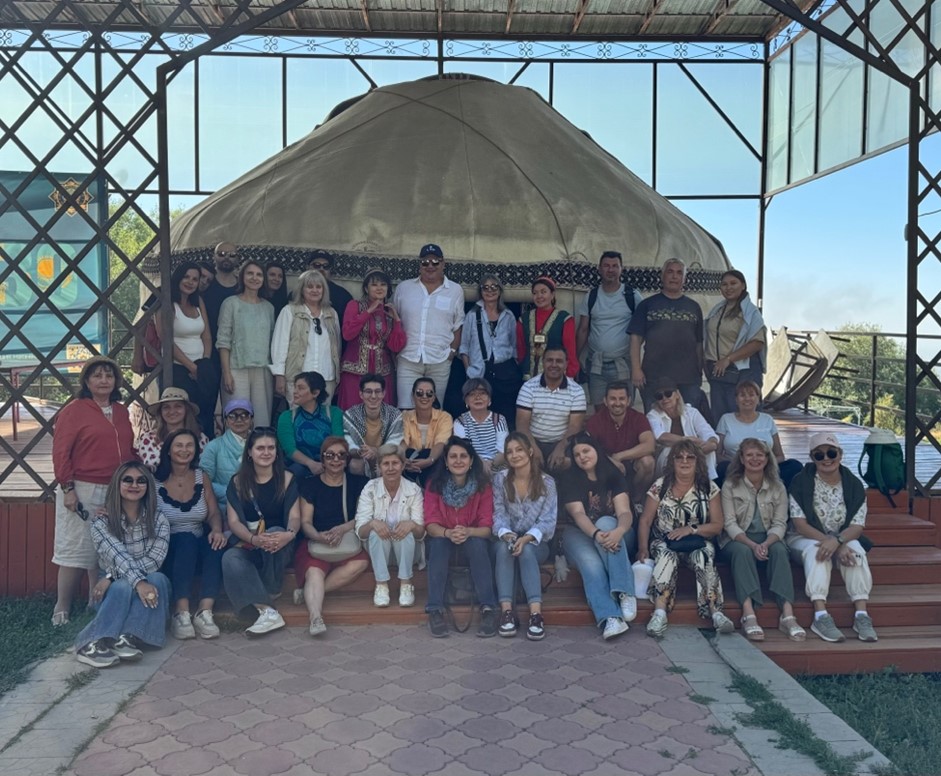
On 4 September 2025, as part of the implementation of the ethnocultural practice «Kazakhstan: History and Culture», a tour to the Ethno-Aul of the Gunnas was organised under the title «Nomadic Culture and Intangible Cultural Heritage».
The third day of the ethnocultural practice was held as part of SDG 4 — quality education, including sub-items aimed at practice-oriented learning, knowledge transfer in an informal educational environment, and familiarisation with traditional knowledge and skills. At the same time, a contribution was made to SDG 17 — Partnerships for the Goals — through interaction with ethnocultural centres, tradition bearers and local cultural institutions, which strengthened cooperation between Al-Farabi Kazakh National University and St. Kliment Ohridski University of Sofia, which supported the preservation of intangible cultural heritage as a valuable humanitarian resource.
More than 30 participants in the ethnocultural practice who came from Bulgaria and participants from Kazakhstan had the opportunity to immerse themselves in the traditional nomadic way of life of the Kazakhs, studying the structure of the yurt, national rituals, and the peculiarities of the Kazakhs' diet and everyday culture. Special attention was paid to equestrian art, where professors and students from Sofia University, Plovdiv State University, and the Academy of the Ministry of Internal Affairs of Bulgaria learned about horse riding skills and the historical significance of horse breeding for nomadic peoples.
Master classes were also held on traditional crafts—felt carpet making, weaving, and national embroidery—which allowed participants not only to see but also to try their hand at reproducing elements of cultural heritage. Interaction with local craftsmen helped to realise the importance of preserving intangible cultural heritage and passing it on to new generations.
The day culminated in discussion sessions and exchanges of experience with experts, where participants discussed the contemporary significance of nomadic culture, its influence on national identity, and opportunities for integrating traditions into educational programmes, which directly contributes to the implementation of SDGs 4 and 17.
Organising committee of the ethnocultural practice of Al-Farabi KazNU: Meirbayev B.B., Zholdubayeva A.K., Kabakova M.P., Khassiyetova Zh.Zh., Alibaeva A.