- Main
- News
- Taraz – Historical Heritage and the Dialogue of Civilizations: Another Day of Ethnocultural Practice
Taraz – Historical Heritage and the Dialogue of Civilizations: Another Day of Ethnocultural Practice
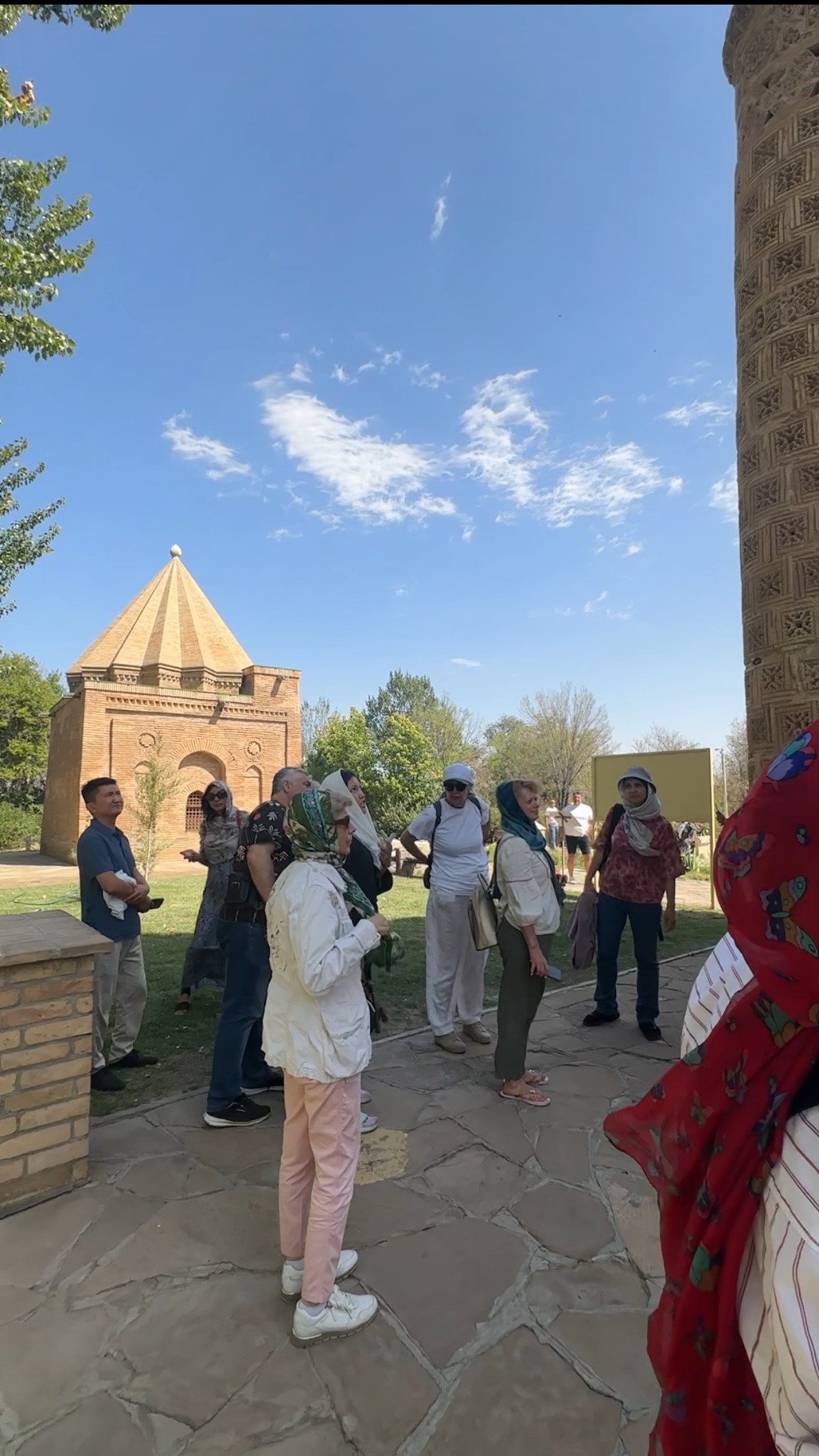
On 7 September 2025, as part of the developed ethnocultural practice based at the Faculty of Philosophy and Political Science, the Department of Religious Studies and Cultural Studies, as well as the Department of General and Applied Psychology of Al-Farabi Kazakh National University, the fifth day of the ethnocultural practice entitled «Taraz as a Space for Civilisational Dialogue» was held. More than 30 guests from Bulgaria took part in the ethnocultural practice, as well as the organising committee of the ethnocultural practice of Al-Farabi KazNU.
This day of ethnocultural practice was implemented within the framework of SDG 4 - ‘Quality Education’ and SDG 17 – «Partnerships for the Goals» and was dedicated to the city of Taraz, one of the oldest cultural and historical centres of the Great Silk Road. Taraz has historically served as an important crossroads of trade, cultural and spiritual routes in Central Asia, contributing to the development of intercultural dialogue and the formation of a unique urban civilisation in the Kazakh steppes. The city is a symbol of historical continuity, rich architectural heritage and significant spiritual traditions of the region.
During the day, participants visited the mausoleums of Aisha-Bibi and Babaja-Khatun, which are striking monuments of medieval architecture and important sites of religious and cultural heritage. These mausoleums reflect the high level of engineering thought of the time, aesthetic traditions and spiritual values of the local population. There was also a tour of the ancient city of Taraz, allowing participants to trace the centuries-old history of the city, its strategic importance on the Great Silk Road, and the processes of urban culture formation.
Visiting these historical and cultural sites allowed participants to study the history of the region, architecture and cultural practices in depth, forming historical, comparative and cultural thinking. Participants were able to understand the role of Taraz as an important centre of civilisational interaction, where the cultural traditions of different eras and peoples intertwine.
At the same time, this day contributed to the implementation of SDG 17, as the preservation and study of the monuments of the Great Silk Road requires international and interregional cooperation, partnerships between educational institutions and cultural organisations, and the strengthening of humanitarian ties.
This interdisciplinary and collaborative approach was fully in line with the objectives of SDG 4 and SDG 17, providing in-depth humanitarian education, fostering value-oriented thinking and promoting international cultural interaction.