The structure of a research article discussed on the second day of the Winter school
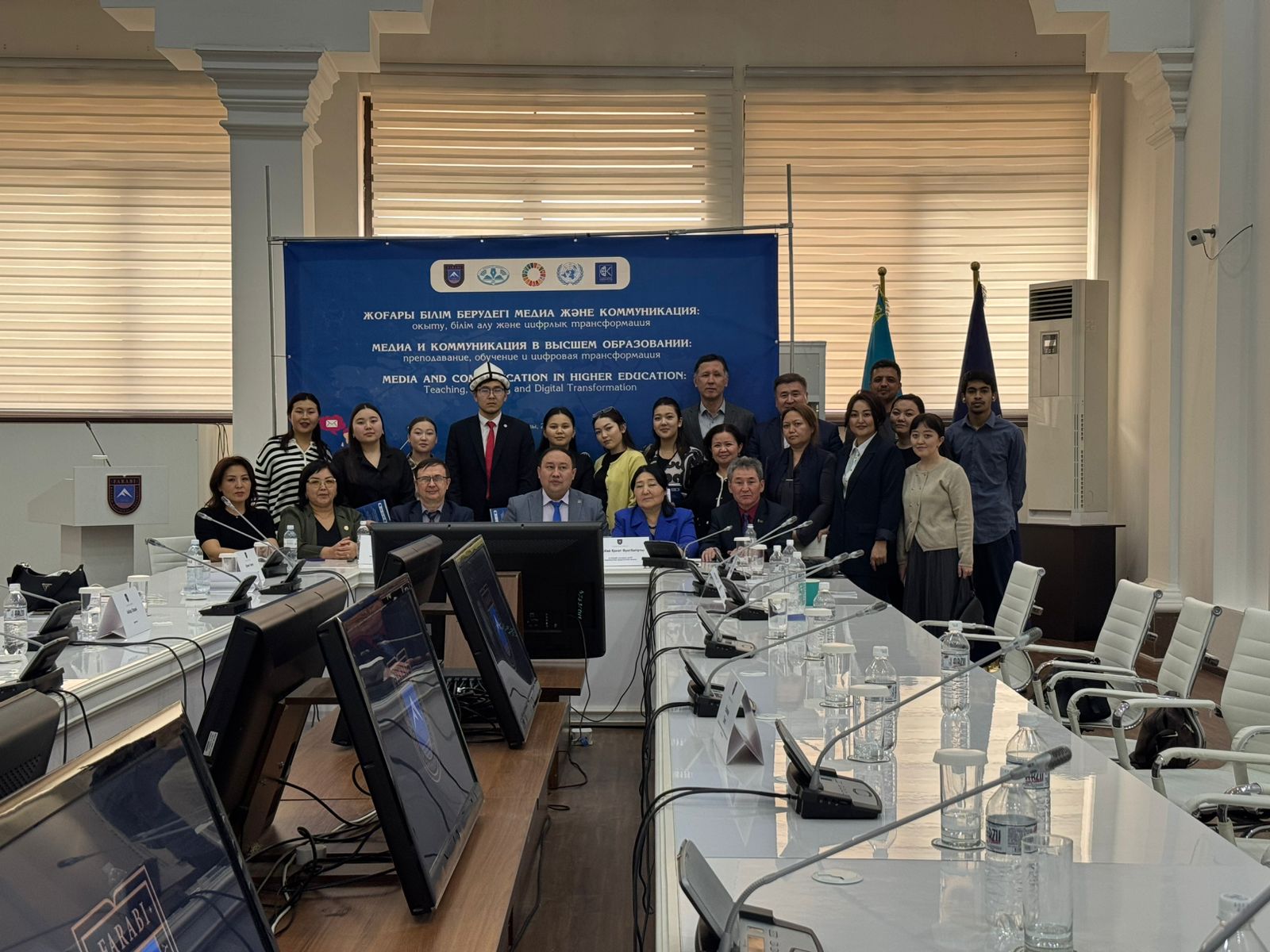
SDG-3 On the second day of the Winter School, held from February 3 to 13 under the theme «Media and Communication in Higher Education: Teaching, Learning, and Digital Transformation», Senior Lecturer Assel Alim delivered a lecture.
She began her presentation, entitled «Constructive-Experimental Examples in the Course «Research Methods», with an analysis of the structure of a scholarly article.
As the lecture was conducted in Russian, the article «The Transformation of Theatre Journalism in the Era of Multimedia Technologies» by S.N. Velitchenko, Professor at Al-Farabi Kazakh National University, published in 2024 in the Journalism series, was examined as an example.
It was noted that any research article begins with an abstract. The analyzed abstract, devoted to the transformation of theatre journalism in the multimedia era, identifies its new formats in terms of content, style, and informational value, and emphasizes that theatre journalism is not only an aesthetic phenomenon but also an integral part of art journalism that disseminates intercultural information.
Through examples, the lecturer demonstrated that an abstract should concisely reflect the purpose of the article, its scientific and practical significance, the methods used, and the keywords.
The scientific significance of the study lies in enriching both theory and practice through the description of new formats of online theatre journalism.
The theoretical aspect involves introducing new propositions into the field and testing hypotheses, while the practical aspect concerns the application of the results in art journalism, cultural studies, communication theory, and the teaching of theatre journalism.
The research methodology included a systematic approach, comparative analysis, and content analysis. Online theatre publications, websites, blogs, and video blogs were used as empirical material.
As a result, new genre trends in theatre journalism in the era of multimedia technologies were identified. The author’s recommendations may be applied in practice, particularly in courses and seminars, as well as in the development of theatre media communication.
In conclusion, it was emphasized that the study demonstrates the transformation of theatre journalism in the multimedia era, describes new formats, highlights their theoretical and practical significance, and sets directions for further research.
The full version of the article «A New Curriculum for the Course «Research Methods» at the Faculty of Journalism» can be found in the «Research» section of Issue №12, December 2025 of the socio-political journal «Thought».