Expert Game as a Tool for Studying the Dynamics of Biodiversity in Aquatic Ecosystems
Khamitova K.K., Lecturer of the UNESCO Chair forSustainable Development of the Faculty of Geography and Environmental Sciences, conducted an interactive business game entitled “Hydrological Expertise of the Biosphere” for first-year students of the educational program “Hydrology”. The activity was aimed at developing analytical and forecasting competencies in the field of sustainable water resource management and biodiversity conservation.
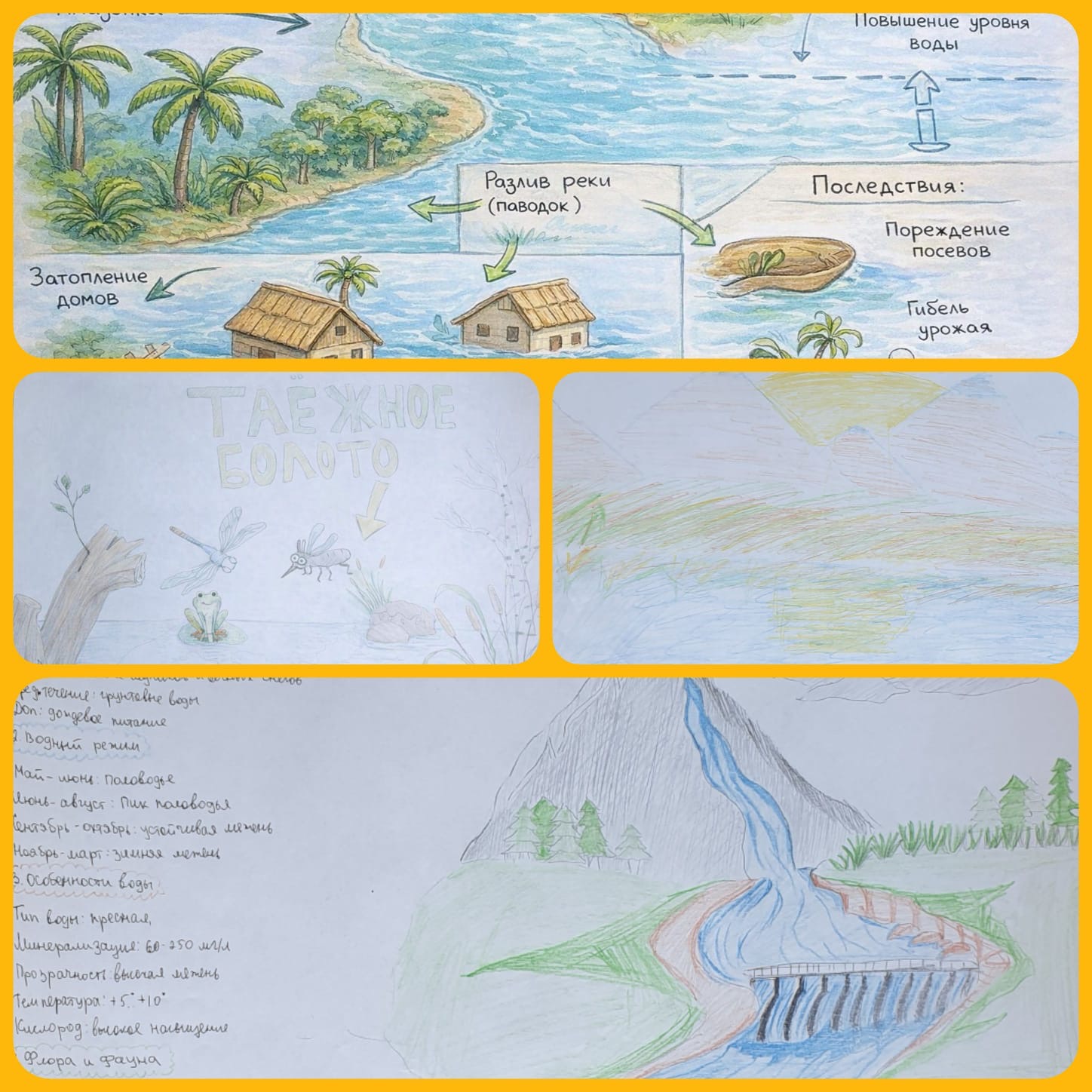
During the class, students acted as experts of an international commission on the state of biosphere waters. Each team received a card indicating a natural zone and a type of water body and prepared a “passport” of the aquatic ecosystem, including an analysis of hydrological characteristics, the structure of living matter, and its biogeochemical functions.
The following scenarios were assigned to the students:
• Taiga wetlands — environmental event: drought
• Mountain river — dam construction
• Tropical aquatic system — flood
• Tundra rivers — climate change
In the course of their work, future hydrologists analyzed the sources of water supply, features of the hydrological regime, chemical composition of water, and identified the structure of living, inert, and biogenic matter. Special attention was paid to the functions of living matter — gas, concentration, redox, and biofiltration functions.
At the second stage, participants assessed the consequences of environmental events for the hydrological regime: changes in water level, discharge, transparency, dissolved oxygen content, and mineralization. Students examined how natural and anthropogenic factors transform biocenoses, including the disappearance of sensitive species, dominance shifts, and changes in the trophic structure of ecosystems.
A particular emphasis of the game was placed on biodiversity as a key indicator of aquatic ecosystem sustainability. Students clearly observed that drought in taiga wetlands leads to a reduction of hydrophilic vegetation and disruption of peat formation processes; dam construction on a mountain river alters migration routes of aquatic organisms and water temperature regimes; flooding in tropical regions transforms the structure of riparian communities; and climate change in tundra rivers affects ice cover timing and species composition.
Within the framework of the expert forecast, teams evaluated changes in the functions of living matter, including self-purification capacity, nutrient cycling, and ecological stability. Possible global consequences were also considered: ecosystem degradation, biodiversity loss, changes in the carbon balance, and intensification of climate effects.
The game is directly related to the implementation of the UN Sustainable Development Goals (SDGs), particularly SDG 6 “Clean Water and Sanitation”, SDG 13 “Climate Action”, and SDG 15 “Life on Land”. The activity demonstrated the importance of comprehensive hydrological analysis for the conservation of aquatic ecosystems and biological diversity.
As a result, the teams formulated conclusions regarding the state of the studied ecosystems — from conditionally stable to degrading — providing scientific justification for their assessments.
The interactive format enabled students of the “Hydrology” program not only to consolidate theoretical knowledge but also to develop skills in environmental forecasting, systems analysis, and expert assessment of aquatic ecosystems under conditions of global change.