Scientific internship is an important stage in doctoral students’ careers and provides advantages for their scientific and professional development. First and foremost, the internship allows doctoral students to gain valuable experience working in a scientific environment and to become familiar with advanced research, methodologies, technologies, and trends in their field.
During the internship, doctoral students can deepen their knowledge in a specific scientific area and master new methods, which contributes to their professional growth. Additionally, the internship provides opportunities for doctoral students to interact with other scientists, researchers, and specialists, exchange experience and ideas, and establish collaboration on joint research projects.
During practical training, doctoral students can acquire new skills in scientific areas (for example, research methods, data analysis) as well as leadership, which enhances their competitiveness in the labor market.
As a result of the internship, doctoral students can participate in scientific publications and present research results at international conferences. This helps them disseminate their scientific ideas and advance their scientific careers. The internship also enables the establishment of new professional contacts, the creation of a network within the scientific community, and potential partnerships for future research.
At our university, doctoral students undergo scientific internships at universities where a scientific supervisor, selected according to the direction of their dissertation, is employed.
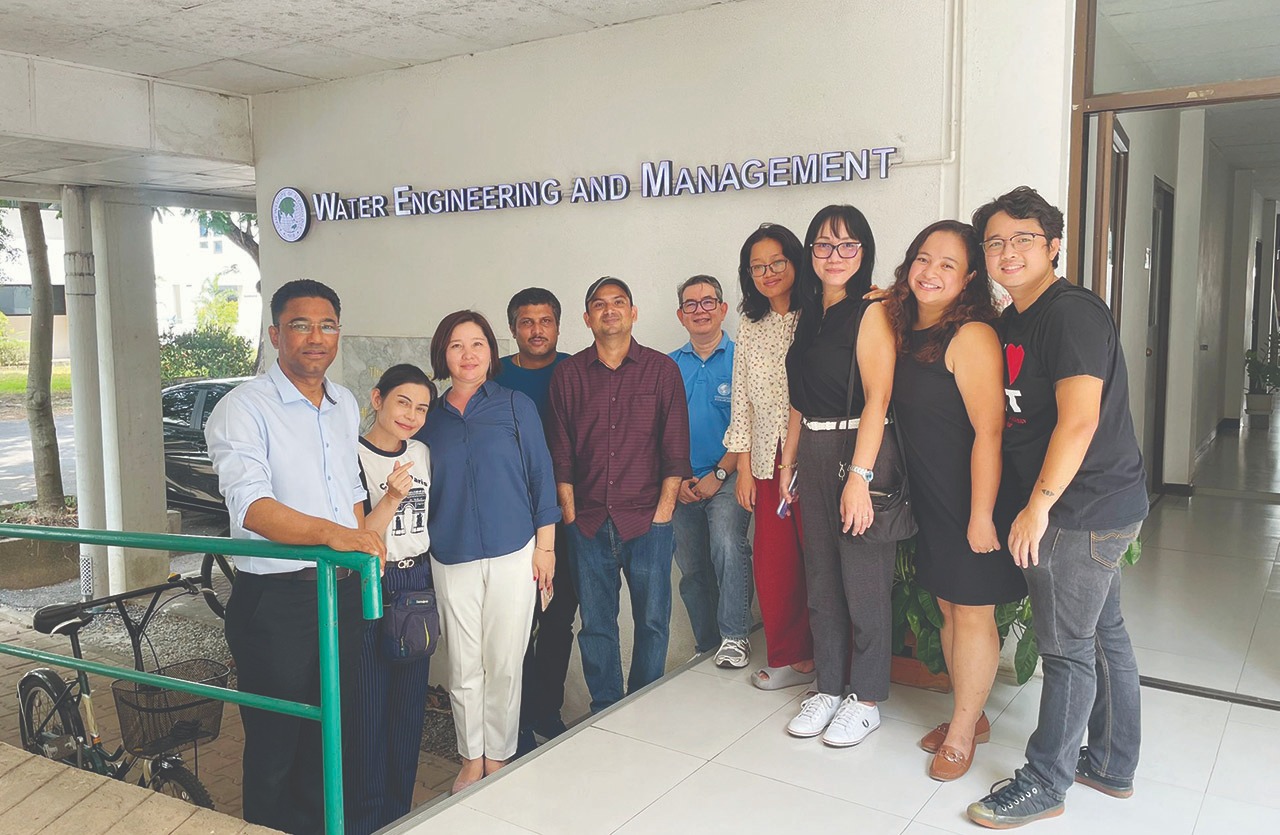
Asset Sagatbekkyzy, a 3rd-year doctoral student in the “Cartography” program at the Department of Cartography and Geoinformatics, Faculty of Geography and Nature Management, completed a scientific internship at the Asian Institute of Technology (AIT) in Bangkok, Thailand.
At AIT, in the Department of Water Engineering and Management, she became familiar with applied research methods and discussed her work with the department professors on the topic “Modeling and forecasting seasonal river flow variations in the Balkhash Lake basin based on GIS.” She also consulted with them regarding her dissertation. Working at the AIT scientific library, she supplemented the materials required for her dissertation. To enrich the theoretical part of her dissertation with new data, she worked with Scopus, Clarivate Analytics, EBSCO, ScienceDirect, and RSCI databases. Additionally, according to her research plan, she analyzed Convolutional Neural Network (CNN), Long Short-Term Memory (LSTM) network, and Soil and Water Assessment Tool (SWAT) models for forecasting seasonal river flow variations in the Balkhash basin. She paid particular attention to modeling parameters affecting seasonal river flow (snow cover, land surface, air temperature, precipitation) based on satellite imagery.
Currently, she is preparing a scientific article for publication using the information collected during her scientific internship at the mentioned university.
Aktoty BEKZHANOVA,
Lecturer, Department of Cartography and Geoinformatics