The number of competitive specialists will increase
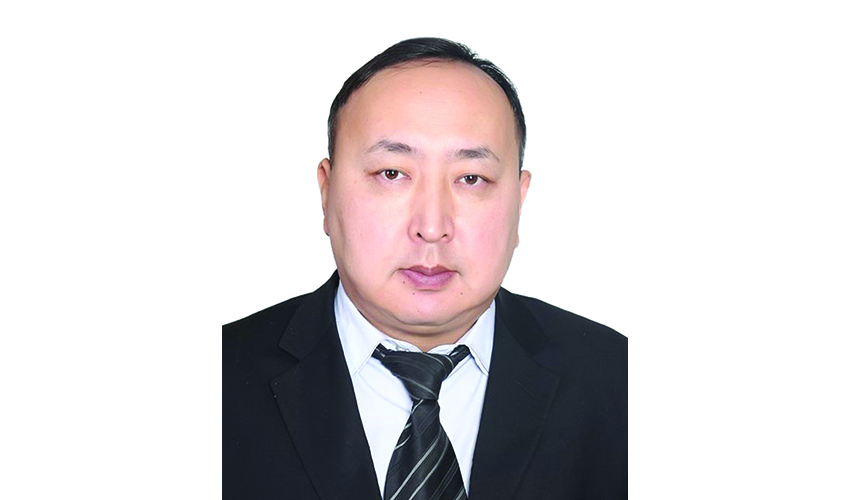
Darkhan MAMYTKHANOV
Candidate of Sociological Sciences:
In his September address to the nation, the Head of State raised and specifically emphasized the issue that “It is very important to gradually strengthen the country’s human resource potential”. Indeed, in today’s era of digital technologies, it is impossible to even peek through the door of civilization without qualified specialists. Therefore, it is essential not to diminish the value of personnel but to find ways to strengthen them. In addition, our President stated: “To improve the nation’s well-being, it is necessary to implement comprehensive measures and renew the system of social support for the population”, giving concrete instructions to the relevant institutions. So what are the ways to address the issues raised in the Address? What advanced practices can an educational institution offer? The correspondent of Qazaq universiteti newspaper spoke about these and other questions with senior lecturer of the Department of Sociology and Social Work at the Faculty of Philosophy and Political Science, Candidate of Sociological Sciences, Darkhan Mamytkanov.
– We still remember the phrase “all problems are solved by personnel.” Even today, the demand for qualified specialists has not decreased but only increased…
– Of course, in every period, the demand for qualified specialists has never diminished. As technology advances, the need for personnel who correspond to these changes remains relevant. However, we must note that according to the demands of the times, the need for some professions is decreasing, while others are developing in new directions. New professions are even emerging. In this regard, in recent years, new specialties that did not previously exist have been opened at our university. Ensuring the economy with qualified personnel is an extremely important task. The President clearly instructed: “First of all, it is necessary to eliminate the acute shortage of personnel observed in the fields of water management, energy, construction, and other sectors. It is also necessary to train qualified specialists for professions that will be in demand in the future.” Concrete work is already being carried out in this direction. The government is determined to integrate higher education into the international educational space. Already, 23 well-known foreign universities have begun operating in our country. Several branches of international universities are functioning at KazNU as well.
The improvement of people’s well-being and the quality of life is closely connected with socio-economic, political, legal, educational, scientific, and cultural relations.
We can now see that in our country, under global geopolitical conditions, internal social, economic, political, and cultural measures are being implemented to bring about progressive changes and improve the nation’s welfare. I believe that the principle of a “Listening State” initiated by our President and the “Just Kazakhstan” idea—aimed at uniting the nation around noble goals—contribute to clarifying citizens’ value orientations, strengthening their confidence in the future, and forming the foundation for societal development. In this regard, I would like to emphasize: one should not dismiss everything by saying “we lack this or that.” Thankfully, domestic universities have mastered the training of professional personnel. Our educational institution trains students in close connection with production. What does “linking education with production” mean? It means combining theoretical learning with practical experience. When our graduates go to work in companies, educational institutions, or other organizations, they immediately grasp the essence of their tasks. I can confidently say that their knowledge and practical skills match their specialties. For example, I have no concerns about the students I have taught. I am absolutely sure they will never embarrass their instructors.
– So you believe that in the future the personnel shortage will decrease?
– In the future, the share of patriotic young people who are professionally competent, ready to serve their country with integrity, competitive, versatile, and skilled in accordance with modern requirements will increase. Many initiatives are being supported to ensure that every sphere of society is provided with the necessary specialists, strengthening the country’s professional personnel potential. Opening branches of leading foreign universities in Kazakhstan, sending young people to study abroad, and giving them opportunities for internships to enhance their scientific potential—all of this contributes to training specialists according to global standards. The growing interest of youth in education and in new, in-demand professions can be seen in the increasing number of state grants each year. Modern educational programs place new demands and responsibilities not only on students but also on teaching staff, requiring the adoption of advanced practices, continuous development, and the enhancement of academic and scientific capacity. Supporting young scholars and lecturers in developing their scientific potential, improving their social well-being, and realizing their capabilities would contribute significantly to fostering innovation and professional growth among youth.
Reducing the personnel shortage in regions—especially in water management, energy, construction, and other fields—requires analyzing the reasons for shortages in these areas, examining ways to compensate for them, and using the results of such analyses to develop approaches for improving professional training. Work in this direction is extremely important.
– The Head of State announced that next year will be designated as the “Year of Vocational Professions.” Do you think this can give new momentum to specialists working in this field?
– Yes, the Address also emphasized the need for technical and vocational education institutions to train qualified specialists. Ensuring employment for those who graduate from vocational programs is a timely initiative. Promoting vocational professions and nurturing diligent, true professionals—people who achieve high professional success in their fields, become respected members of society through honest work, and attain prosperity—should be supported by society and recognized accordingly. Improving the systems of fair recognition and reward for such workers is important. This will motivate citizens to value their work, strive for success, and improve themselves. I believe that designating 2025 as the “Year of Vocational Professions” will help resolve many pressing issues in society. For example, it is currently difficult to find combine operators, mechanics, tractor operators, and other specialists needed in agriculture in rural areas. Vocational-technical schools once trained such professionals. Therefore, showing respect for workers and laborers is a duty of society.
– Thank you for the interview!
Interview conducted by
Gulzat NURMOLDAQYZY