New challenges in nuclear energy and digitalization
"The president noted that Kazakhstan fully supports the initiative of China "One Belt – One Road", noting that this project will not only increase the transit potential of the country, but also open the way for the transfer of new technologies." It was also noted that the active participation of national universities in the training of personnel in this process is important.
A new stage in nuclear power
The development of nuclear energy in Kazakhstan is a strategic task. In this direction, the use of Chinese experience and training of specialists in the field of nuclear technology was on the agenda. At the meeting of the president with the leadership of CNNC (China National Nuclear Corporation), new opportunities for bilateral cooperation were discussed.
The construction of a nuclear power plant is not only a guarantee of energy independence, but also an important step that gives impetus to the development of high – tech production. The contribution of domestic scientific schools plays a decisive role in the implementation of such projects.
KazNU-Forge of nuclear specialists
Al-Farabi Kazakh National University is a leading Center for training personnel in nuclear energy and nuclear physics. Currently, 455 students study in this direction. Among them are students and young scientists of the specialties" nuclear physics", "nuclear medicine", "nuclear engineering".
The university, together with JSC" NAC" Kazatomprom", is launching new training programs. Students also receive dual-degree education in leading universities in Russia, Japan, South Korea and China and undergo internships at the CERN Nuclear Laboratory.
Artificial intelligence and digitalization
The president highly appreciated China's achievements in digitalization and noted that Kazakhstan is open to cooperation in this area. Experts predict that by 2033 the volume of the artificial intelligence market may reach долларға 5 trillion.
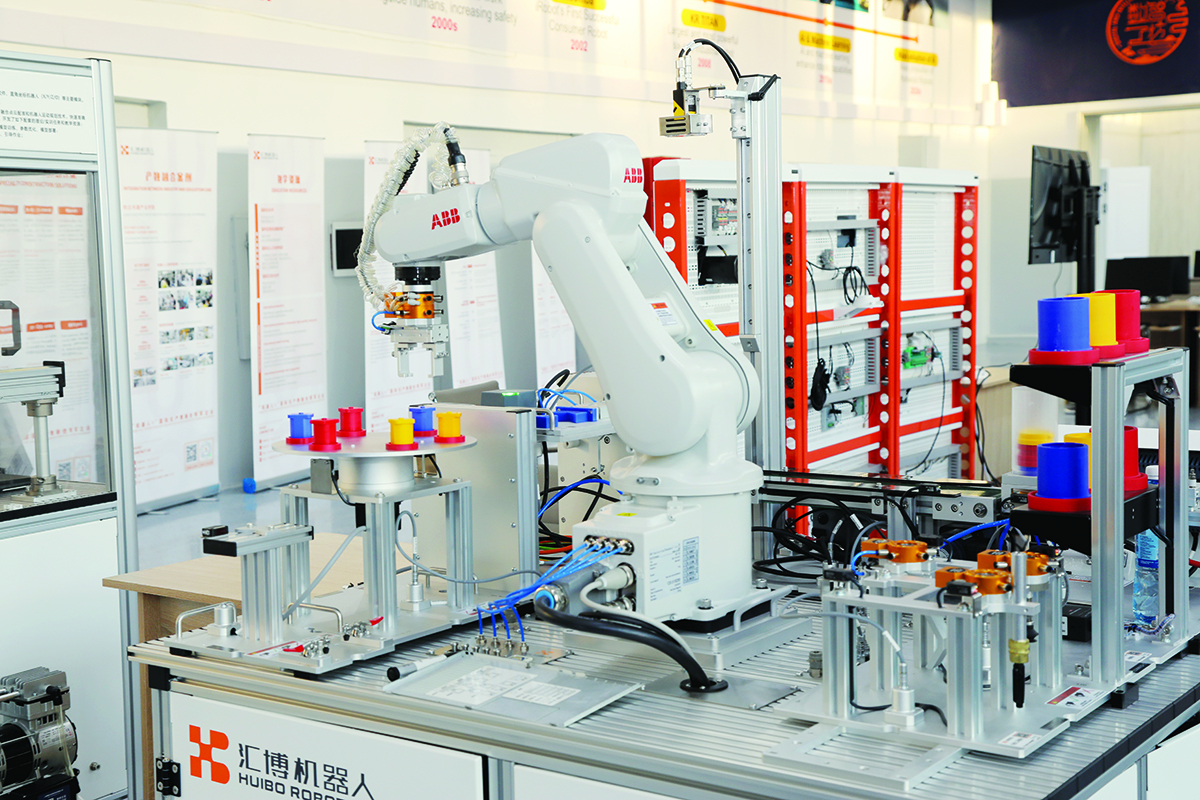
Kazakhstan also followed this process and launched the first supercomputer in the region. Kaznu successfully operates the Huawei center and the Kazakh-Chinese Joint Center for digital technologies and robotics. 749 students study here in the fields of Electronics, Telecommunications, photonics.
The Kazakh-Chinese strategic partnership covers not only traditional industries, but also new technological areas. Nuclear power and digitalization are clear proof of this.
Al-Farabi Kazakh National University will continue to be an active participant in this partnership as a leading educational institution that contributes to the formation of scientific human resources and technological development of the country.
Nurzada BEYSEN,
professor, dean of the Faculty of physics and technology