A Critical View on GMOs: An Open Discussion within the Course "Industrial Ecology"
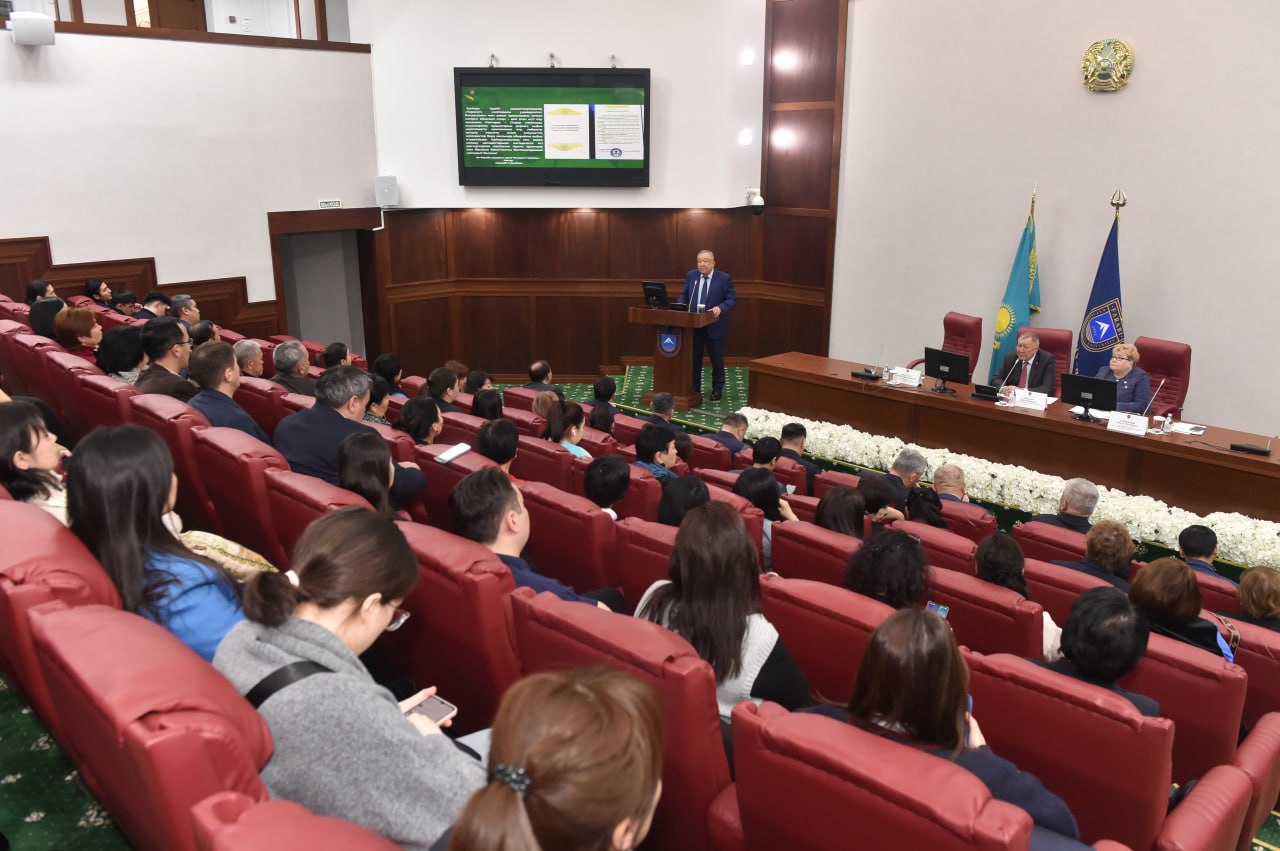
On November 21 of 2025, as part of the teaching practice of Baizakova N.T., who is a master’s student at the UNESCO Chair for Sustainable Development, an open seminar on the course "Industrial Ecology" was held for 3rd-year students of the "Ecology" program. The class format was unusual - a debate on the topic "For and Against GMOs," in which two teams participated.
At the beginning of the session, the master’s student provided an introductory explanation of what GMOs are, what technologies are used to create them, and why the topic of genetically modified organisms remains so controversial worldwide.
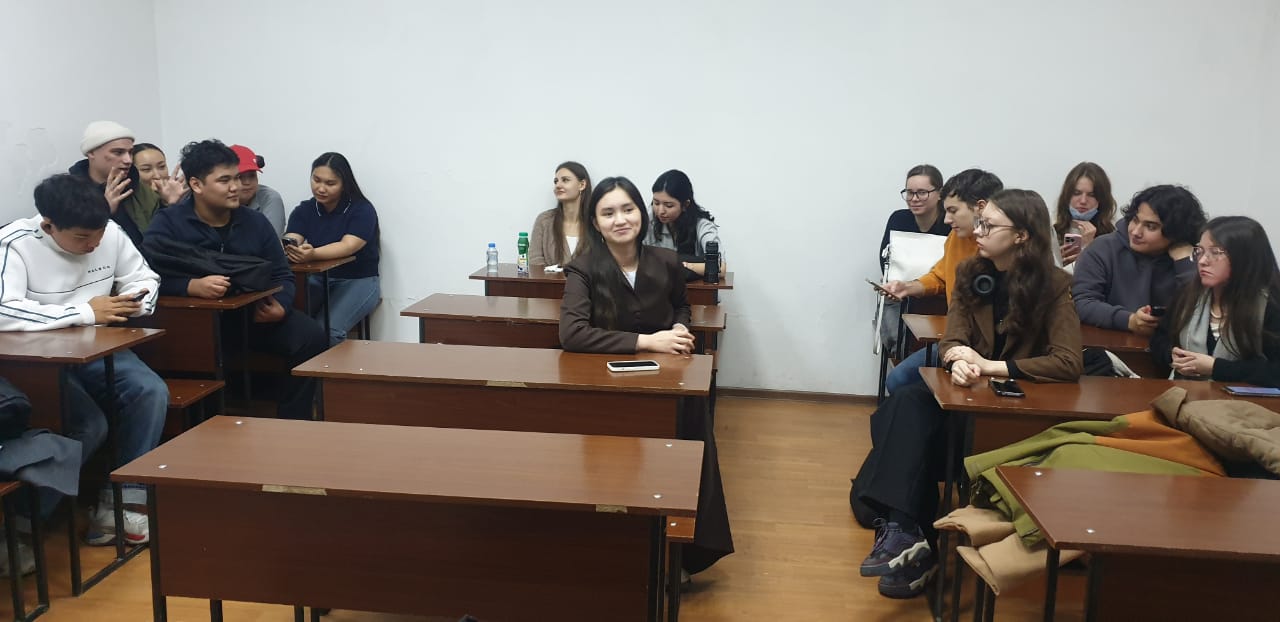
Then the teams each presented their positions.
The students explained:
- How GMO technologies originated,
- Which countries are leaders (USA, Brazil, Argentina, Canada, China, etc.),
- Which crops are most frequently modified,
- The situation in Kazakhstan and which organizations and research centers are involved in this field,
- The potential ecological, economic and social consequences of implementing GMO products.
The seminar was attended by the curator-adviser Khamitova K.K., who supported the teams’ work and provided them with her recommendations. Each team presented arguments for and against the use of GMOs, drawing on global examples, scientific research and real cases.
The students noted that in the field of GMO crop production, large monopolists often dominate, which creates specific ecological and economic risks. At the same time, they emphasized that GMOs also have certain advantages and in many European countries consumers freely choose whether to buy GMO or non-GMO products.
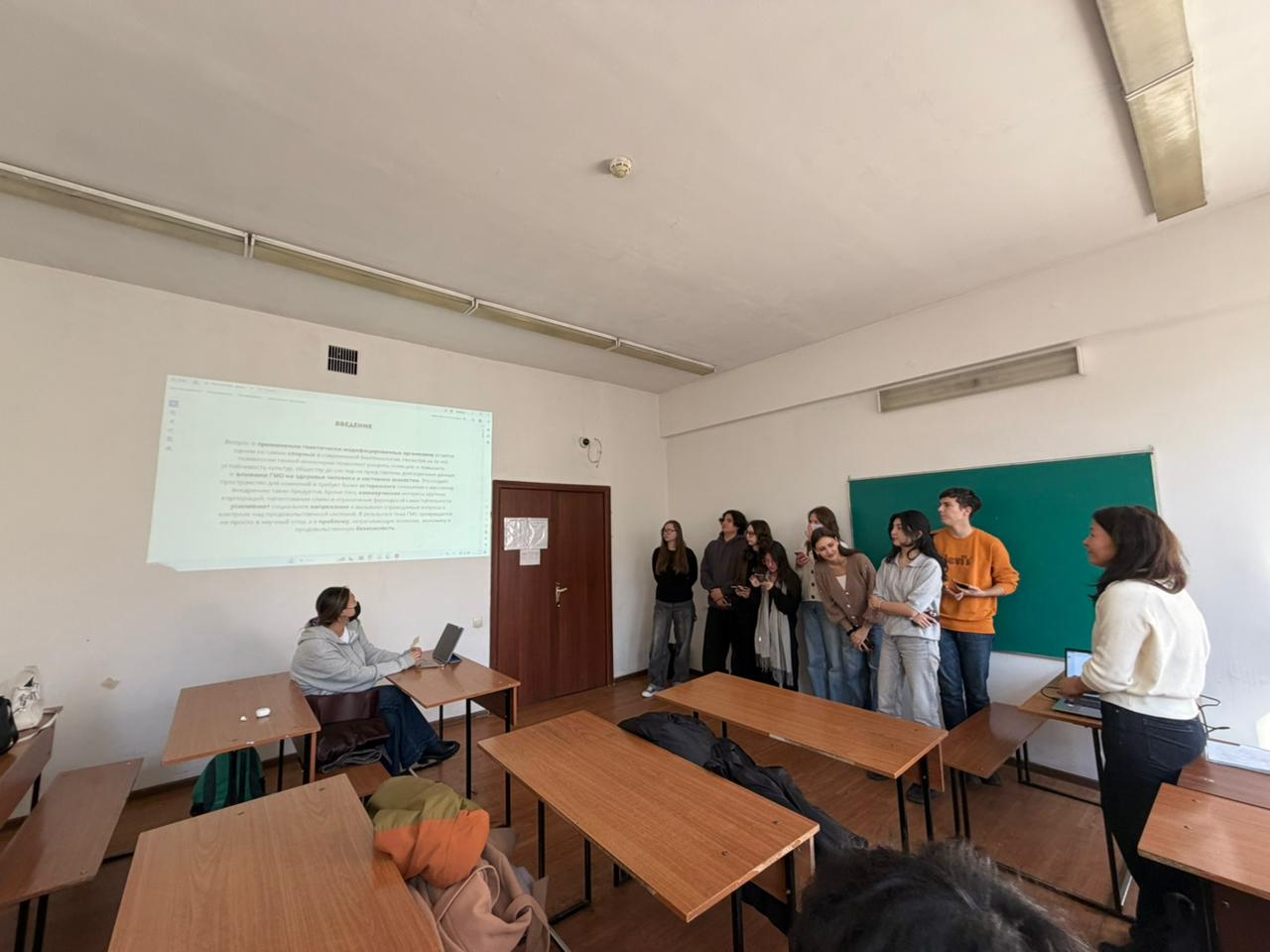
At the conclusion of the discussion, the students reached a general consensus:
Kazakhstan is likely to develop GMO technologies over time, but not on as large a global scale as, for example, in the USA. The debate participants identified the optimal approach as targeted implementation of biotechnology in areas where it truly enhances agricultural sustainability and reduces ecological risks.
Thanks to the master’s student Baizakova N.T., for the interesting format and to the students for their engagement and well-reasoned arguments!