- Main
- News
- International Educational and Methodological Conference "Artificial Intelligence in the educational process: opportunities, risks and ethical challenges"
International Educational and Methodological Conference "Artificial Intelligence in the educational process: opportunities, risks and ethical challenges"
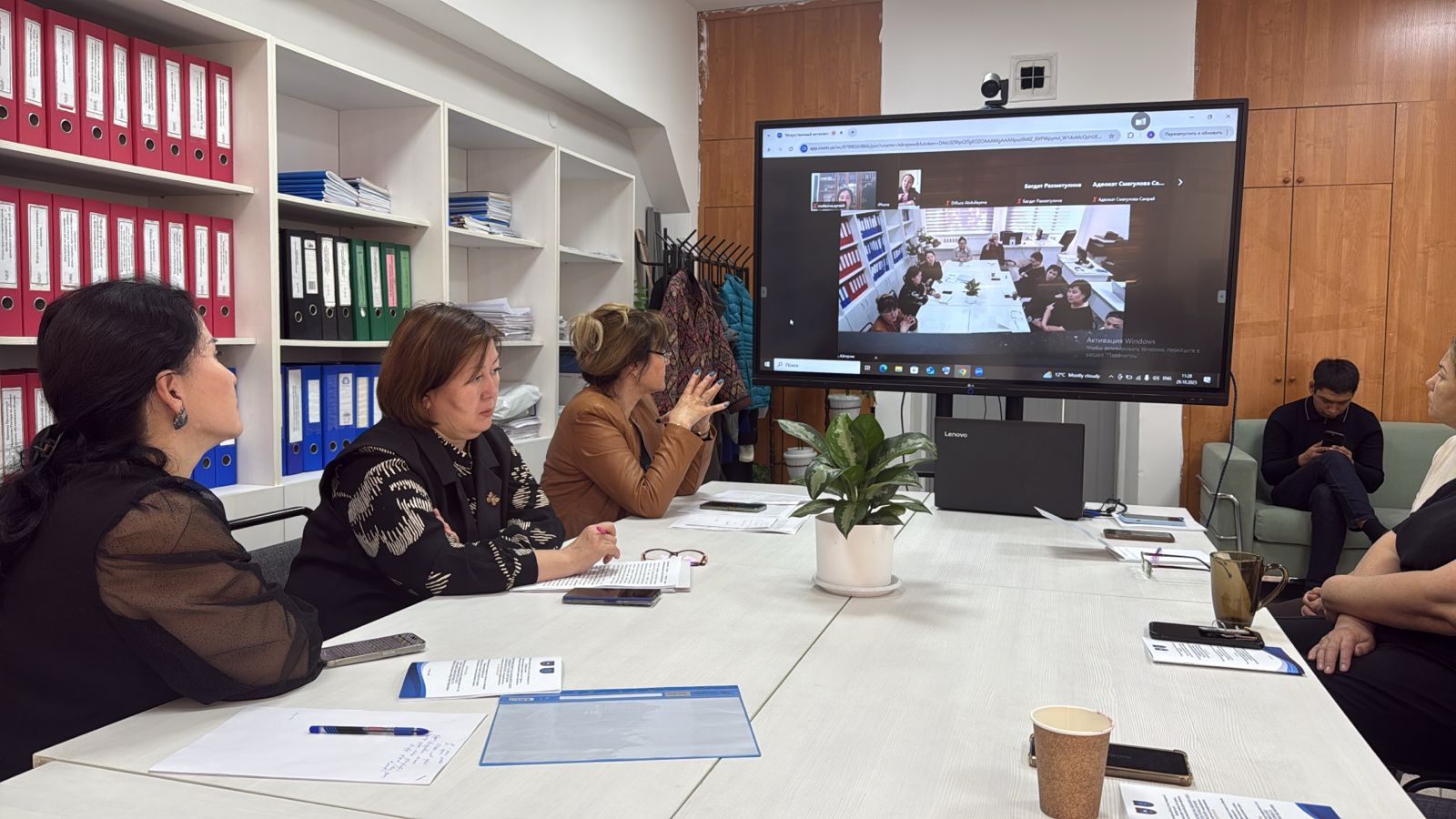
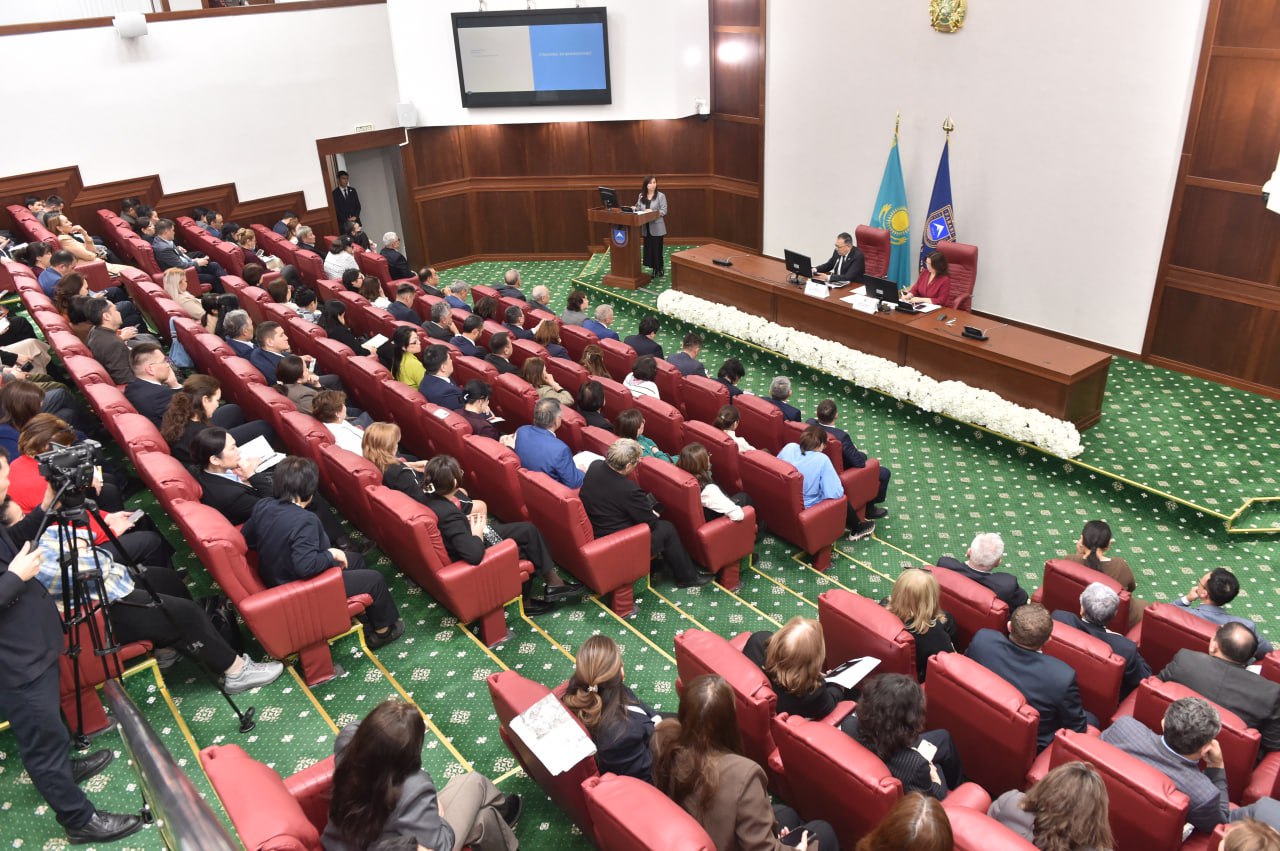
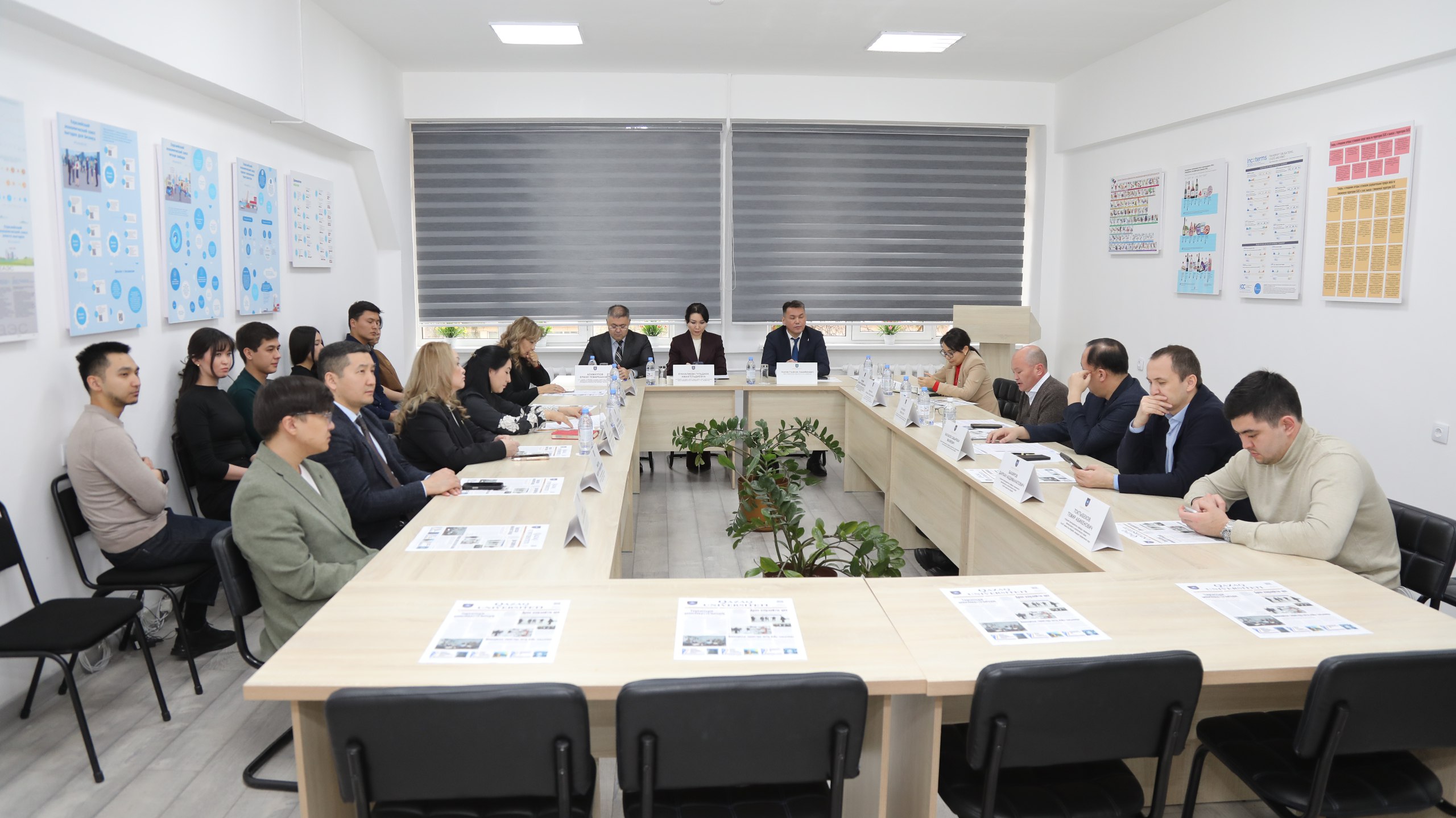
On October 29, 2025, an international educational and methodological conference on "Artificial Intelligence in the educational process: opportunities, risks and ethical challenges" was held at the Faculty of Law of the Al-Farabi Kazakh National University. The event was organized by the Department of Theory and History of State and Law, Constitutional and Administrative Law. The conference was held offline and online.

Within the framework of the conference, leading scientists and teachers from Kazakhstan, Uzbekistan and Kyrgyzstan spoke, who discussed topical issues of the use of artificial intelligence in the field of legal education, the prospects for digitalization of the educational process and the importance of ethical responsibility in the use of technology.
Ualikhan Akypbekovich Akhatov, Dean of the Faculty of Law of KazNU, opened the conference, emphasizing the relevance of the topic of introducing artificial intelligence into the modern educational process and the importance of exchanging experience between representatives of the scientific community of Kazakhstan and other countries.
Karlygash Rahimzhanovna Useinova, PhD, Head of the Department of Theory and History of State and Law, Constitutional and Administrative Law of the Al-Farabi Kazakh National University, referring to the issues of introducing digital technologies into the teaching of legal disciplines, noted that artificial intelligence is becoming an integral part of modern education, opening up new opportunities for learning and research, as well as requiring an understanding of the ethical and legal foundations of its use.
Presentations were made at the conference by Zhamaladen Ibrahimuly, Professor of the Department of Constitutional and Civil Law of the L.N. Gumilyov Eurasian National University, Doctor of Law, and shared his thoughts on the possibilities of using artificial intelligence technologies in higher education. The speaker noted that AI affects not only the forms and methods of teaching, but also the very understanding of the educational process as an interaction between humans and technology.
Associate Professor of the Department of International Law and Human Rights at Tashkent State Law University, Dr. Azkhodzhayeva Rosa Altynovna, reviewed in her speeches the trends in the development of artificial intelligence technologies in education, as well as possible scenarios for the application and impact of GPT. The negative and positive aspects of using GPT in education were touched upon.
Aksunkar Islanbekovna Birmanova, Head of the Department of Theory and History of State and Law of the E.A.Buketov Karaganda National Research University, PhD, Associate Professor, stressed that artificial intelligence is becoming one of the key factors in the transformation of the education system today. The speaker noted that the modernization of education using AI involves a transition from the traditional model of knowledge transfer to a more flexible, adaptive and personality-oriented student. With the help of intelligent systems, it is possible to create individual learning paths, automate knowledge assessment and improve the effectiveness of feedback between teachers and students.
Alua Salamatovna Ibraeva, PhD, Professor of the Department of Theory and History of State and Law, Constitutional and Administrative Law of Al-Farabi Kazakh National University, shared her experience in using artificial intelligence technologies in the process of developing and improving educational programs in the legal field. She noted that modern digital tools make it possible to conduct an in-depth analysis of curricula, identify gaps in the content of disciplines and form more flexible and adaptive educational trajectories that meet the requirements of the time. The professor emphasized that artificial intelligence can become an effective assistant in assessing the relevance of educational materials, predicting educational outcomes and developing competencies in demand in the labor market. Thanks to the use of AI, more accurate modeling of educational processes is possible, which makes it possible to combine academic standards with innovative teaching methods. The speaker paid special attention to the experience of al-Farabi Kazakh National University in creating an innovative program based on the integration of digital technologies and an interdisciplinary approach. Alua Salamatovna noted that when developing such a program, international trends were taken into account, and artificial intelligence was used as a tool for data analysis and optimization of educational content.
Head of the Department of Law of Kokshetau University named after Sh. Ualikhanov, PhD in Law, Bagdat Saginganovna Rakhmetulina, paid special attention to the issue of improving the quality of legal education through the use of AI in the analytical and research work of students. According to her, artificial intelligence can help in analyzing court decisions, working with large amounts of legal information and preparing legal documents, thereby forming new competencies for future specialists. At the same time, she stressed that the process of digital modernization requires a balanced approach and an understanding of the risks – loss of human interaction, possible algorithm errors and the threat of academic dishonesty. Therefore, the key condition for the successful implementation of technology, according to the speaker, is to maintain a balance between innovation and humanistic principles of education.
Associate Professor of the Department of Theory and History of State and Law, Constitutional and Administrative Law at KazNU.Al-Farabi, Doctor of Law, Dina Muratovna Baymakhanova, in her speech touched upon one of the most relevant and controversial topics of modern education — the influence of artificial intelligence on the process of students' independent work (SRS). She noted that, on the one hand, AI opens up wide opportunities for self-education by providing access to instant consultations, text analysis, modeling of legal situations and preparation of educational materials. On the other hand, the use of such technologies raises a number of serious methodological and ethical problems. The speaker emphasized that students' excessive dependence on artificial intelligence can reduce the level of critical thinking and independence in completing learning tasks. In this regard, it is particularly important to develop skills for the conscious and correct use of AI, where the student is not a passive user, but an active participant in the educational process.
Zhanar Amanzhanovna Kegembayeva, PhD, Professor of the Department of Theory and History of State and Law, Constitutional and Administrative Law of Al-Farabi Kazakh National University, presented in her speech an innovative approach to the use of artificial intelligence in teaching students legal skills related to the preparation of administrative acts. She noted that modern technologies can significantly improve the quality of education if AI is used not as a substitute for human analytical activity, but as a tool for modeling and practical development of legal situations. The professor paid special attention to the concept of teaching tools – the ability to formulate precise and logically structured queries to artificial intelligence systems. In her opinion, this is becoming a new area of methodological training for lawyers, since the correctness of the question posed depends on the correctness and legal accuracy of the result obtained.
Almagul Zhagaltayevna Tussupova, Associate Professor of the Department of International Law at Al-Farabi Kazakh National University, drew attention to the need to develop internal university regulations governing the use of AI in the learning process, especially in terms of authorship, responsibility for generated materials and personal data protection. She also stressed that international law is already considering issues related to the legal status of results created by artificial intelligence, and this should be reflected in national educational policies. Almagul Zhagaltayevna highlighted a number of limitations associated with the use of AI in education: the risk of students losing critical thinking, the possibility of replacing original work with automatically generated texts, as well as ethical issues such as information distortion or discriminatory algorithms.
Associate Professor of the Department of Theory and History of State and Law, Constitutional and Administrative Law at Al-Farabi Kazakh National University, Candidate of Law Najiya Khusainovna Kalisheva emphasized in her speech that the rapid development of artificial intelligence technologies poses new challenges to the legal community that require understanding and adaptation of legal mechanisms. According to her, the legal regulation of AI is one of the most relevant topics of modern law, as it is directly related to issues of responsibility, human rights protection, cybersecurity and ethical standards.
Associate Professor of the Department of Theory and History of State and Law, Constitutional and Administrative Law at Al-Farabi Kazakh National University, Candidate of Law Mynbatyrova Nurlaym Kambatyrovna noted in her speech that modern artificial intelligence technologies open up new horizons for the development of education, especially in the field of legal training. She emphasized that AI is becoming not just an auxiliary tool, but a full-fledged participant in the educational process, capable of optimizing both teaching and evaluating students' knowledgeciate Professor of the Department of Theory and History of State and Law, Constitutional and Administrative Law at Al-Farabi Kazakh National University, Candidate of Law Mynbatyrova Nurlaym Kambatyrovna noted in her speech that modern artificial intelligence technologies open up new horizons for the development of education, especially in the field of legal training. She emphasized that AI is becoming not just an auxiliary too, but a full-fledged participant in the educational process, capable of optimizing both teaching and evaluating students' knowledge. The speaker elaborated on the practical possibilities of introducing AI into the learning process. In particular, she highlighted such areas as automated verification of written papers, adaptive testing, analysis of academic performance and the formation of individual learning trajectories. According to her, the use of intelligent systems not only saves the teacher's time, but also increases the objectivity of knowledge assessment.
During the conference, participants exchanged experiences in introducing digital technologies into the educational process, discussed thng the conference, participants exchan experiences in introducing digital technologies into the educational process, discussed the risks and prospects of using artificial intelligence in higher educatio
The organizer is the Department of Theory and History of State and Law, Constitutional and Administrative Law of Al-Farabi Kazakh National University
Other news