Modern Approaches to Learning: Coursera in the Educational Process
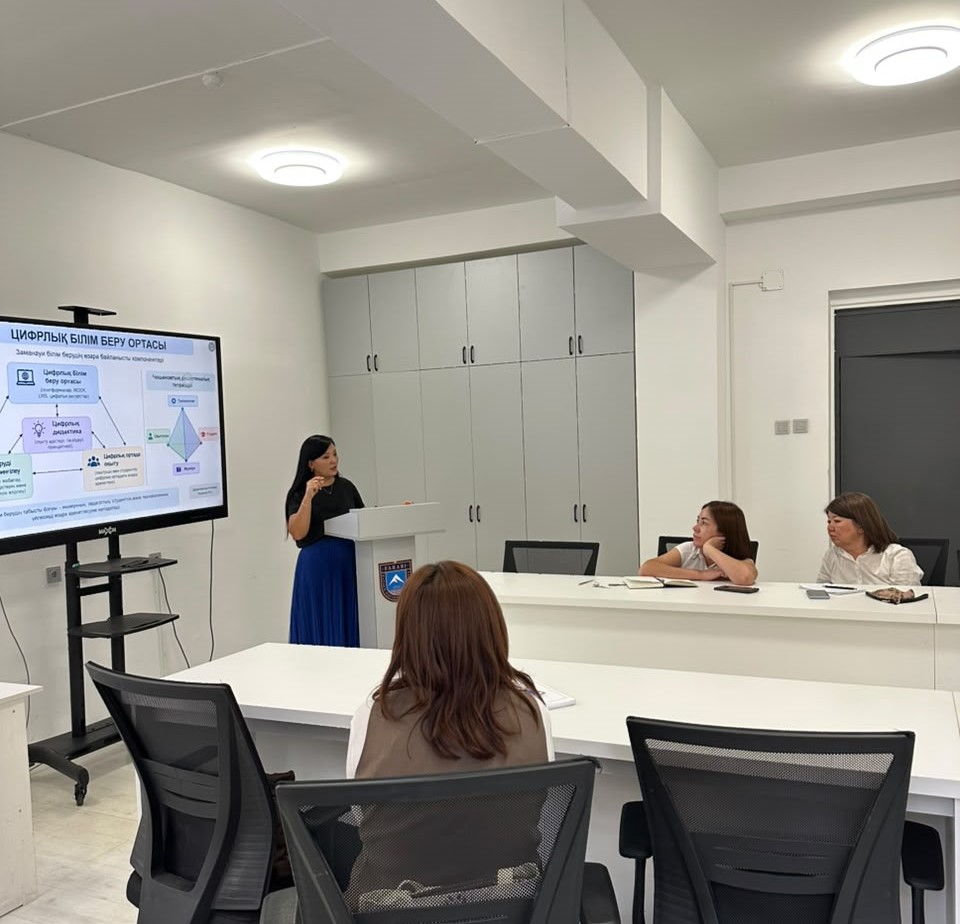
On 16 September 2026, the Faculty of Geography and Environmental Sciences of Al-Farabi Kazakh National University held a methodological seminar entitled “Integrating Coursera Courses into the Educational Process.”
During the seminar, A. Shaken, Deputy Dean for Academic and Methodological Affairs, provided faculty members with a detailed overview of the main models for integrating Massive Open Online Courses (MOOCs) into the educational process. Various formats were discussed, including the use of online courses as supplementary educational resources and materials for students’ independent study, the partial integration of individual topics and modules into course content, and the use of Coursera courses within a blended learning format.
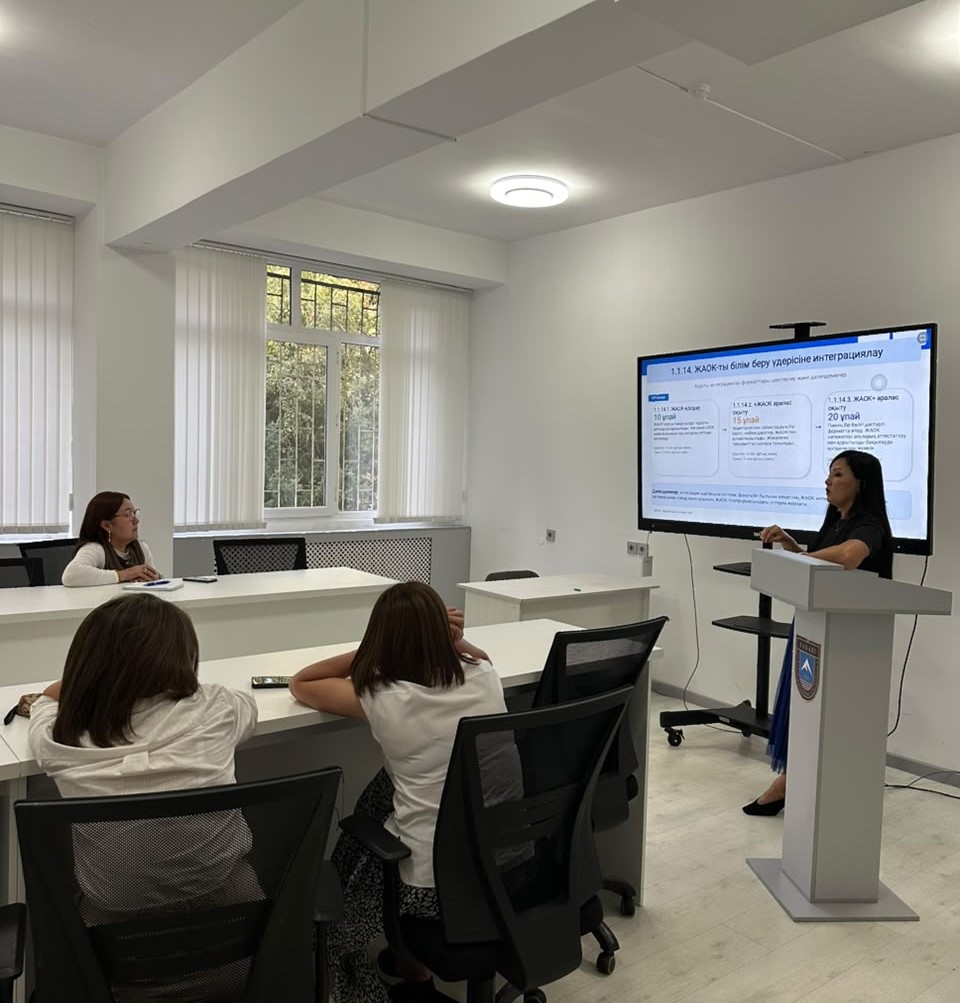
Particular attention was paid to aligning selected online courses with course learning outcomes and workload, procedures for recognizing learning outcomes, the development of course integration maps, the use of online course results in ongoing and final assessment, and the preparation of the required supporting documentation. Faculty members were provided with detailed explanations of the documentation requirements for MOOC integration, as well as practical approaches to incorporating online courses into the educational process.
Participants were also introduced to the opportunities available through the Coursera platform, the principles of selecting online courses in accordance with course content and intended learning outcomes, and the methodological support provided by BMG UpSkill. This support includes consultations, analysis of selected courses, preparation of recommended course lists, and methodological guidance throughout the process of integrating online courses into university curricula.
The seminar was conducted in an interactive format that encouraged professional discussion. Faculty members discussed practical and organizational aspects of working with the Coursera platform and raised questions concerning course selection, integration formats, recognition of learning outcomes, and the preparation of relevant documentation. By the end of the seminar, participants received answers to their questions as well as practical recommendations for the further integration of Coursera courses into the disciplines they teach.
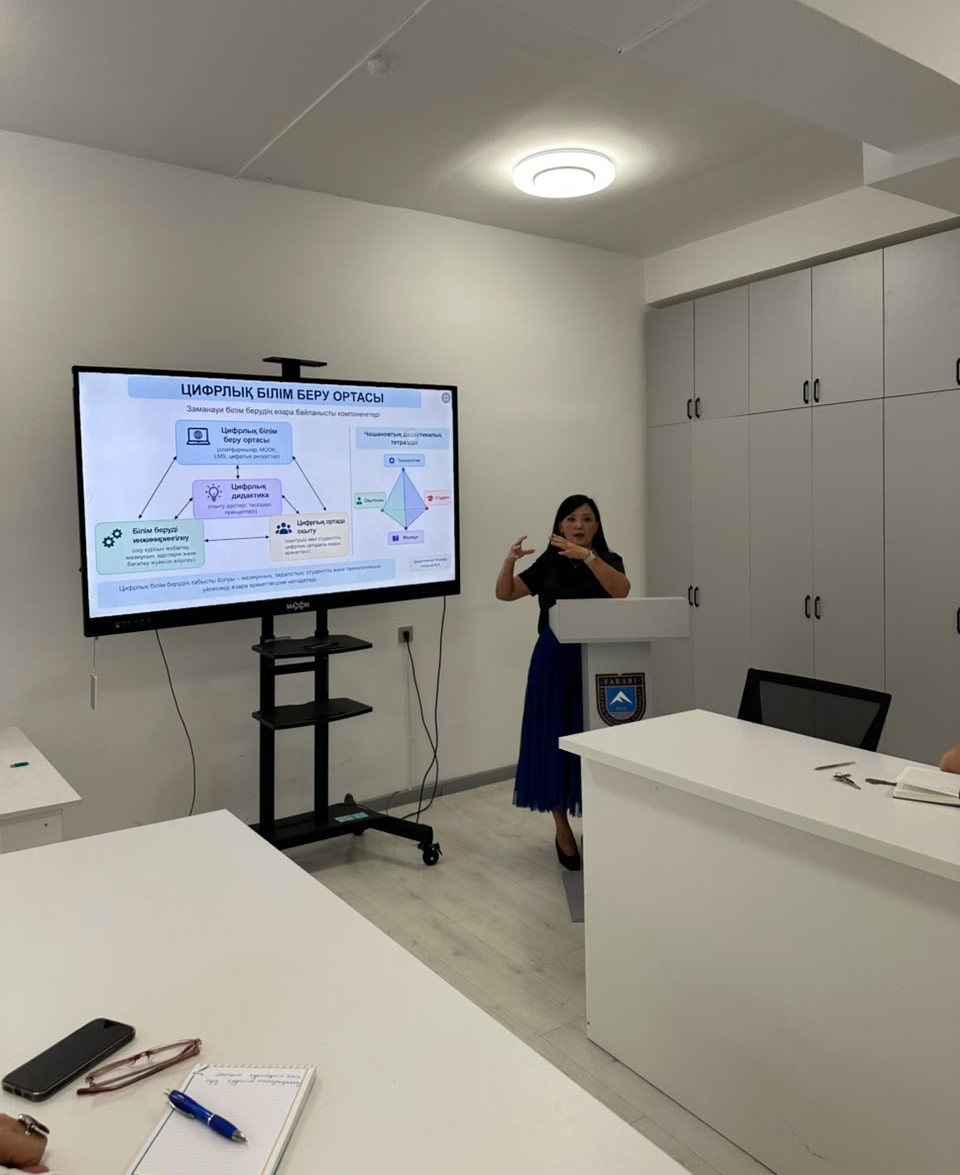
The seminar contributes to the implementation of Sustainable Development Goal 4 “Quality Education”, which aims to ensure inclusive and equitable quality education, promote lifelong learning opportunities, and support the development of modern educational technologies. The integration of international online courses expands access to high-quality educational resources, strengthens the digital competencies of both faculty members and students, and supports the introduction of innovative approaches to teaching and learning.
The use of digital learning platforms and international educational resources is also aligned with SDG 9 “Industry, Innovation and Infrastructure” and SDG 17 “Partnerships for the Goals”, contributing to the adoption of innovative solutions in education and strengthening cooperation with international educational platforms and partners.
Other news