Traditional Korean Chuseok Festival Celebrated at the Department of the Far East
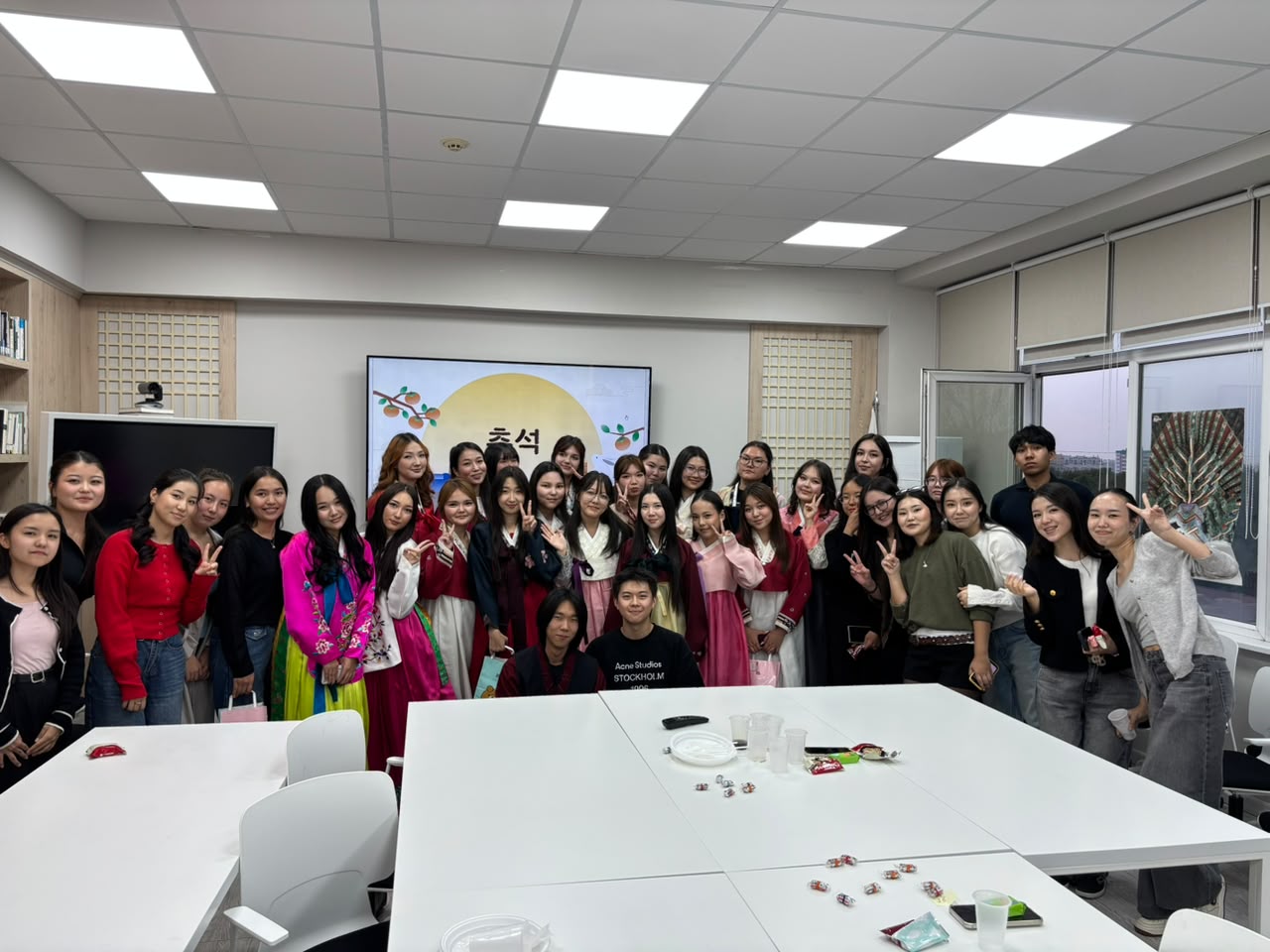
On September 30, 2026, a festive event dedicated to Chuseok (추석), one of Korea’s most important traditional holidays, was held at the Department of the Far East of Al-Farabi Kazakh National University. The event was organized by the Korean Studies Section of the Department of the Far East, Faculty of Oriental Studies.
The main objective of the event was to introduce first-year students to the history, culture, and traditions of Chuseok, while strengthening connections between students of different academic years and fostering friendship and a sense of community.
Chuseok is a traditional Korean harvest festival that symbolizes gratitude for a bountiful harvest, respect for ancestors, and the preservation of family values. The holiday holds a special place in Korea’s cultural heritage and plays an important role in passing national traditions from one generation to the next.
As part of the celebration, fourth-year students prepared a special festive program for first-year students. The program featured creative performances, introductions to Korean customs and traditions, traditional Korean games, and various interactive activities.
Special attention was given to introducing students to traditional Korean cuisine. Participants had the opportunity to taste traditional dishes and gain a deeper understanding of Korean festive dining customs.
The Chuseok celebration not only broadened students’ knowledge of Korean culture but also provided a valuable opportunity for informal communication, the exchange of experiences, and the strengthening of friendships between senior and junior students.
The event was held with the participation of lecturers A. B. Abagan, N. E. Khamitova, and A. N. Bidakmet from the Korean Studies Section of the Department of the Far East, along with students of the Korean Studies program.
Organizing such cultural and educational events is an important part of the Korean Studies Section’s academic activities. These initiatives contribute to the development of students’ intercultural competence, deepen their interest in studying the Korean language and culture, and promote the preservation and popularization of Korean national traditions.