- Main
- News
- Artificial Intelligence and Human Translators: Professional Opportunities in the Age of Digital Technologies
Artificial Intelligence and Human Translators: Professional Opportunities in the Age of Digital Technologies
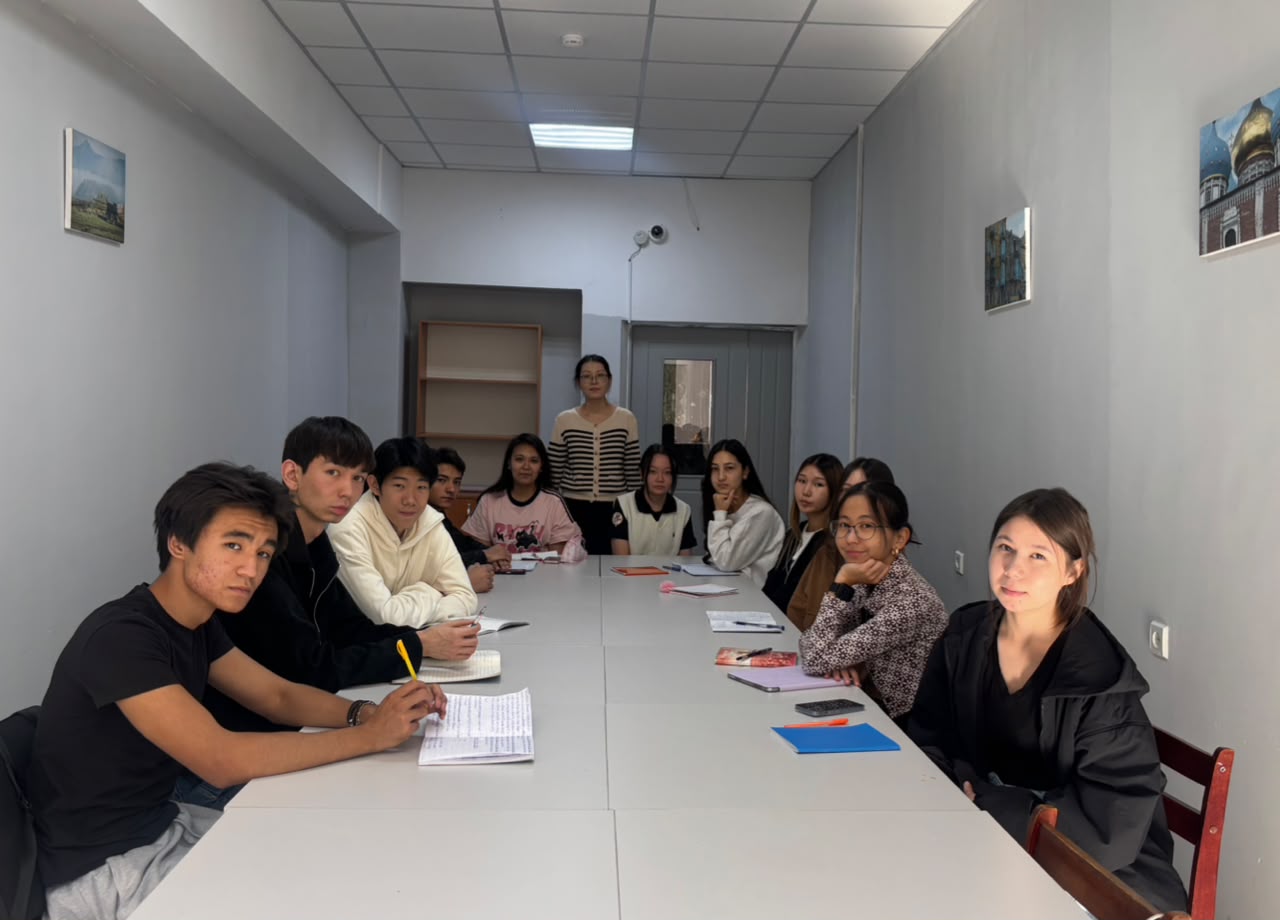
On October 24, 2026, first-year students of the educational programme “Translation Studies (Western Languages)” (Russian-language group) of the Department of Foreign Philology and Translation Studies, Faculty of Philology, Al-Farabi Kazakh National University, participated in an open lesson on the topic “Artificial Intelligence and Human Translators: Opportunities, Advantages, and Differences.” The lesson was conducted by Aigerim Muratova, a lecturer at the department.
The lesson was held within the framework of the United Nations Sustainable Development Goals (SDGs), with particular emphasis on SDG 4 “Quality Education.”
The main objective of the lesson was to broaden students’ understanding of the role of artificial intelligence in modern translation practices, encourage a comparative analysis of human translators and automated translation systems, and develop critical thinking, analytical reasoning, digital literacy, and professional communication skills.
The rapid development of artificial intelligence technologies is significantly transforming the translation industry, offering new opportunities for processing and translating texts. However, despite the increasing efficiency and accessibility of machine translation systems, issues related to semantic accuracy, cultural appropriateness, and the preservation of stylistic features remain highly relevant. Particular attention was therefore given to the future of the translation profession, the impact of emerging technologies on professional practices, and the interaction between human expertise and artificial intelligence.
The central part of the lesson involved an interactive discussion during which students explored several important questions: “Can artificial intelligence completely replace human translators?”, “How important is human professional experience in ensuring translation quality?”, and “What technological and professional skills should translators of the future possess?” Students examined the advantages and limitations of artificial intelligence, presented their arguments, responded to different viewpoints, and expressed their opinions on the future of the translation profession.
During the discussion, particular attention was paid to the importance of conveying national and cultural characteristics, linguistic nuances, emotional tone, and the author's individual style when translating literary texts. Students also considered the potential of artificial intelligence as a tool for improving translation efficiency while recognising the importance of critically evaluating machine-generated translations and maintaining professional responsibility for the final translation product.
The lesson was closely aligned with Target 4.4 of SDG 4, which aims to increase the number of young people equipped with relevant skills for employment, decent jobs, and entrepreneurship. In this context, special emphasis was placed on digital literacy, critical thinking, adaptability, and the responsible use of emerging technologies as essential competencies for future translators in a rapidly changing labour market.
The discussion also highlighted the importance of combining technological innovation with human professional expertise. Although artificial intelligence can facilitate translation processes and enhance productivity, human judgment, creativity, cultural awareness, and professional responsibility remain essential for preserving the communicative purpose, cultural content, and stylistic characteristics of the original text.
The open lesson encouraged active student participation and contributed to the development of analytical thinking, argumentation, collaborative communication, and professional awareness. It also provided students with an opportunity to reflect on the changing role of translators in the digital age and the importance of continuously developing their professional competencies.
Thus, the open lesson contributed to the implementation of SDG 4 “Quality Education” by promoting the development of relevant professional skills, responsible attitudes towards digital technologies, and critical thinking among future translators. Such educational initiatives play an important role in preparing competitive and adaptable specialists capable of responding effectively to the challenges and opportunities of the modern translation industry.
Department of Foreign Philology and Translation Studies
Lecturer Aigerim Muratova
Other news