“Students’ Psychological and Physical Safety”: A Tutor-Led Session
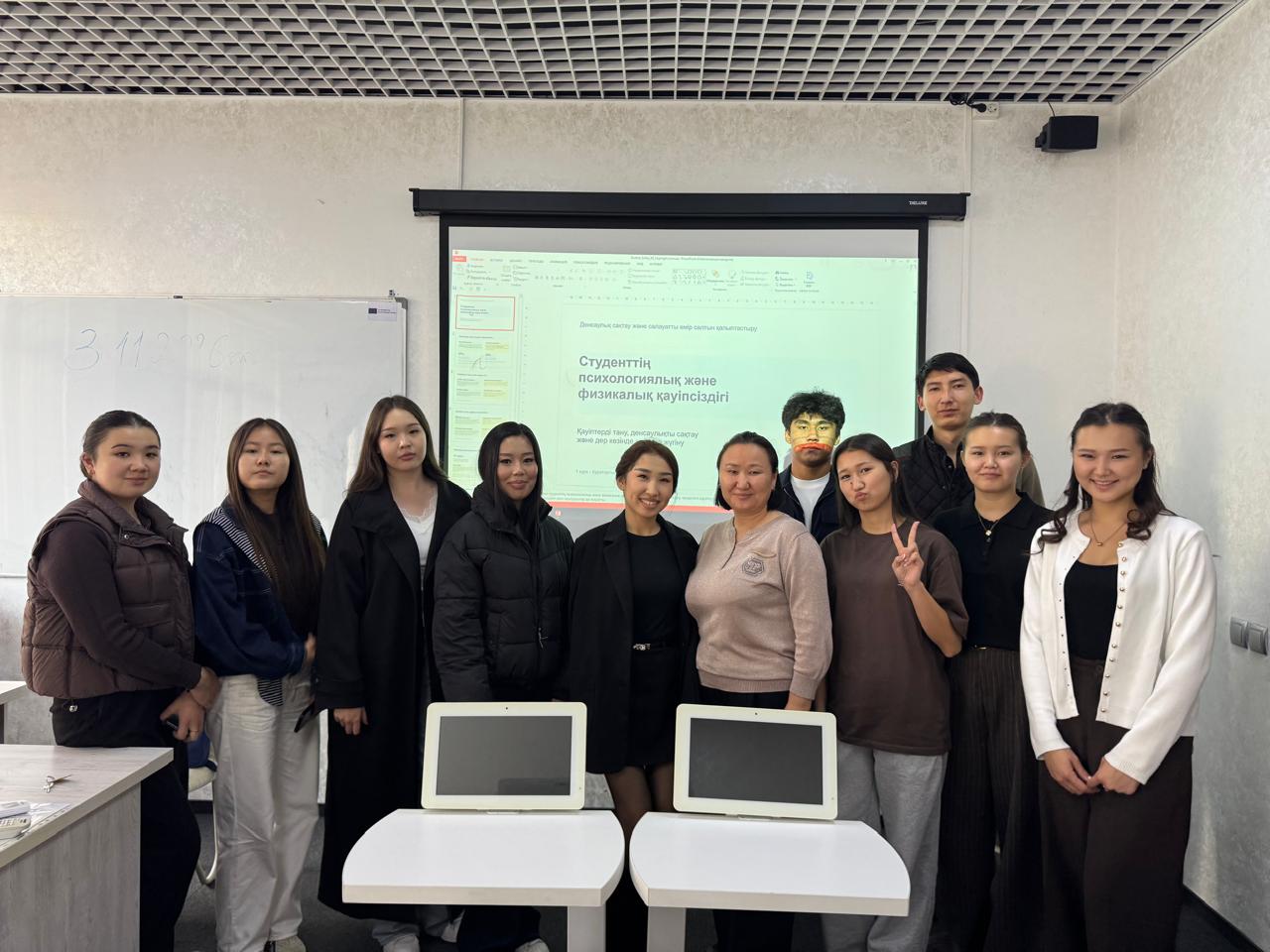
A tutor-led session entitled “Students’ Psychological and Physical Safety” was held at Al-Farabi Kazakh National University. The event supported Sustainable Development Goal 3, “Good Health and Well-being”, Goal 4, “Quality Education”, and Goal 16, “Peace, Justice and Strong Institutions”. Participants were first-year students from the Kazakh-language division of the “6B04109 Digital Economy” educational programme.
The session aimed to encourage responsibility for personal health, explain the importance of a safe learning environment, and introduce ways to prevent risks. Particular attention was given to adjusting to university life, managing academic workloads, establishing relationships with classmates, and finding support within their university.
Psychological safety was discussed as the opportunity to express opinions, ask questions, and seek assistance without fear of humiliation or rejection. Students learned about common sources of stress, signs of emotional exhaustion, and their possible effects on studying. Examinations, limited time, separation from family, and changes in familiar routines were identified as potential challenges.
Participants were encouraged to plan assignments, maintain regular routines, allow time for rest, and communicate with trusted people. When difficulties persist and interfere with everyday activities, seeking support from a university psychologist or another professional is important. Asking for help was presented as responsible attention to personal wellbeing.
The discussion also addressed personal boundaries, mutual respect, and bullying prevention. Insults, intimidation, humiliation, and deliberate exclusion undermine a safe educational environment. Students considered how classmates can support someone experiencing such behaviour and why concerns should be reported to a tutor or an appropriate university staff member.
Given the programme’s focus, digital safety received attention. Topics included cyberbullying, exposure of personal information, suspicious messages, and fraudulent links. Students were reminded to protect passwords, enable two-factor authentication, and assess information critically. Sharing another person’s photographs, private messages, or personal details without permission was discussed as incompatible with respectful online communication.
Physical safety covered conduct on campus, in student accommodation, and in public spaces. Participants reviewed the importance of knowing evacuation routes, using electrical equipment correctly, and remaining calm during emergencies. Kazakhstan’s emergency service numbers, including 112, 101, 102, and 103, were introduced.
Healthy lifestyle discussions highlighted adequate sleep, regular movement, balanced nutrition, and breaks during computer use. Maintaining a manageable balance between studying and recovery was also emphasised.
The session connected health protection, safe educational conditions, and violence prevention with the Sustainable Development Goals. It encouraged students to recognise risks, support classmates, and contribute responsibly to a respectful university community.
Organizers: Abdullayeva B.A., Kuliyev I.U.
Other news