- Main
- SDG 15
- “Decent work and economic growth. Factors influencing university graduates’ employment and career success”
“Decent work and economic growth. Factors influencing university graduates’ employment and career success”
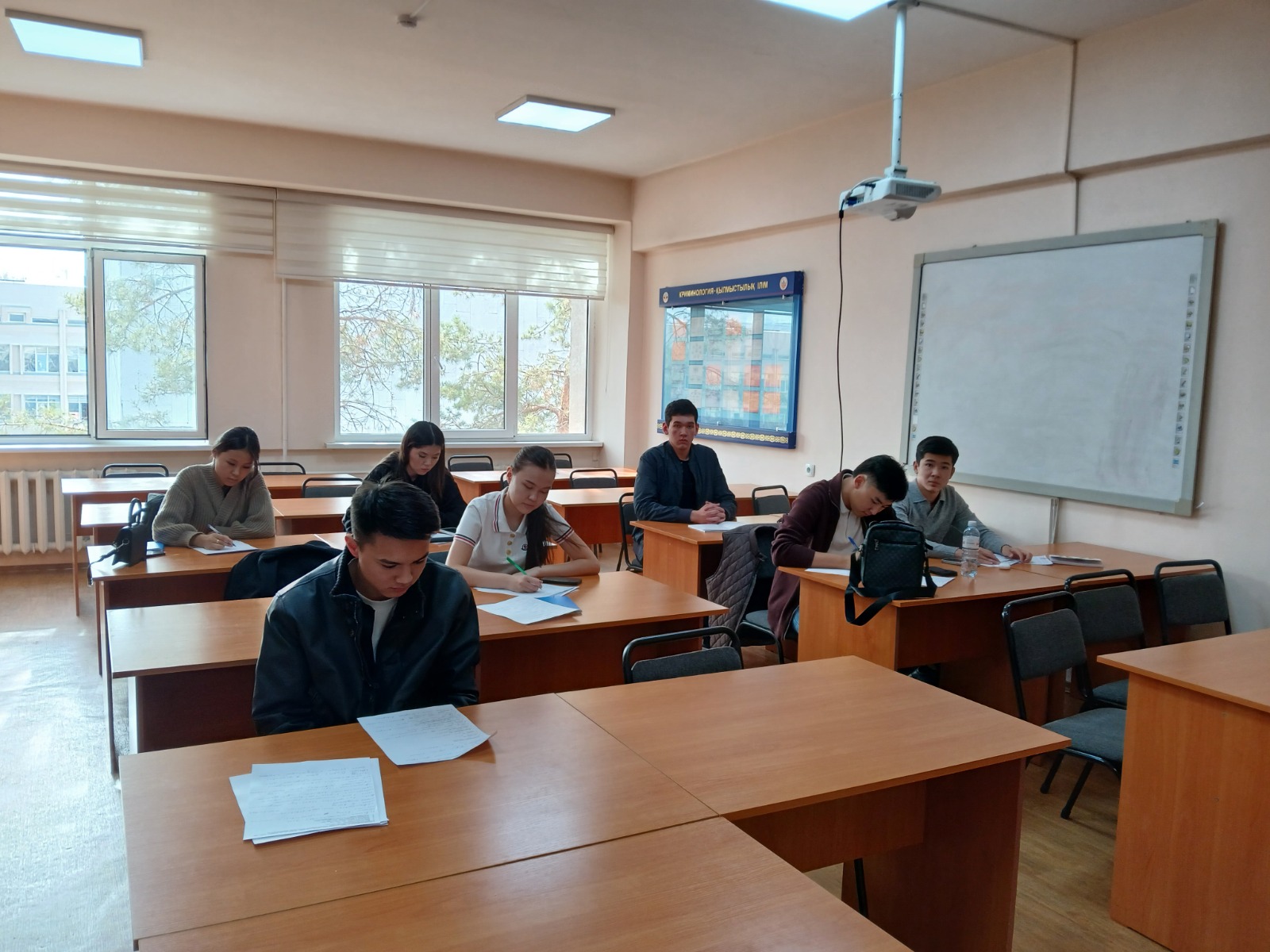
On November 10, 2026, Aigul Zholdubaevna Karkanova, a lecturer at the Department of Russian Philology and World Literature, conducted a lesson entitled “Decent work and economic growth. Factors influencing university graduates’ employment and career success” for first-year students enrolled in the Law Enforcement Activity programme.
The lesson was organized as part of the implementation of the objectives of Sustainable Development Goal 8. The theme of the lesson was “Decent work and economic growth. Factors influencing university graduates’ employment and career success“. The central message of the lesson was conveyed through the following quotation by Muhammad Yunus, a Bangladeshi banker, Professor of Economics, and Nobel Peace Prize laureate, recognised for his efforts to establish the foundations for economic and social development: “All human beings are born entrepreneurs. People should wake up in the morning and say, ‘I am not looking for a job; I am creating one.”
During the lesson, students prepared reports and presentations on the above-mentioned topic, conducted stylistic analyses of relevant articles, and familiarised themselves with academic and educational literature. Their presentations and reports covered the following topics: “Graduates in the Labour Market: From an Academic Degree to Professional Value”, “Decent Work Begins with Opportunities”, “Decent Work and Economic Growth”, and “Decent Work Begins with Readiness for Change”, among others.

It was highlighted that today's labour market poses a different question to university graduates. Rather than asking, “Where did you study?”, employers increasingly seek to know, “What tasks are you capable of performing right now?” For university graduates, decent work means productive employment, fair remuneration, safe working conditions, social protection, and opportunities for professional development.
The students expressed the view that university graduates should not simply accept any available job vacancy but should seek to establish a sustainable professional career path that offers opportunities for growth, ensures workplace safety, and enables them to achieve and recognise tangible results of their work.
Five key factors influencing university graduates' employment prospects were identified:
Professional knowledge and competencies;
Practical experience and a professional portfolio;
Communication skills and the ability to work effectively in a team;
The ability and willingness to engage in continuous learning;
The capacity to adapt to a rapidly changing world.
Throughout the lesson, students actively participated in discussions, substantiated their viewpoints, responded to the questions raised, and engaged in an exchange of opinions. The lesson was both engaging and informative, contributing to the development of students' critical thinking and professional awareness.

In conclusion, it can be stated that a successful career is not a matter of accidentally good fortune after obtaining a university degree; rather, it is the outcome of consistent, conscious, and disciplined effort in one's chosen professional field. Continuous professional development, the ability to adapt to changing labour market demands, and a commitment to productive employment constitute important prerequisites for successful career development and sustainable economic growth.
Other news