- Main
- News
- Biodiversity Conservation and Climate Change Adaptation (SDGs 12, 13, 15): Students’ Industrial Practice
Biodiversity Conservation and Climate Change Adaptation (SDGs 12, 13, 15): Students’ Industrial Practice
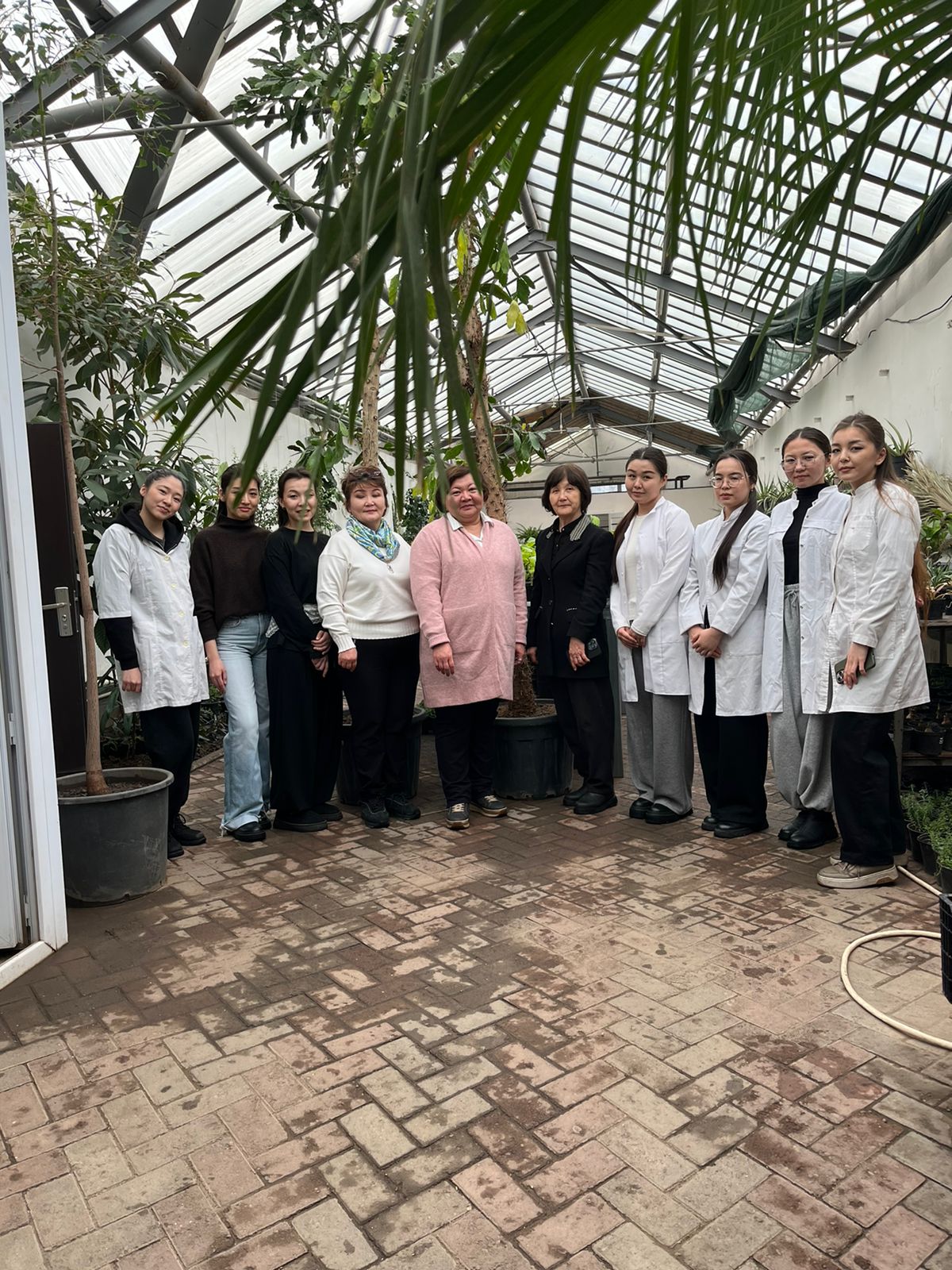
On 9 February 2026, students of the 6B05102 “Biology” educational programme of the Department of Botany and Agroecology visited the Institute of Botany and Phytointroduction to undertake their industrial (field-based) practice. The practice was designed to develop students’ professional competencies, connect university-based theoretical knowledge with real scientific and applied work, and introduce modern research approaches in the field of plant resource conservation. The visit was organised under the supervision of department instructors Akhtaeva Nursulu Ziyakhanovna and Tileubayeva Zhanar Slyamkhanova.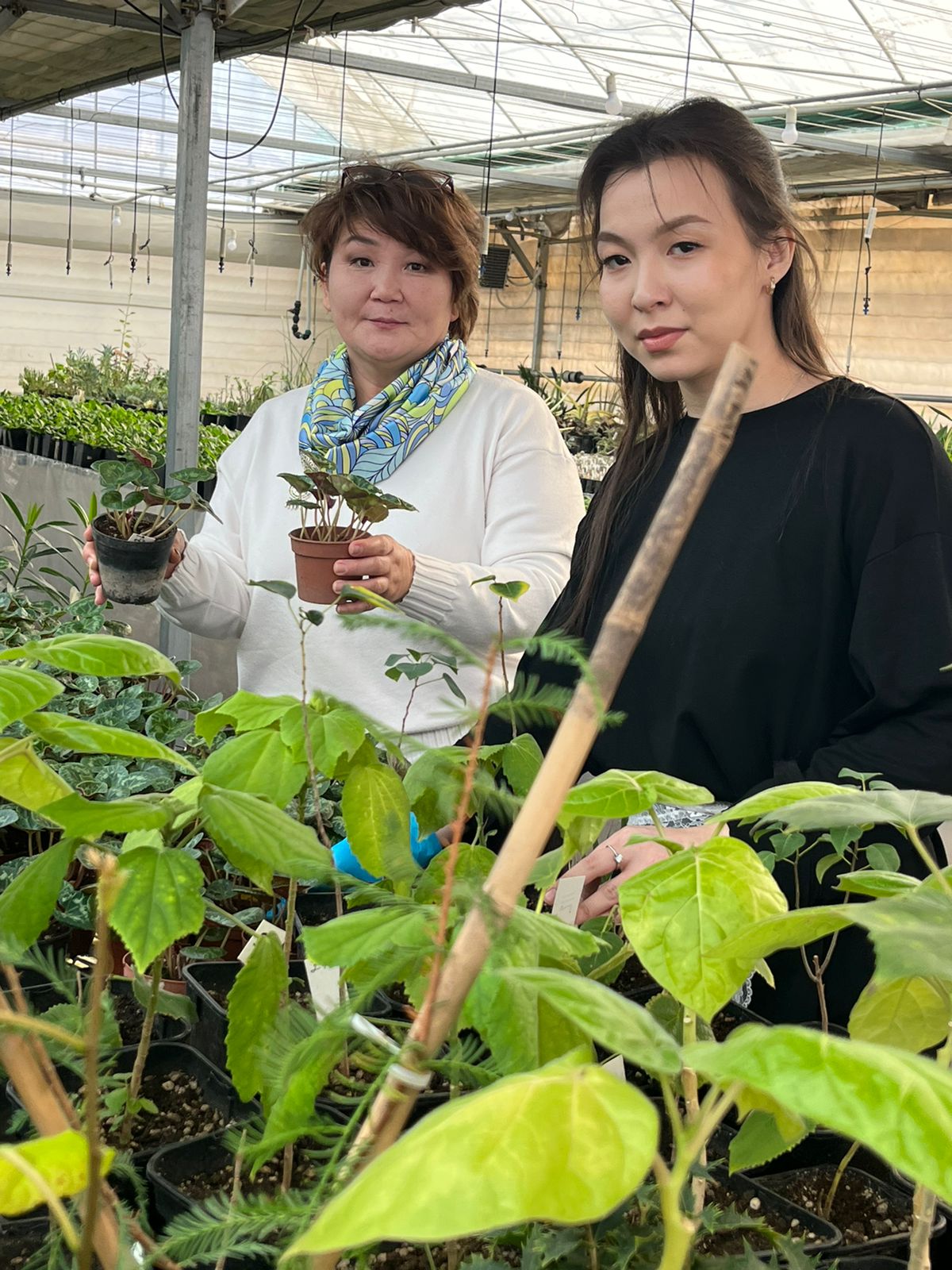
During the practice, students became familiar with the Institute’s scientific and structural units and the main research areas in plant introduction and acclimatisation. In particular, they were comprehensively introduced to the work carried out in the Introduction and Acclimatisation Department, the Ornamental Plants Laboratory, and the Tropical and Subtropical Plants Laboratory (greenhouse). Sholpan Kuanyshbayevna provided detailed explanations of the research and practical activities conducted in these units, including the scope of work, the specific requirements for maintaining, conserving, and cultivating introduced plants, and the applied relevance of each component.
As part of the hands-on sessions, students learned about greenhouse microclimate management (light, temperature, and humidity), planning irrigation regimes, and evaluating how substrate selection affects plant physiology. The programme also addressed essential aspects of working with introduced plant collections: identifying morphological traits, comparing physiological responses to environmental factors, and organising preventive measures against pests and diseases. This experience not only strengthened students’ scientific thinking, but also reinforced laboratory culture and biosafety practices.
The Institute’s research on the introduction and cultivation of tropical, subtropical, and rare plant species—implemented within its floriculture laboratory—fully aligns with contemporary ecological and biological priorities. These studies form an integrated scientific framework aimed at conserving plant biodiversity, protecting genetic resources, and ensuring ecosystem stability. Most notably, this work directly supports the United Nations Sustainable Development Goal (SDG) 15, “Life on Land.” Conserving rare and endangered plant species under ex situ conditions, establishing living collections, and studying their biological and morpho-physiological characteristics help reduce anthropogenic pressure on natural populations and enable the long-term preservation of plant genetic diversity.
At the same time, investigating the adaptive capacity of introduced tropical and subtropical species in new ecological settings and assessing their physiological responses to climatic factors is closely linked to SDG 13, “Climate Action.” Efforts to improve cultivation technologies, optimise the use of water and substrate resources, and implement principles of sustainable management of introduced species correspond to SDG 12, “Responsible Consumption and Production.” In this way, the Institute’s introduction research represents an effective scientific mechanism that contributes to efficient resource use, enhanced ecosystem resilience, and the development of an evidence-based ecological culture.
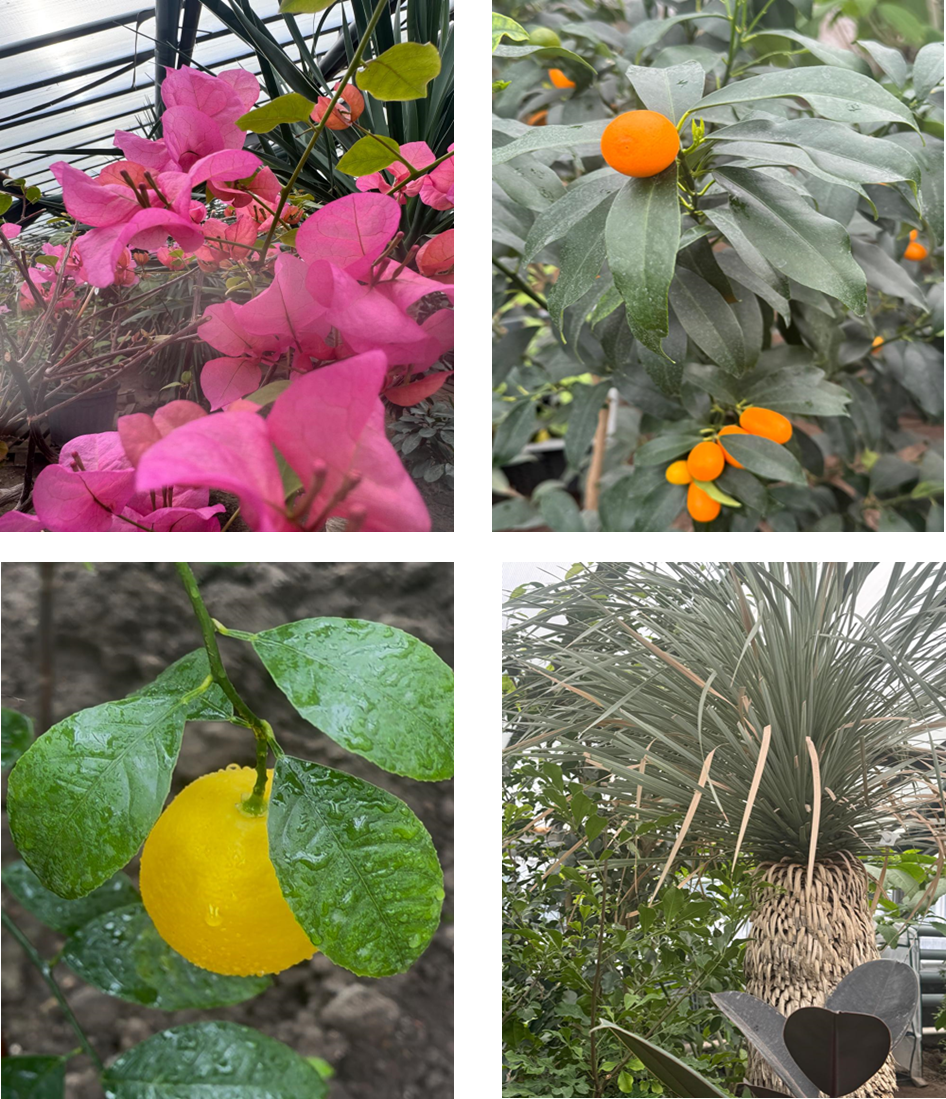
The scientific research conducted at the Floriculture Laboratory of the Institute of Botany and Phytointroduction, focusing on plant introduction and cultivation, aims to ensure ecological sustainability, identify plants’ adaptive potential to climatic factors, and establish a scientific basis for the rational use of biological resources. These studies comprehensively address the conservation of plant biodiversity, the enrichment of genetic resources, and the support of natural ecosystem resilience, making a significant contribution to the practical implementation of scientific initiatives aligned with the United Nations Sustainable Development Goals (SDGs). In addition, students’ industrial practice enables them to integrate theoretical knowledge with real research processes, develop professional skills, and build a solid practical foundation for becoming qualified specialists in botany, ecology, and plant introduction in the future.
Upon completion of the practice, students refined their professional interests and explored opportunities to connect future research projects, course papers, and thesis work with topics in plant introduction, plant physiology, and biodiversity conservation. Overall, the practice was recognised as a meaningful step that strengthens continuity between scientific research and practical training.
If you want, I can also make a shorter news-style version (for a website/social media) in both Russian and English
Department of Botany and Agroecology