- Main
- News
- Artificial Intelligence and the Future of Labor Markets: KazNU Researchers Participated in an International ETF Webinar
Artificial Intelligence and the Future of Labor Markets: KazNU Researchers Participated in an International ETF Webinar
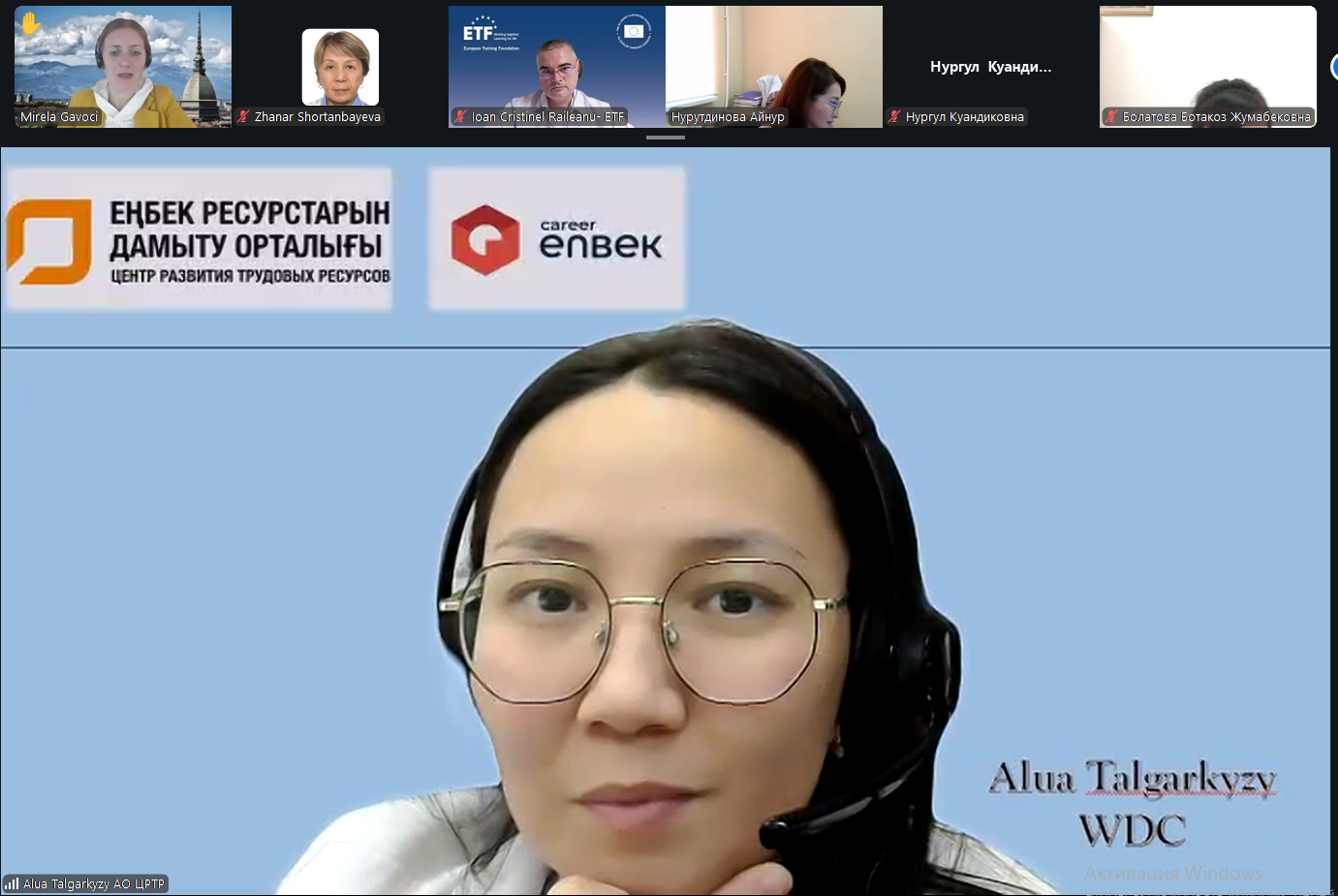
On November 9, 2026, faculty members and researchers from Al-Farabi Kazakh National University actively participated in an international expert webinar hosted by the European Training Foundation (ETF) entitled "The Impact of AI on Labour Markets: What We Know So Far" and "The Changing Landscape of Skills in the Age of AI"
Key speakers Mirela Gavoci and Cristian Raileanu presented comprehensive research findings on how artificial intelligence (AI) is transforming global employment, workforce productivity, and educational priorities
The study categorized professions based on their exposure and complementarity to AI
The ETF report outlined a three-tiered skill pyramid for the AI era
Advanced Skills (<1% of workforce): AI scientific and engineering talent creating core models and platforms
Intermediate Skills (~5% of workforce): Domain experts applying AI solutions in healthcare, manufacturing, education, and finance
Basic Skills (Nearly 100% of workers): Universal AI Literacy — the ability to understand, apply, ethically evaluate, and critically question AI outputs
This webinar and its strategic insights align directly with the United Nations Sustainable Development Goals (SDGs):
SDG 4 (Quality Education): Focuses on embedding AI literacy, critical thinking, and human agency into university curricula
SDG 5 (Gender Equality): Highlights the importance of bridging the gender gap in STEM/ICT fields and mitigating bias in algorithmic systems
SDG 8 (Decent Work and Economic Growth): Fosters labor productivity, job quality improvement, and smooth workforce transitions amidst digital transformation
SDG 17 (Partnerships for the Goals): Enhances international institutional collaboration and knowledge exchange with European educational bodies
KazNU continues to integrate top-tier international analytical standards into its educational and research programs, preparing students for the evolving demands of the global labor market
Other news