SDG-Aligned Scientific Seminar: PhD Pre-Defense on Acanthophyllum gypsophiloides
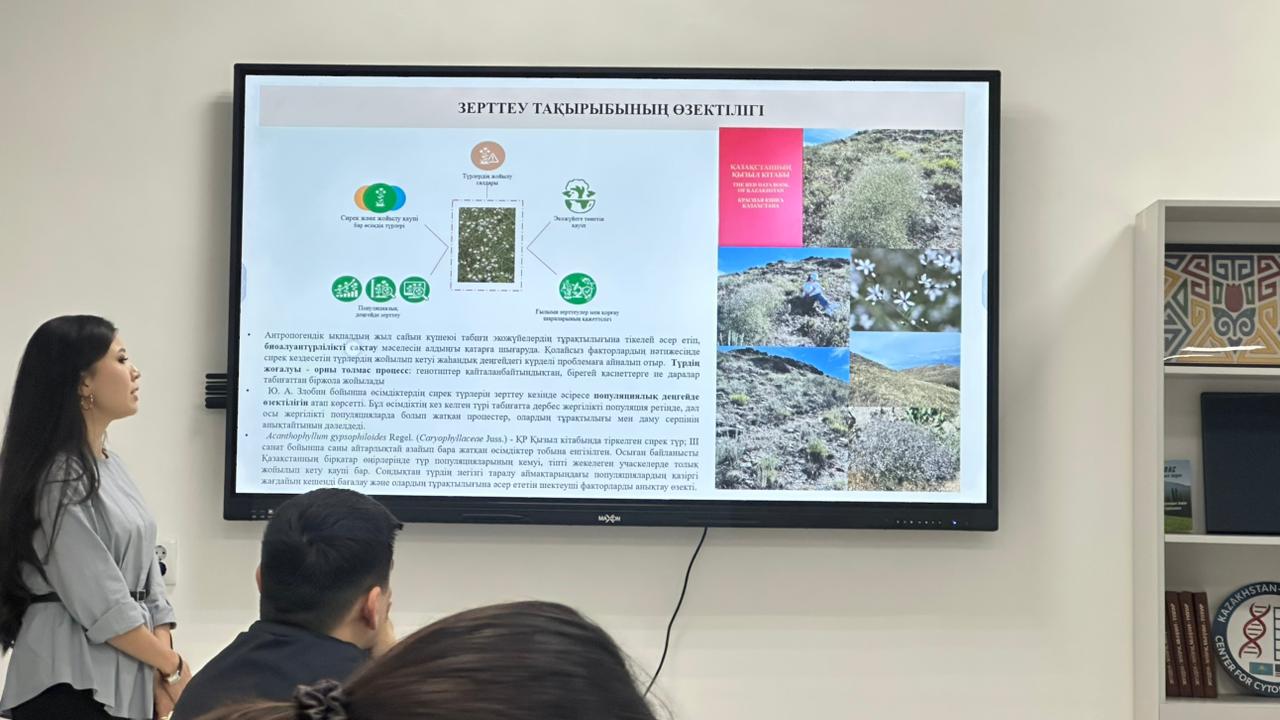
On 27 February 2026 at 11:00, the Department of Botany and Agroecology, Faculty of Biology and Biotechnology, al-Farabi Kazakh National University, held a scientific seminar for a pre-defense within the educational program “8D05108 – Geobotany.” The event was organized at the Kazakhstan–American Cytomatrix Research Center, in the Zoology Room 1, and the discussion was conducted in Kazakh. The seminar followed the established procedure: participants were introduced to the agenda, and the purpose and format of the discussion were clarified.
The main agenda item was the pre-defense of the dissertation prepared by doctoral candidate Asem Arysbekovna Tastanbekova for the Doctor of Philosophy (PhD) degree, entitled “Ecological and biological features and assessment of the status of coenopopulations of the rare endemic species Acanthophyllum gypsophiloides Regel. occurring in South Kazakhstan.” The seminar aimed to discuss the presented findings comprehensively within the department’s academic community, evaluate the internal logic of the study, determine its scientific novelty and applied relevance, and formulate recommendations to improve the final version of the dissertation.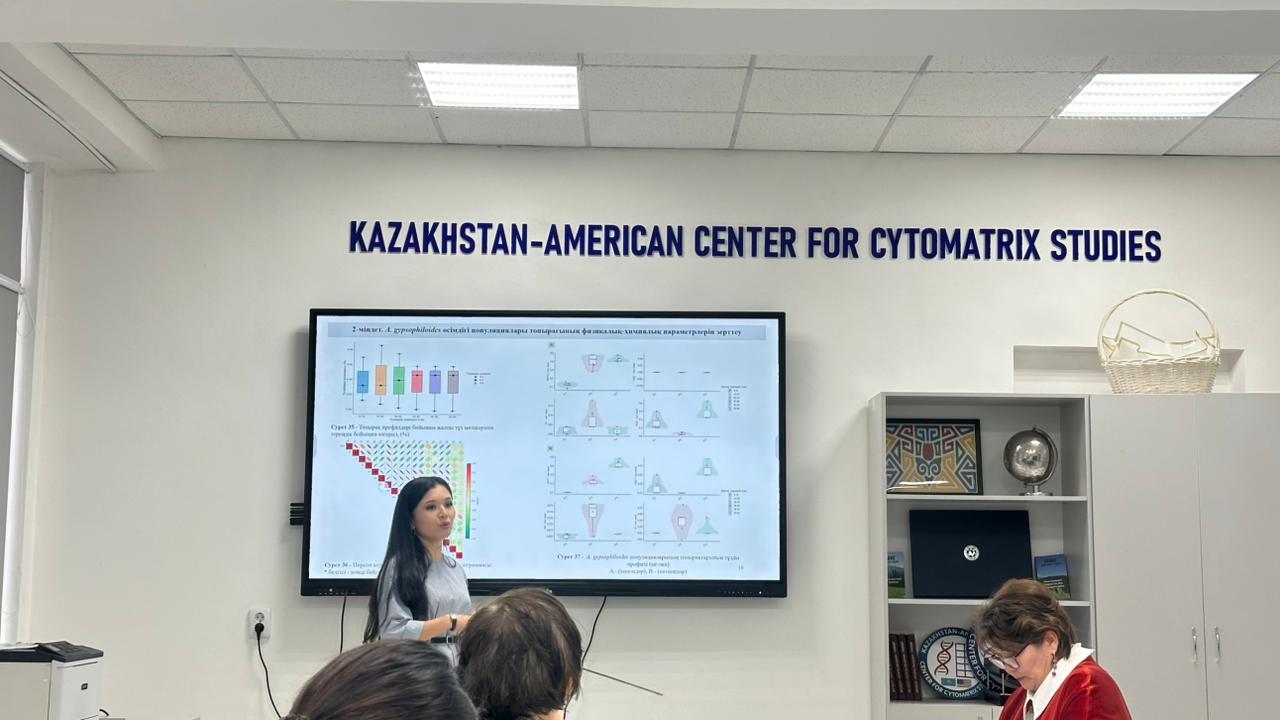
In her presentation, the candidate consistently substantiated the relevance of the research, emphasizing that assessing the condition of natural populations of a rare and endemic species is a priority in biodiversity conservation. It was noted that, in the context of South Kazakhstan, changes in natural habitats, increasing land-use pressure, degradation processes, and variability in climatic factors directly affect the stability of rare species. Accordingly, the need for an ecological-biological analysis at the coenopopulation level and for assessing the current state of populations using scientifically grounded criteria was justified.
Turning to the core content, the candidate specified the object and subject of the study, described the distribution patterns of Acanthophyllum gypsophiloides, the ecological characteristics of its habitats, and the approaches used to assess structural attributes of populations. The rationale behind the indicators applied for comparative analysis of coenopopulations was explained, and the importance of considering structural-dynamic characteristics, regeneration potential, and population stability indicators was highlighted.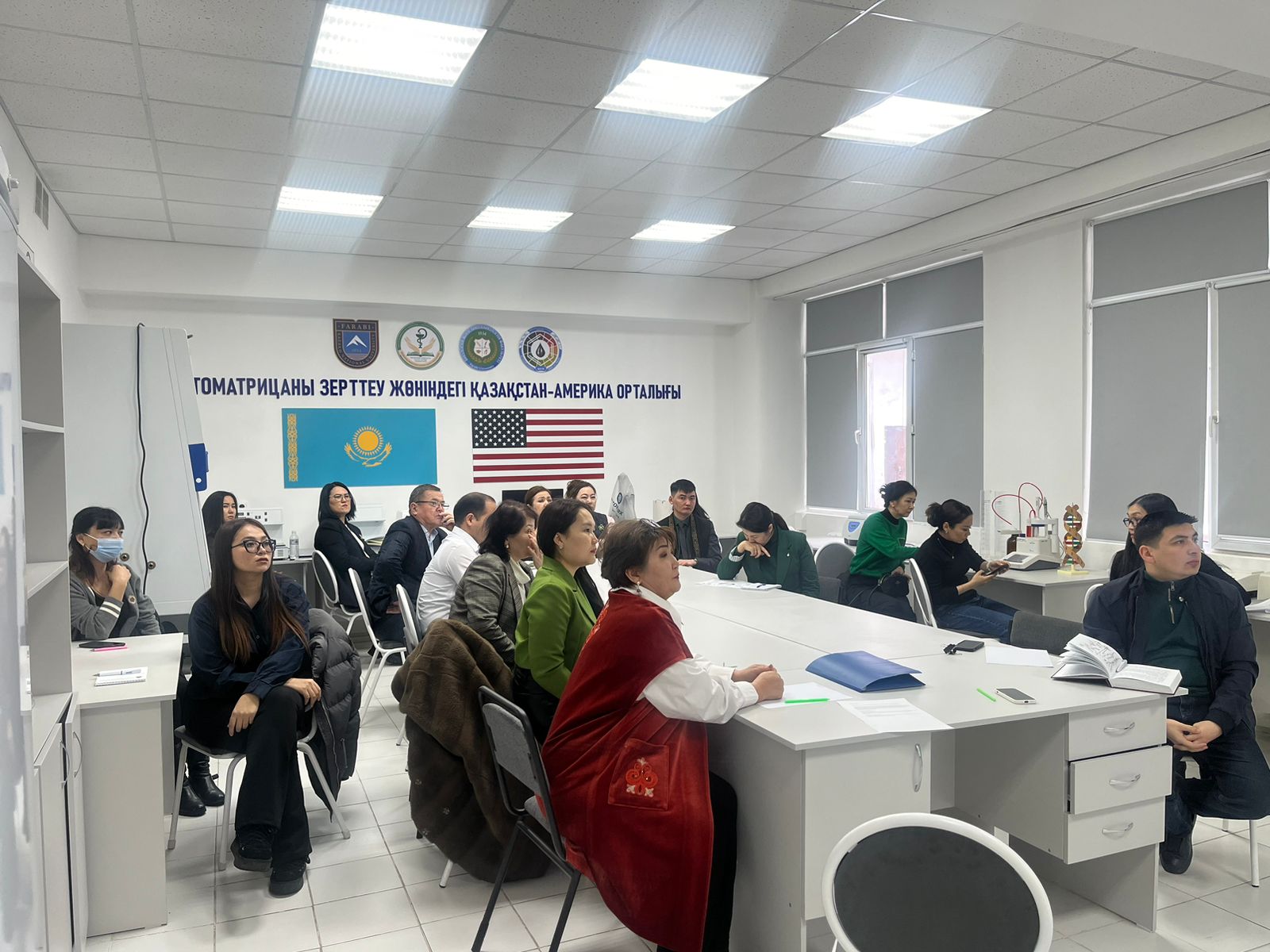
During the seminar, the linkage of the dissertation to the UN Sustainable Development Goals (SDGs) was integrated into the discussion. The work was noted to be directly related to SDG 15 – Life on Land (biodiversity conservation, protection of rare and endemic species, and population monitoring). In addition, examining the effects of natural factors and long-term ecological changes on population status aligns with SDG 13 – Climate Action. It was also emphasized that systematic departmental discussion of a PhD dissertation in the format of a scientific seminar supports SDG 4 – Quality Education, while methodological exchange and alignment with international academic criteria correspond to SDG 17 – Partnerships for the Goals.
It was reported that the dissertation was carried out under the guidance of scientific consultants. The domestic supervisor was Meruert Sakenovna Kurmanbaeva, Doctor of Biological Sciences, Dean of the Faculty of Biology and Biotechnology at al-Farabi KazNU and Professor at the Department of Botany and Agroecology. The international supervisor was Maria Hyön, PhD, Professor at the Department of Botany, Hungarian University of Agriculture and Life Sciences (Hungary). It was noted that international supervision strengthened the methodological framework of the study and broadened opportunities for comparative analysis and refinement of conclusions in line with academic requirements.
In the discussion phase, participants asked questions and offered recommendations to clarify specific aspects of the research. Particular attention was given to strengthening the logic of result interpretation, refining applied conclusions, systematizing assessment criteria, and reinforcing the evidence base for recommendations. The candidate responded to the questions and presented a plan to incorporate the recommendations into the final dissertation and to supplement the materials prior to submission for formal defense.
As a result of the scientific seminar, the pre-defense materials were оформалized in accordance with departmental procedures, and the dissertation was directed toward further improvement and preparation for the next stage—submission for defense.
Department of Botany and Agroecology