Global experience is changing the scientific environment
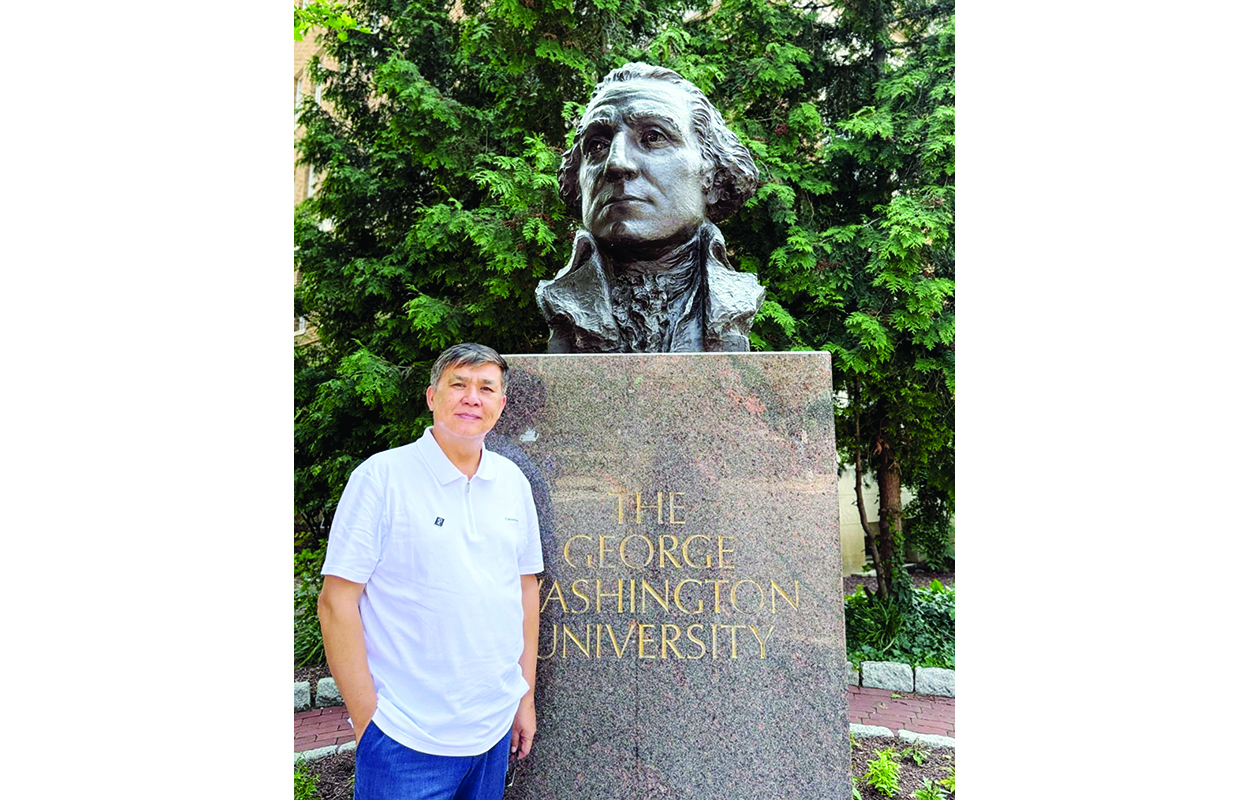
Scientific internship under the Bolashak program is not only personal professional growth, but also an important step that contributes to the recognition of Kazakhstan's science on the world stage. Having gained global experience, the fellows return to the country and enrich the existing scientific environment with new thinking and new knowledge. The international program aimed at increasing scientific potential in Kazakhstan will allow young scientists and teachers to deepen their professional competencies in the best universities in the world. The scientific internship at George Washington University (George Washington University, USA) within the framework of this program has greatly contributed to the development of advanced technologies in the field of education and research, the use of new methodologies in my practice and integration into the international scientific environment.
The internship covered a number of important subjects in accordance with the approved curriculum. In addition to mastering the theoretical material, practical work was carried out in the lessons on the use of research methods, the use of digital educational resources and the introduction of modern pedagogical technologies.
As part of the scientific internship N.Salem, D.The disciplines "Academic Writing", "Qualitative Research", "Quantitative Methods for Applied or Academic Research" and "Course in Design & Educational Technology" with professors Dolan, V. Bhagwat contributed to raising the research culture to a new level. I have improved my skills in mastering the structure of academic writing, building accurate and reliable argumentation, and observing the norms of scientific style. My ability to conduct qualitative research interviews, use methods such as monitoring, content analysis, and data interpretation has increased. In digital analysis, I have expanded my ability to make data-based decisions through statistical processing, hypothesis testing, and regression models. And my competencies in educational technologies have been strengthened in designing an interactive environment, effectively introducing digital resources into classes, visualizing educational materials and developing innovative tasks. As a result, the complex of professional competencies was significantly developed, systematically mastering both theoretical and practical aspects of conducting scientific research.
As a scientific supervisor during the internship, Professor H.Khamooshi was approved. Constant work with the supervisor has greatly contributed to the systematization of the content and increasing the effectiveness of scientific work.
During the internship period, I participated in several international conferences and seminars. Among them are Addressing Central Asia's water Crisis – a panel discussion on Water Resources in Central Asia, Network and Navigate seminar – strategies for professional development and job search, International Culture Day – an international cultural event for GWU Students, A Scientific Forum on Central Asian energy held by Georgetown University.
As a result of the internship, one article in the Scopus index, one work published in the KKSON Journal and two international conference materials were prepared and presented to the scientific community. These results indicate the effectiveness of the internship, the knowledge gained and methodological competencies directly contributed to the practical research work. In addition, in order to improve my skills on the Coursera and Citi program platforms, I successfully completed courses "Social & Behavioral Research", "Research Study Design", "Mental Health for Higher Education", "Optional Modules", "Creating a Visual Tasks Guide with Microsoft PowerPoint" and received certificates. All courses have improved my research skills and strengthened my professional competencies.
During the scientific internship, it was possible to master modern research methods. Deep skills in academic writing, quantitative and qualitative analysis, and educational technologies have been developed. The experience of working in the international scientific environment has increased, new methods have been developed that allow improving the quality of research projects. Real practical results have been achieved on the use of digital educational tools.
The acquired knowledge and experience will undoubtedly contribute to the further promotion of research and pedagogical activities within the walls of kaznu to a new level. Thus, I contribute to the introduction of innovative approaches to the modern educational process.
Zhanat BAKTYBAYEV,
Associate professor of the Department of pedagogy and Educational Management
Other news