Modern science knows no borders. Addressing global challenges—particularly the forecasting of natural and technological hazards and the study of climate change—requires close international scientific cooperation. In this regard, the Faculty of Geography and Environmental Sciences of Al-Farabi Kazakh National University continues to strengthen its partnerships with leading research institutions around the world. One clear example of this commitment is the opportunity for the university's young researchers to undertake internships at internationally renowned research centers.
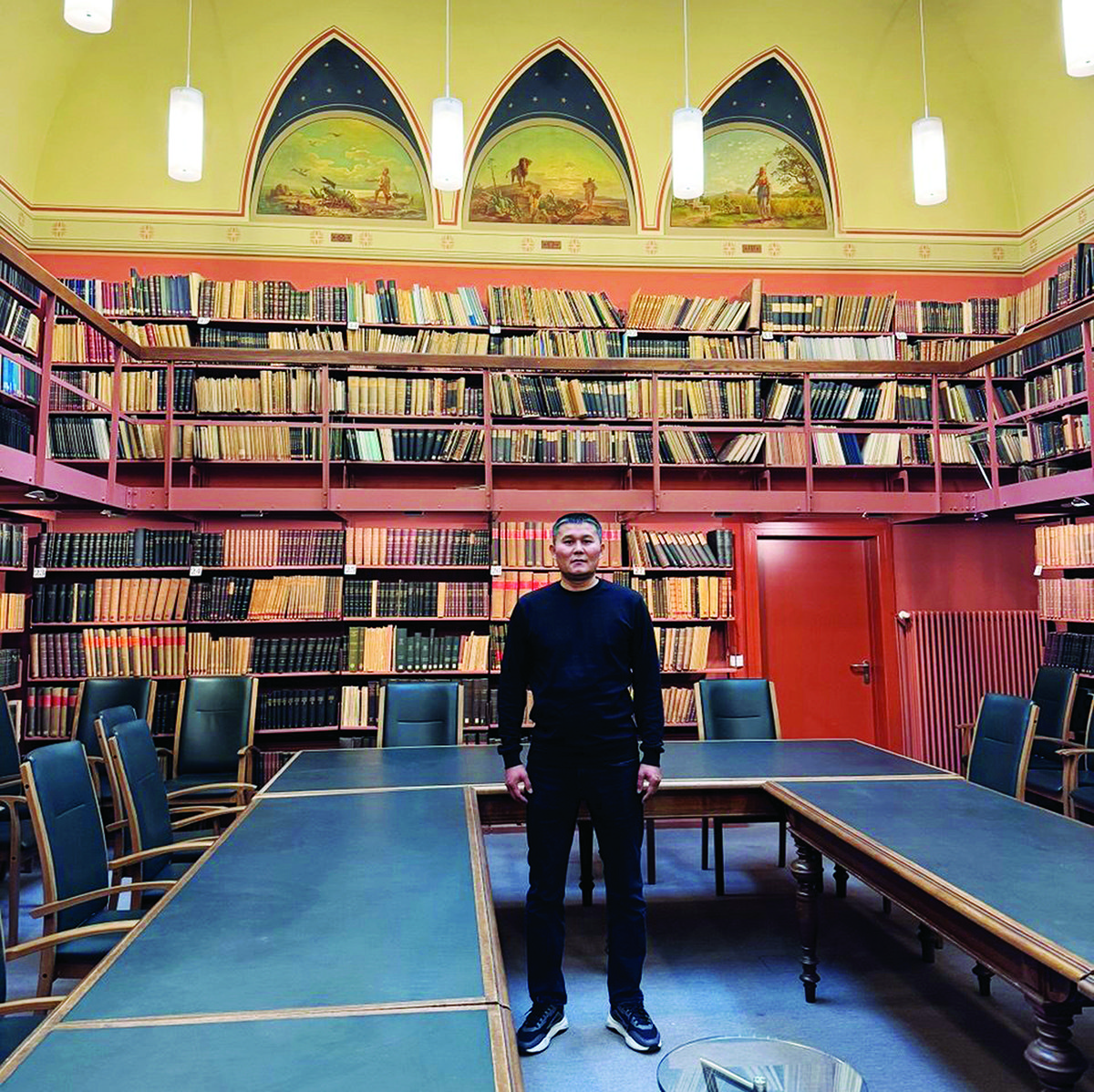
Currently, Zhasulan Takibayev, a second-year doctoral student in the Natural and Technogenic Hazards educational program, is completing a research internship at the Helmholtz Centre Potsdam – GFZ German Research Centre for Geosciences (GFZ) in Potsdam, Germany, one of the world's leading institutions in the geosciences.
Located on the historic Telegrafenberg campus, the GFZ is an internationally recognized research center conducting pioneering work in geodesy, geophysics, remote sensing, climate change, and hydrology. The center develops advanced models of some of the Earth's most complex natural processes using state-of-the-art technologies. Conducting research in such a prestigious international scientific environment represents a significant achievement not only for the young Kazakhstani researcher but also for the advancement of geography, cartography, and engineering geology in Kazakhstan.
The internship has been organized at a high professional level. Zhasulan Takibayev's research is supervised by Abror Gafurov, a leading researcher at the GFZ German Research Centre for Geosciences and the doctoral student's international academic advisor. Under the guidance of this experienced international expert, the scope of the doctoral research has been significantly expanded, providing new methodological perspectives in line with international scientific standards.
During the internship, the doctoral student is acquiring advanced expertise in the application of Geographic Information Systems (GIS), high-precision processing of remote sensing data, and modern methods of spatial analysis. Particular emphasis is placed on modeling natural and technological hazards, including mudflows, landslides, and snow-related hazards, as well as integrating satellite observations into scientific research in near real time.
In the context of global climate change and increasing anthropogenic impacts, the accurate prediction of hydrological and climatic processes has become a matter of critical importance. By studying the experience of European researchers in this field, the young scientist is actively engaging with the international scientific community while mastering advanced algorithms for geospatial data processing.
This international research internship contributes not only to the professional development of the doctoral student but also to strengthening academic and scientific cooperation between Kazakhstan and Germany in the fields of higher education and research.
The valuable research materials and innovative geospatial technologies acquired at the GFZ German Research Centre for Geosciences will directly enhance the quality of the doctoral dissertation. Moreover, the knowledge gained is expected to support future national projects aimed at natural hazard assessment and mitigation, seismic and geomorphological zoning, and improving disaster risk management and public safety in Kazakhstan.
We wish the young researcher every success in his scientific endeavors.
Aktoty Utepkyzy Lecturer Department of Cartography and Geoinformatics