The indelible mark of the great teacher: Scientific School of Professor Zheken Mamytov — KazNU

The indelible mark of the great teacher: Scientific School of Professor Zheken Mamytov
15 July 2026
The indelible mark of the great teacher: Scientific School of Professor Zheken Mamytov
Professor Zheken Umbetkululy Mamytov, Doctor of Biological Sciences, was an outstanding scholar whose contributions left a lasting mark on the history of geography, soil science, and agroecology in Kazakhstan. The scientific school he founded continues to evolve today through the application of modern geospatial technologies. Professor Mamytov is recognized as the founder of Kazakhstan's scientific school of Adaptive Landscape Farming Systems (ALFS), whose relevance and strategic importance continue to grow over time. As students who had the privilege of learning from his scientific vision and mentorship, we are proud to carry forward the ideas and traditions of his academic school.

Professor Mamytov's foremost scientific legacy was his conviction that land and soil must be protected from degradation so that they can continue to fulfill their natural functions within the biosphere. He regarded soil fertility as a strategic national asset that deserves legal protection in the interests of both the nation and the state.

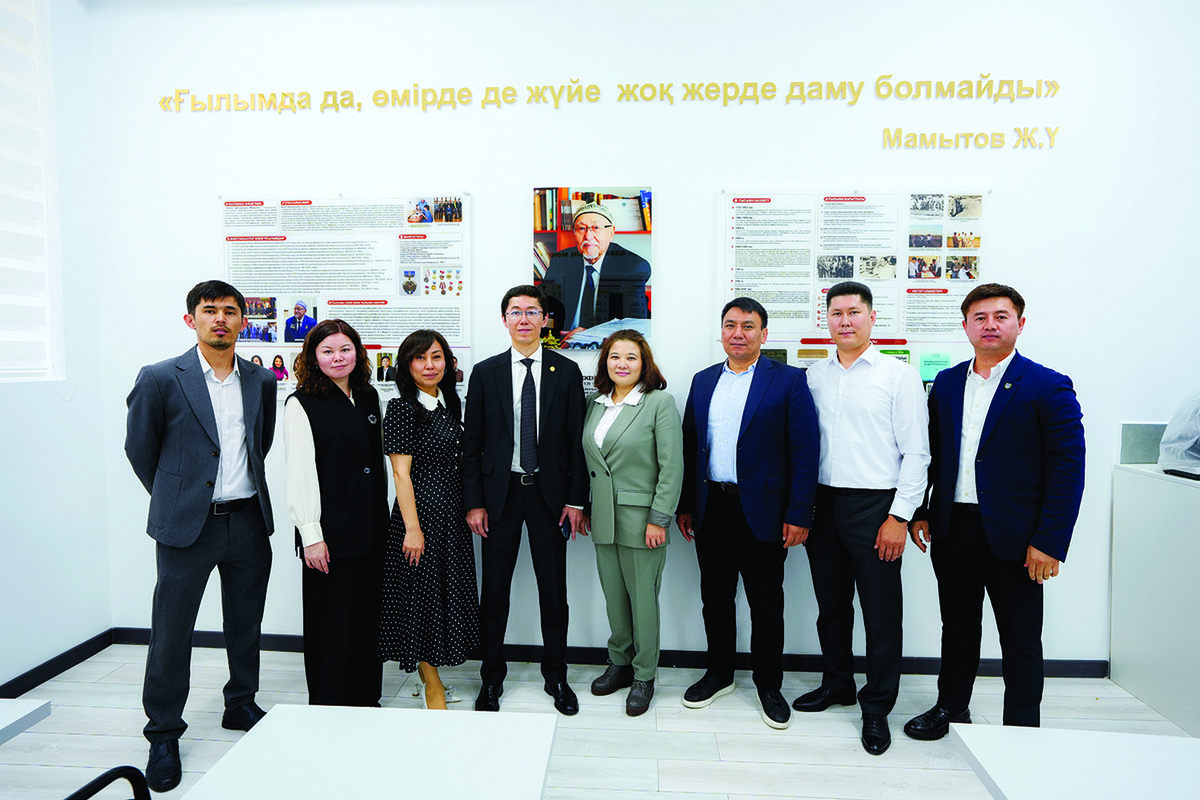
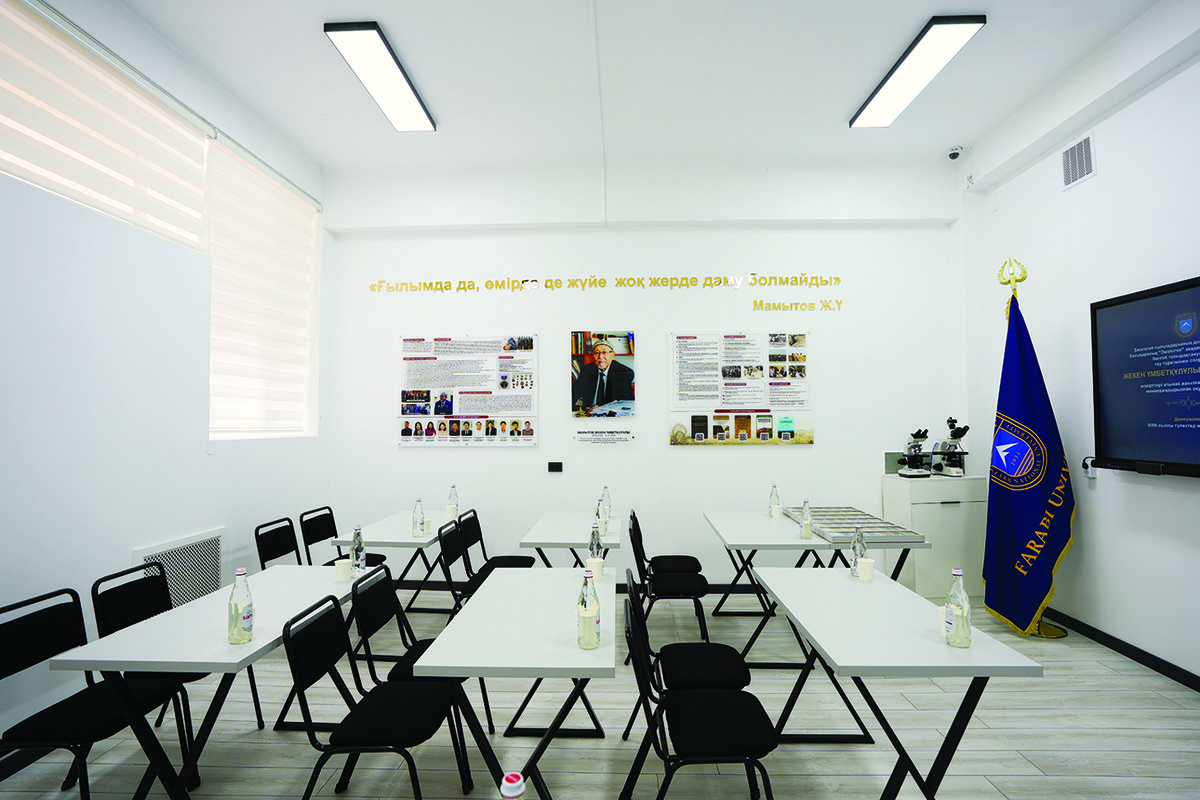
In recognition of this legacy, a specialized Soil Science Memorial Classroom was inaugurated at the Faculty of Geography and Environmental Sciences of Al-Farabi Kazakh National University during the university's Alumni Day celebrations. The classroom serves as a direct and legitimate continuation of the scientific school established by Professor Mamytov, adapted to the demands of contemporary science and education.

Within this new academic space, we will bring together young researchers, doctoral candidates, and master's students to implement fundamental and applied research projects using advanced digital technologies. The projects will focus on soil fertility monitoring, modeling land degradation processes, and optimizing agricultural landscapes.

Throughout his distinguished career, Professor Mamytov received numerous honors, including the "For Distinguished Labor" Medal (2009) and the "Veteran of Labor" Medal (1999) in recognition of his many years of dedicated service.

The scientific legacy and visionary ideas of this remarkable scholar, who regarded soil fertility as one of the nation's greatest treasures, will continue to contribute to the advancement of geography and agroecology in Kazakhstan. Through this new research and educational center, his work will help strengthen the country's future scientific potential while ensuring the continued development of the academic path he established.


The distinguished career and public legacy of Professor Zheken Umbetkululy Mamytov originated from a remarkable life devoted to science, education, and public service. He was born on 9 May 1939 in the village of Kastek, Zhambyl District, Almaty Region, into the family of horse breeders. Until the age of eight, he lived in a traditional nomadic yurt throughout the year, developing from an early age a profound understanding of nature. After his father was killed during the Second World War in 1943, he was raised by his uncles, Mamyt and Baigary.

In 1948, he began his primary education in the village of Targap and graduated from secondary school in Uzynagash in 1957. While still a student, he served as chairman of the school's student committee. Inspired by his teachers, he enrolled in the Faculty of Natural Sciences and Geography at the Kazakh State Pedagogical Institute named after Abai. Alongside outstanding academic performance, he was actively engaged in student leadership, progressing from secretary of the faculty Komsomol bureau to First Secretary of the Institute's Komsomol Committee. During his studies, he was awarded the prestigious V.I. Lenin Scholarship, one of the highest academic distinctions of the time.

Professor Mamytov's organizational abilities became evident at an early stage of his career. In 1959, he received the Honorary Certificate of the Supreme Soviet of the Kazakh SSR for helping establish preparatory courses (workers' faculties), an initiative that was later adopted throughout the Soviet Union. He was also an enthusiastic mountaineer and tourism organizer, earned the title of Candidate for Master of Sports, and became one of the first developers of the Almaty–Issyk-Kul (via the Kastek–Saryzhazyk Pass) and Almaty–Ayakkalkan hiking routes, which remain popular today.

After graduating from the institute, he joined the Department of Zoology as a lecturer. Upon the recommendation of Academician Malik Gabdullin, he organized Kazakhstan's first "Pedagog" Housing Construction Cooperative, providing many educators with access to affordable housing. For this significant social contribution, he personally received a letter of appreciation and a monetary award from Dinmukhamed Kunaev, First Secretary of the Communist Party of Kazakhstan.

In 1964, Professor Mamytov entered postgraduate studies at the Institute of Soil Science of the Academy of Sciences of the Kazakh SSR. In 1968, he successfully defended his Candidate of Sciences dissertation on the soil microflora of the Otrar Plain. He became one of the first scientists in Kazakhstan to introduce electron microscopy, phase-contrast microscopy, fluorescence microscopy, and gas-liquid chromatography into soil science research. His entire scientific career remained closely associated with the Institute of Soil Science, where he advanced from postgraduate researcher to Head of the Laboratory of Soil Biochemistry, which he established.

In 1993, he defended his doctoral dissertation in Moscow entitled "Alkalinity of Paddy Soils and Irrigation Waters in Kazakhstan and Methods for Their Regulation." His research revealed the mechanisms of salinization and alkalization in the soils of arid regions and introduced important scientific revisions to classical theories in soil science.

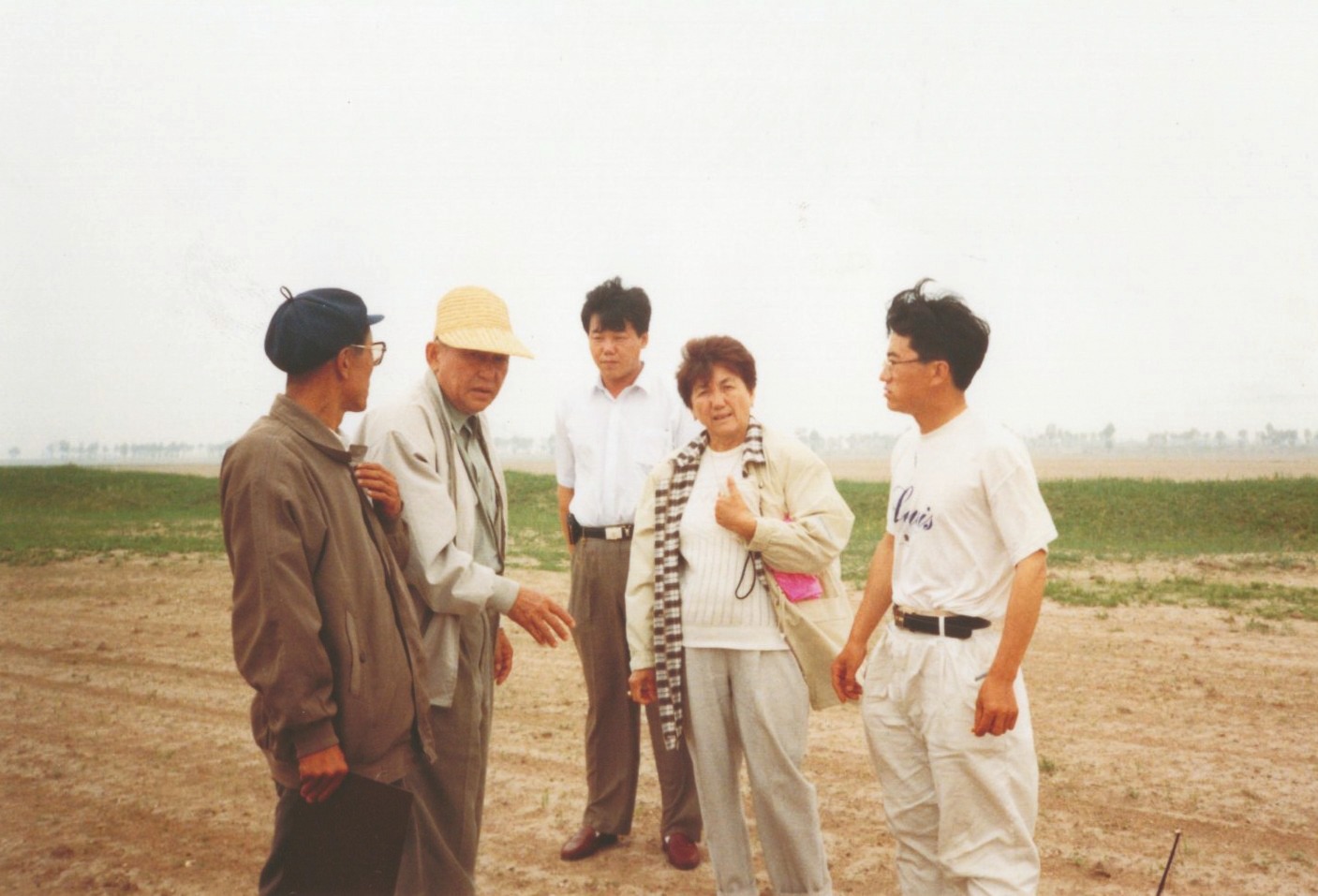
Professor Mamytov maintained close professional relationships with internationally renowned Soviet academicians, including V.A. Kovda, E.N. Mishustin, and N.P. Panov, reflecting his high standing within the scientific community. He was invited to lecture at Lomonosov Moscow State University, the K.A. Timiryazev Agricultural Academy, and Harbin University in China. Between 1996 and 2000, he served as Director of the Green Industry State Commercial Research Institute under the Chinese Academy of Sciences, where he also published a major scientific monograph in the Chinese language. 

The New Technology for the Reclamation of Saline-Alkaline Paddy Soils (NTRS) developed under the leadership of Professor Zheken U. Mamytov represented a major breakthrough in global soil science and agricultural practice. Unlike conventional methods, which require years of salt leaching before cultivation becomes possible, this innovative technology enabled farmers to obtain planned crop yields during the very first year of land reclamation. The method was successfully implemented on more than 100,000 hectares across Kazakhstan, Uzbekistan, and Karakalpakstan, where it received widespread international recognition. Building upon Professor Mamytov's pioneering work, his students later advanced these approaches through nano-agromelioration technologies, which are now widely applied in several regions of Kazakhstan.

Professor Mamytov's scientific principles extended far beyond traditional soil biochemistry, introducing innovative methodological approaches to regional analysis and agroecological assessment. Throughout his career, he authored more than 200 scientific publications, including five monographs and 16 inventor's certificates (patents).

In 2001, Professor Mamytov joined Al-Farabi Kazakh National University as a professor, where he continued teaching and mentoring young scientists until the end of his life. After joining the university, he established a distinctive academic school based on the early involvement of undergraduate students in research, beginning from their first and second years of study, while providing continuous scientific supervision from the bachelor's level through PhD education.

Under his supervision, 14 Candidate of Sciences dissertations and two doctoral dissertations were successfully defended. As a result of this systematic mentorship, many of his students—including A. Asylbekova, Ye. Kakimzhanov, O. Taukebayev, G. Isanova, D. Shokparova, K. Temirbayeva, and Sh. Laiskhanov—have become accomplished scholars who continue to advance the scientific legacy established by their mentor.

Today, the Adaptive Landscape Farming System established by Professor Zheken U. Mamytov continues to evolve through our ongoing research. His original scientific concepts have been further developed by integrating radar and optical satellite data processing, vegetation index analysis, and machine learning algorithms with modern remote sensing and spatial modeling technologies. These advanced geospatial tools have significantly enhanced our ability to assess the condition of agricultural landscapes in real time and to produce high-precision digital maps of soil resources.

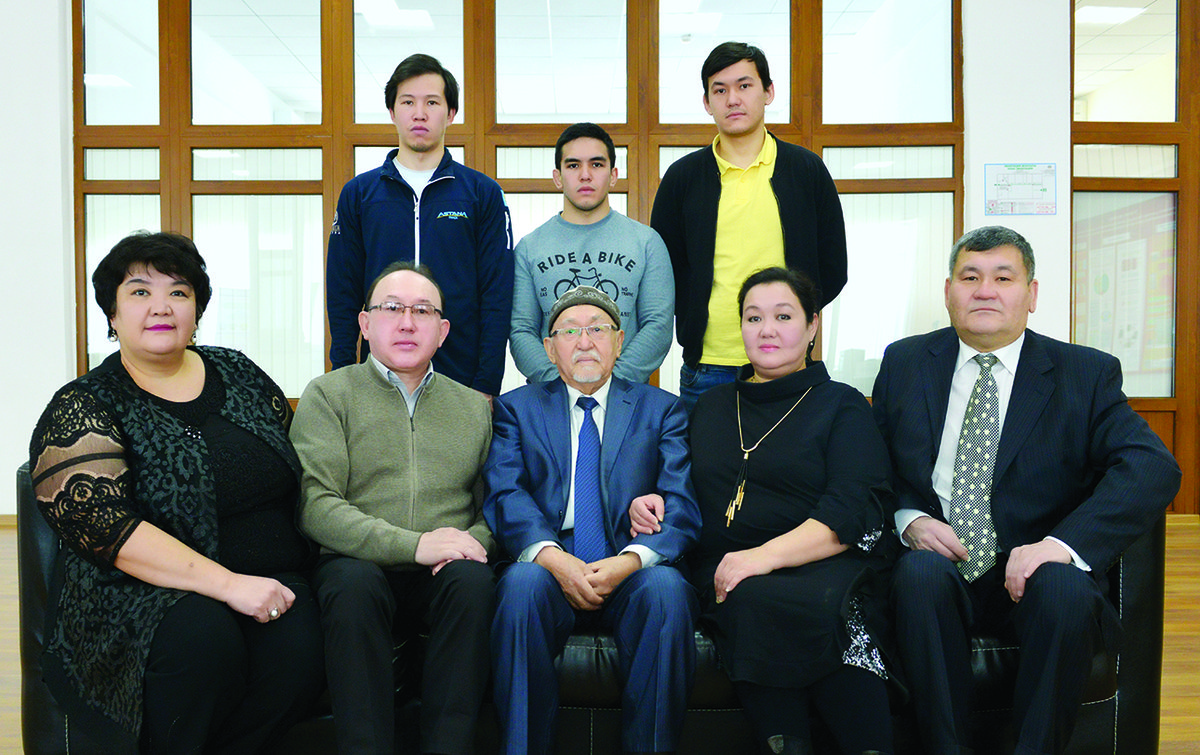
Professor Mamytov often took great pride in the fact that the study of soils became a shared vocation within his family. His wife and longtime colleague, Akhan Tileubekkyzy, was a distinguished soil chemist and Associate Professor. Today, their son Kanat manages a scientific and industrial enterprise in the agricultural sector, while their daughter Anar, who holds a master's degree in ecology, serves as Chief Executive Officer of an engineering and design company. Their grandchildren—Alen, Shakhnazar, and Yernazar—have also distinguished themselves, representing Kazakhstan in various sporting disciplines.


Aizhan Asylbekkyzy
Head of the Department of Cartography and Geoinformatics,
PhD, Associate Professor