Quantum AI laboratory opens new opportunities — KazNU

Quantum AI laboratory opens new opportunities

28 August 2026
Quantum AI laboratory opens new opportunities

Timur Imankulov,

Dean of the Faculty of Information Technology and Artificial Intelligence, PhD, Associate Professor

Today, quantum technologies are among the fastest-growing and most promising fields in global science and high technology. According to experts, just as the internet and artificial intelligence transformed the world in their time, quantum technologies have the potential to drive a technological revolution of comparable scale in the future.

With this in mind, Qazaq Universiteti newspaper interviewed Timur Imankulov, PhD, Associate Professor and Dean of the Faculty of Information Technology and Artificial Intelligence at Al-Farabi Kazakh National University. Today, we present that conversation to our readers.

— Mr. Imankulov, how can we imagine quantum technology?

Quantum technology can be understood in the following way. While conventional computers process information using bits that can take only the values of 0 or 1, quantum computers process information using qubits. Owing to the principles of quantum mechanics—superposition and quantum entanglement—such systems are capable of solving certain complex problems far more efficiently than classical computers. This opens up new possibilities for addressing scientific and engineering challenges that have previously been extremely difficult to solve.

Today, the United States, China, the countries of the European Union, Canada, Japan, South Korea, and Australia are investing billions of dollars in the development of quantum technologies. Leading global technology companies, including IBM, Google, Microsoft, Intel, Amazon, IonQ, and Rigetti, are carrying out extensive work on quantum computers, new algorithms, and quantum software.

Numerous forecasts suggest that in the coming years quantum computing will be widely applied in artificial intelligence, the development of new materials and pharmaceuticals, finance, energy, logistics, telecommunications, industry, and cybersecurity. As a result, many countries are already training specialists in quantum technologies and establishing dedicated research centers and laboratories.

Kazakhstan is not standing aside from this global trend. The country has begun taking its first steps toward mastering quantum technologies, and society has a strong interest in ensuring the rapid development of this strategically important field.
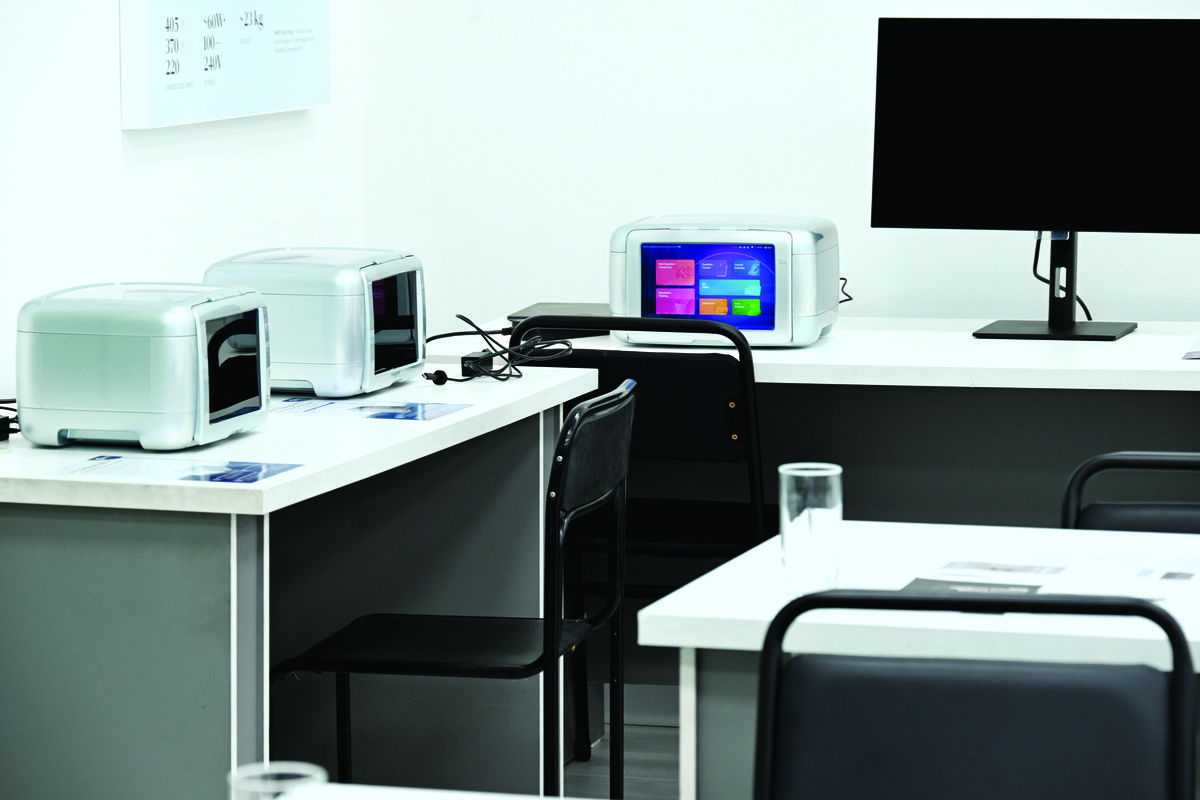
— The recent launch of the Quantum AI Laboratory is considered a new scientific initiative in Kazakhstan. Could you tell us more about it?

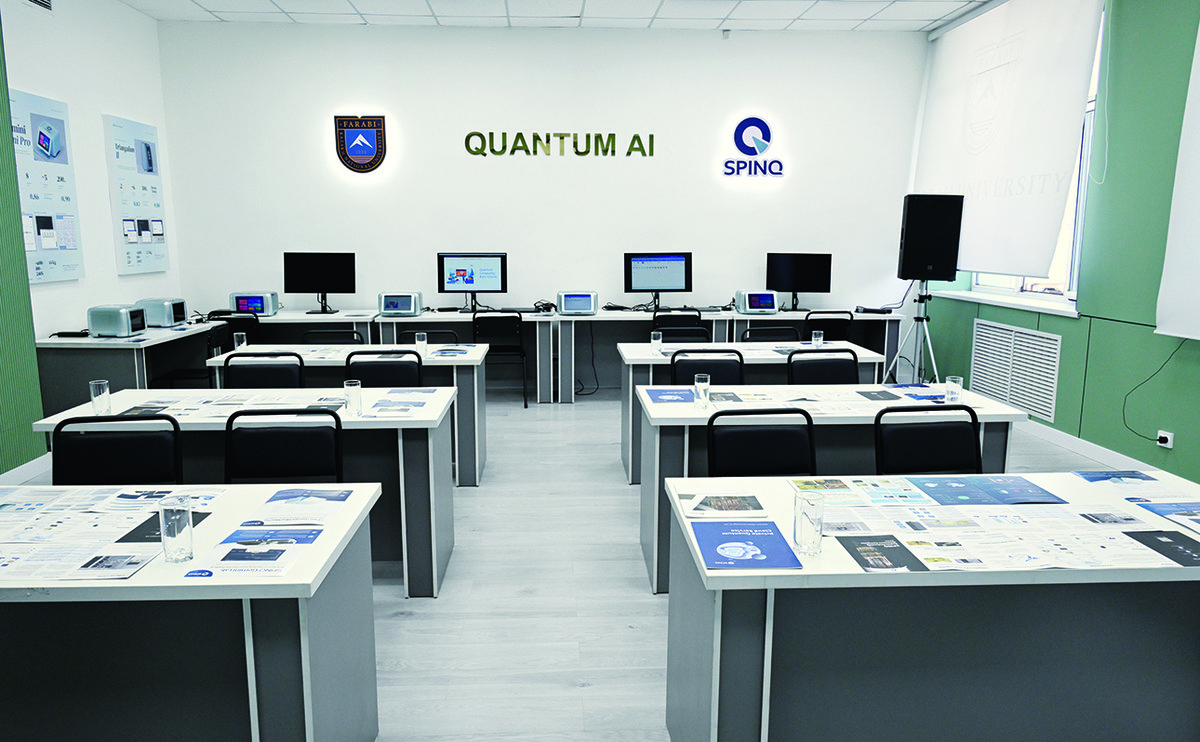
Al-Farabi Kazakh National University has established the Quantum AI Laboratory, a research laboratory dedicated to quantum artificial intelligence.

The laboratory’s primary mission is to conduct fundamental and applied research in quantum computing, quantum artificial intelligence, and quantum technologies; develop new quantum algorithms and software solutions; train highly qualified specialists; and promote international scientific collaboration.

In addition, the laboratory is aimed at creating a modern research ecosystem for quantum technologies in Kazakhstan and integrating domestic science into the global scientific community. This is an ambitious undertaking, and we fully recognize the responsibility it carries. Therefore, we will continue advancing our research in this strategic field.

— The laboratory has acquired Kazakhstan’s first portable quantum computers. What are their capabilities?

One of the laboratory’s most significant achievements is the acquisition of Kazakhstan’s first portable quantum computers.

As a result of cooperation with SpinQ Technology Inc., the laboratory has been equipped with seven SpinQ Gemini Mini/Mini Pro portable quantum computers. Each device features two qubits and serves as an effective platform for teaching the fundamentals of quantum computing, developing and testing quantum algorithms, and conducting scientific research.

This acquisition marks an important milestone in the development of quantum science in Kazakhstan. Students and researchers now have the opportunity not only to use cloud-based quantum platforms provided by leading global companies, but also to carry out practical experiments on physical quantum computers within the laboratory itself. This represents a significant investment in the education and research potential of our academic community.

— What projects will the Quantum AI Laboratory implement in the future?

The laboratory has identified several key research priorities for the coming years, including:

  • Developing quantum machine learning and quantum artificial intelligence algorithms;

  • Creating quantum and quantum-inspired optimization methods for applications in energy, logistics, transportation, and industry;

  • Modeling complex physical, chemical, and biological processes using quantum computing;

  • Developing quantum software platforms and simulators for education and scientific research;

  • Conducting research in quantum cryptography and information security;

  • Implementing joint research projects with international universities, research centers, and high-tech companies.

It is important to note that these projects will utilize both the laboratory’s own quantum computers and cloud-based quantum platforms provided by the world’s leading technology companies.


— You will also begin training the next generation of specialists, correct?

— Absolutely. One of the key priorities of the Quantum AI Laboratory is the preparation of highly qualified professionals in the field of quantum technologies.

Bachelor’s, master’s, and doctoral students will be able to participate in research projects, complete their undergraduate and postgraduate theses, undertake scientific internships, and contribute to real-world research in quantum computing and quantum artificial intelligence.

In addition, the laboratory plans to develop specialized academic courses, organize scientific seminars, master classes, summer schools, and practical training sessions using quantum computing equipment.

— So, all of this represents a significant contribution to Kazakhstan’s digital future?

— The development of quantum technologies will play a crucial role in strengthening Kazakhstan’s digital economy and technological independence.

Specialists trained at the laboratory will contribute to the development of next-generation artificial intelligence algorithms, big data processing methods, cybersecurity solutions, and highly efficient optimization algorithms for various sectors of the economy.

In the future, quantum technologies are expected to be widely applied in energy, finance, healthcare, transportation and logistics, telecommunications, industry, and scientific research.

The establishment of the Quantum AI Laboratory at Al-Farabi Kazakh National University marks an important step toward building a national scientific school in quantum technologies in Kazakhstan. The launch of the country’s first portable quantum computers, the creation of modern research infrastructure, and the expansion of international partnerships will open new opportunities for training world-class specialists and implementing innovative scientific projects.

— Thank you for your time.


Interviewed Gulzat NURMOLDAKYZY