- Main
- News
- Al-Farabi KazNU Representatives Participate in China’s International Youth Talent Exchange Program
Al-Farabi KazNU Representatives Participate in China’s International Youth Talent Exchange Program
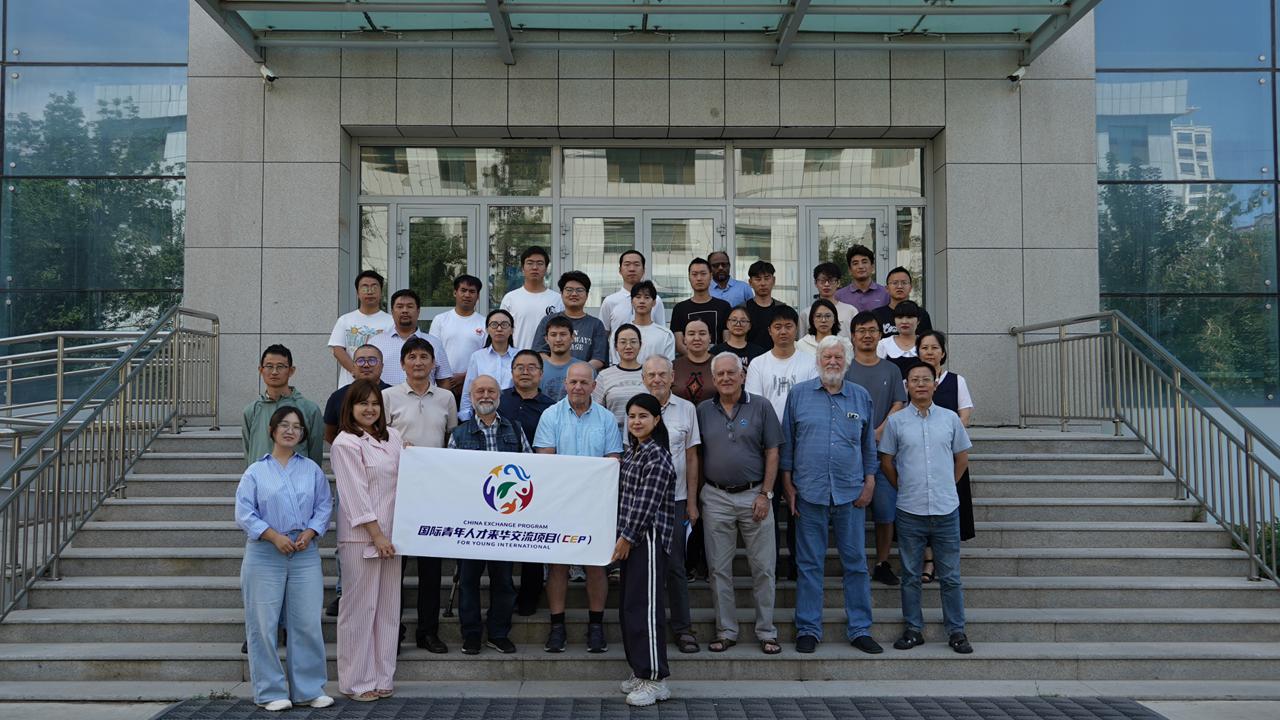
Aruzhan Omar, Research Associate Professor at the Department of Electronics and Astrophysics of the Faculty of Physics and Technology, Al-Farabi Kazakh National University, together with two master’s students from the department, participated in the International Youth Talent Exchange Program, supported by the China International Talent Exchange Foundation.
The host institution was the Xinjiang Astronomical Observatory of the Chinese Academy of Sciences in Urumqi. The KazNU participants were supported under two tracks of the program: International Internship for the two master’s students and Short-term Work for the Research Associate Professor. Their research activities focused on astrophysics and on gaining hands-on experience with modern astronomical research infrastructure.
During their one-month stay, the KazNU representatives conducted research at the Xinjiang Astronomical Observatory, worked closely with its scientists, and became familiar with current research areas and advanced approaches to the acquisition, processing, and interpretation of astronomical data. The program combined research activities with professional exchange and provided the participants with first-hand experience of how scientific work is organized at one of China’s leading astronomical research institutions.
An important component of the program was a visit to the Nanshan Observation Station, one of the key observational facilities of the Xinjiang Astronomical Observatory. The participants explored the station’s research infrastructure, learned about the operating principles of its telescopes, and familiarized themselves with the organization of astronomical observations as well as methods used for recording and processing observational and experimental data.
The Xinjiang Astronomical Observatory is part of the Chinese Academy of Sciences and is a major research center in astronomy and astrophysics. Its research areas include radio astronomy, pulsar studies, star formation and stellar evolution, galaxies and cosmology, astrochemistry, solar physics, and astronomical technologies. Working in such a research environment gave the young scholars an opportunity to gain practical experience with advanced scientific infrastructure and broaden their understanding of international approaches to astrophysical research.
The International Youth Talent Exchange Program is designed to promote the international academic and professional mobility of young researchers and students, support scientific exchange, and strengthen cooperation between overseas universities and research institutions in China. The program offers several participation formats, including international internships for students and short-term research placements for young professionals.
The participation of representatives from the Faculty of Physics and Technology marked another practical step in strengthening cooperation between Al-Farabi KazNU, the Xinjiang Astronomical Observatory, and research institutions of the Chinese Academy of Sciences. Of particular importance is the involvement of master’s students in international research activities at an early stage of their academic careers, enabling them to develop professional competencies, scientific data analysis skills, and experience in international academic communication.
The experience gained through the program creates further opportunities for expanding joint research, developing new academic and research mobility initiatives, engaging young scientists in international projects, and strengthening long-term cooperation between KazNU and leading research institutions in China.
This international research mobility initiative also contributes to several United Nations Sustainable Development Goals (SDGs). In particular, it supports SDG 4: Quality Education by enhancing students’ practical and research training; SDG 9: Industry, Innovation and Infrastructure through access to advanced scientific infrastructure and the development of research capacity; and SDG 17: Partnerships for the Goals by fostering sustainable international scientific collaboration between universities and research centers in Kazakhstan and China.
Other news