- Main
- News
- The Art of Mindful Reading: Why Books and Critical Thinking Define Success in the 21st Century
The Art of Mindful Reading: Why Books and Critical Thinking Define Success in the 21st Century
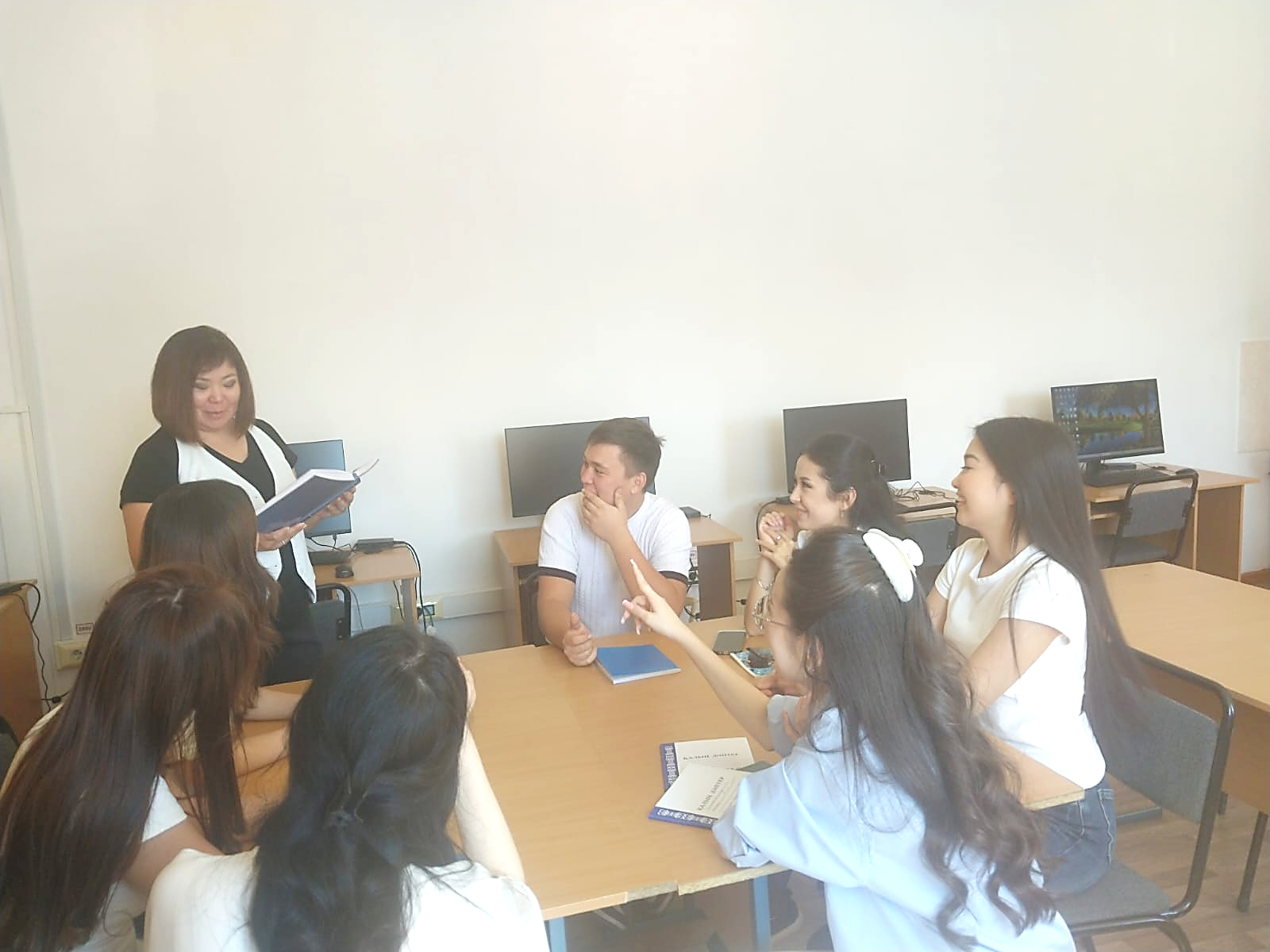
In an era of rapid digital technology development and endless information flows, modern people face colossal amounts of data every day. News, analytical articles, social media, and advertising messages surround us everywhere, often leaving not a minute for deep reflection. Against this background, the ability to work competently with primary sources, deeply analyze facts, and confidently separate the wheat from the chaff is acquiring special relevance. That is why the meaningful and educational meeting between A. M. Maksutkhanova, senior lecturer at the Department of Thermal Physics and Technical Physics, and students, dedicated to reading books and developing critical thinking, turned out to be not just an interesting event, but a truly vital step in shaping the intellectual and cultural environment of modern youth.
The main goal of the held event was to sustainably increase students' interest in reading, form a deep culture of working with text, and improve practical skills of critical analysis. During the lively conversation, participants thoroughly examined the multifaceted role of books in the educational process and the personal development of every individual. Regular reading of quality literature is proven to broaden horizons, enrich vocabulary, train memory, attention, and imagination. It teaches how to systematize incoming information, highlight main ideas, capture hidden meanings, and competently formulate one's own position.
Special emphasis at the meeting was placed on the development of critical thinking. Amidst an abundance of fake news and manipulative content, a critical approach becomes the main shield of a modern specialist. Students discussed the importance of thorough information analysis, comparing various independent sources, weighing arguments, and building logical conclusions. Instead of blindly believing ready-made judgments from the internet, young people learned to ask the right questions, check facts for authenticity, and form their own well-founded opinions.
The event was not limited to dry theory: students actively shared their impressions of the read works, discussed the actions of literary characters, and social problems raised by authors. The discussion turned into an engaging open dialogue where everyone could express their point of view, confirm it with specific examples from the text, and hear the arguments of opponents. This helped not only to develop public speaking skills, but also to cultivate a culture of respectful debate, which is so necessary in any teamwork.
In terms of content, this meeting directly correlates with the global UN Sustainable Development Goals. It supports SDG 4 ("Quality Education"), stimulating the desire for self-development and lifelong learning. In addition, the event echoes SDG 8 ("Decent Work and Economic Growth"), because the ability to deeply analyze data, argue professional decisions, and think critically are the core competencies of any in-demand specialist. At the end of the meeting, participants unanimously agreed that such initiatives powerfully increase the intellectual potential of youth and lay a solid foundation for their future successful careers.
Other news