- Main
- News
- International School for Students of Taiyuan University of Technology Held at Al-Farabi KazNU
International School for Students of Taiyuan University of Technology Held at Al-Farabi KazNU
From October 2 to 6, 2026, the Faculty of Physics and Technology at Al-Farabi Kazakh National University (KazNU) hosted an international educational school for students of Taiyuan University of Technology (TYUT), People's Republic of China. The event was organized with the participation of the Innovation Scientific and Educational Center of the Faculty of Physics and Technology.
The program was implemented in cooperation with the Sino-Singaporean Talents Exchange Center (SSTECSG), based in Singapore, which served as the international organizational partner of the educational initiative. This collaboration aims to promote international academic exchanges and expand opportunities for international students to participate in short-term educational programs at the university.
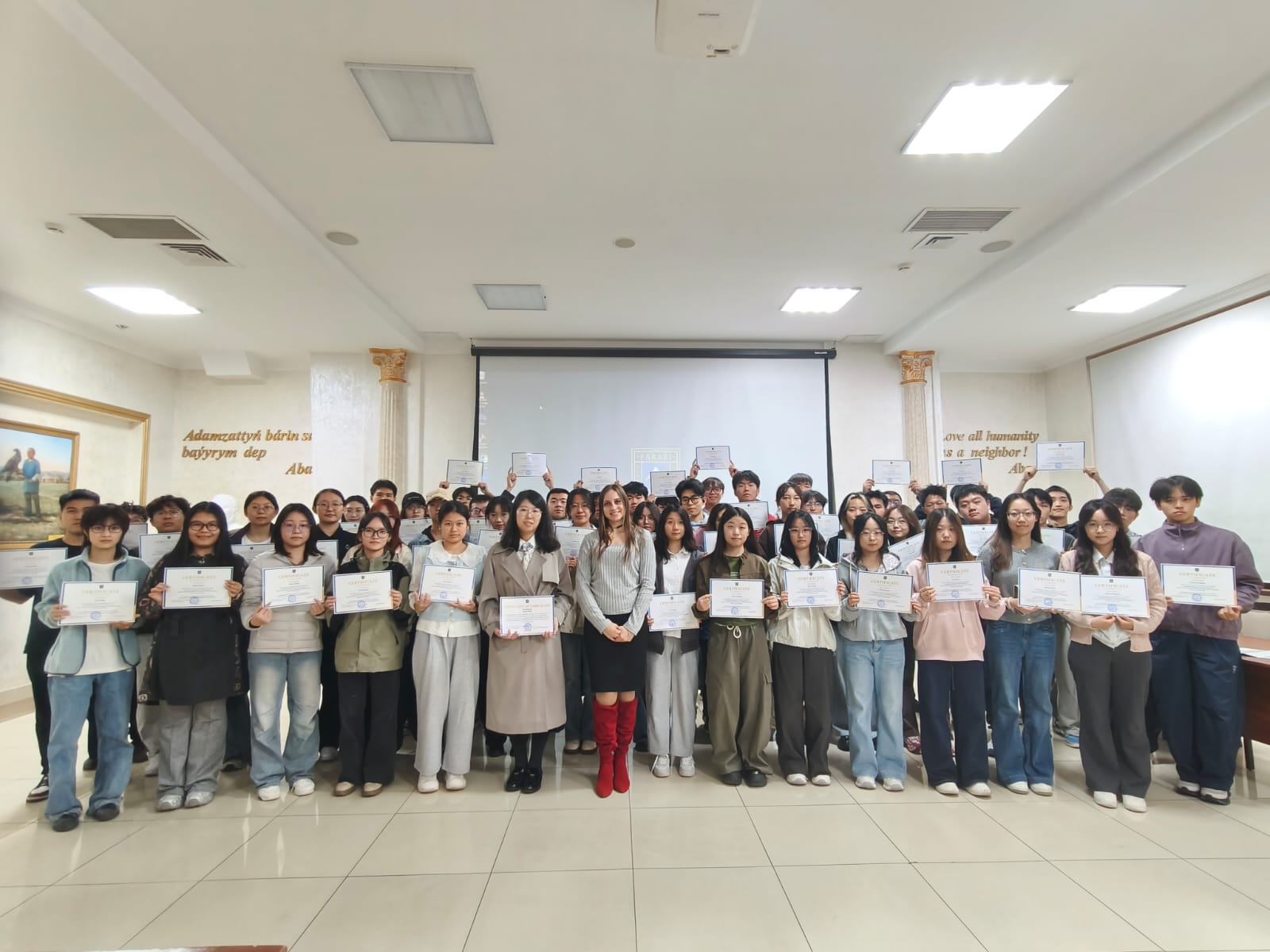
The international school brought together 50 students from Taiyuan University of Technology and five accompanying faculty members. To ensure the effective organization of the educational process, the participants were divided into two study groups. This arrangement facilitated the systematic delivery of the curriculum and the effective organization of thematic academic sessions.
The primary objective of the international school was to introduce international students to KazNU's scientific and educational potential, recent advances in physical and technological sciences, innovative developments, and promising areas of scientific research. Particular emphasis was placed on strengthening academic cooperation between universities in Kazakhstan and China, expanding opportunities for international academic mobility, and promoting intercultural interaction.
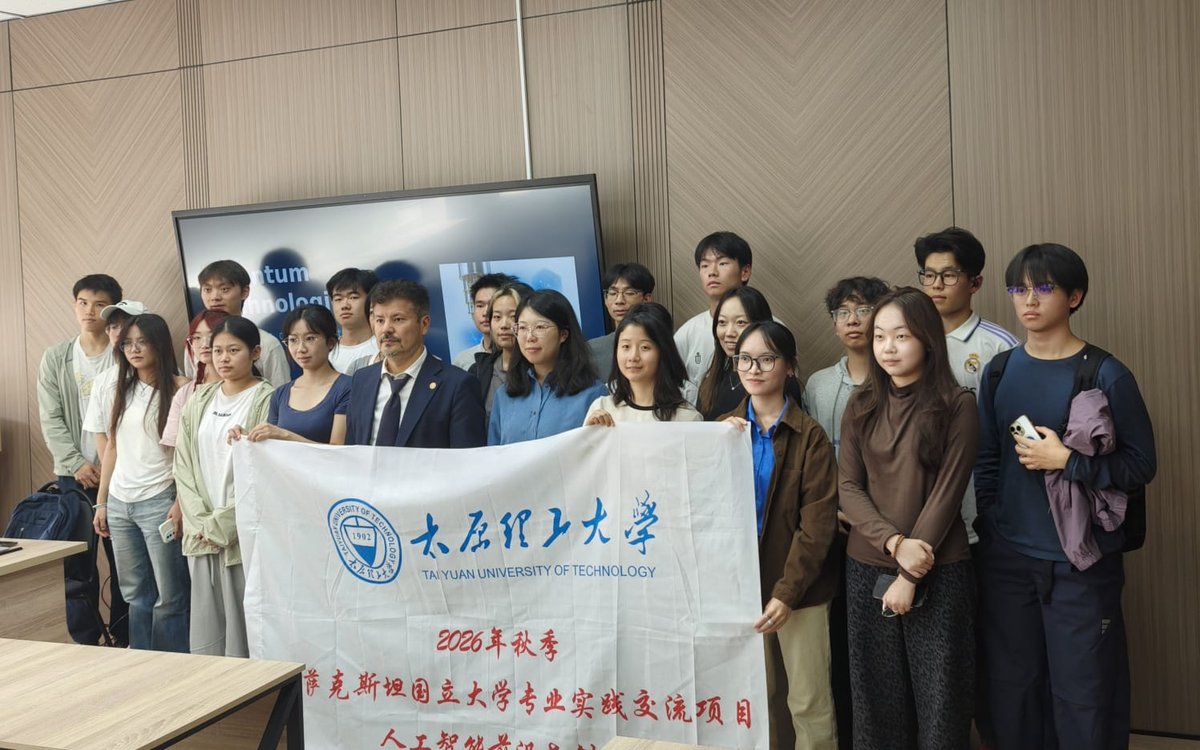
The educational program covered key areas of modern science and technology, including robotics, quantum technologies, the application of artificial intelligence in scientific research, and the principles of responsible AI use. During the sessions, participants explored prospects for the development of high-tech industries, opportunities for integrating digital solutions into research activities, and the role of interdisciplinary approaches in addressing contemporary scientific and technological challenges.
The academic sessions were delivered by representatives of the Faculty of Physics and Technology: Svetlana Peshaya, Vice Dean for Research, Innovation and International Relations, Medeu Abishev, and Sayat Akhtanov. The lecturers introduced participants to contemporary research areas and emerging trends in technological development.
An important component of the international school was the opportunity to explore KazNU's scientific and educational infrastructure. Students visited laboratories at the Faculty of Physics and Technology and gained insights into the organization of scientific research and the practical applications of advanced technologies.
The program also included meetings between the international participants and KazNU faculty members, master's students, and undergraduate students. These academic exchange sessions provided opportunities to discuss educational practices, research activities, student life, and prospects for future collaboration. Such interactions contribute to the development of international professional networks and intercultural communication.
Organizational support for the international school was provided by the Innovation Scientific and Educational Center of the Faculty of Physics and Technology. The implementation of such initiatives contributes to the development of international educational services, the expansion of institutional partnerships, and the enhancement of the university's attractiveness to international students.
Upon completion of the educational program, participants were awarded certificates of participation in the international school.
The event aligns with the priorities of the United Nations Sustainable Development Goals (SDGs), particularly SDG 4: Quality Education, SDG 9: Industry, Innovation and Infrastructure, and SDG 17: Partnerships for the Goals. International educational programs contribute to the dissemination of advanced knowledge, the development of scientific and technological capacity, and the strengthening of international academic partnerships.
The international school marked another step toward strengthening cooperation between Kazakhstan and China in higher education, science, and innovation. Such programs expand opportunities for academic mobility, create a foundation for joint educational and research initiatives, and contribute to reinforcing Al-Farabi KazNU's position within the international scientific and educational community.
Other news