- Main
- News
- Faculty of Physics and Technology at Al-Farabi KazNU Expands Scientific Cooperation with Polish Researchers through Erasmus+
Faculty of Physics and Technology at Al-Farabi KazNU Expands Scientific Cooperation with Polish Researchers through Erasmus+
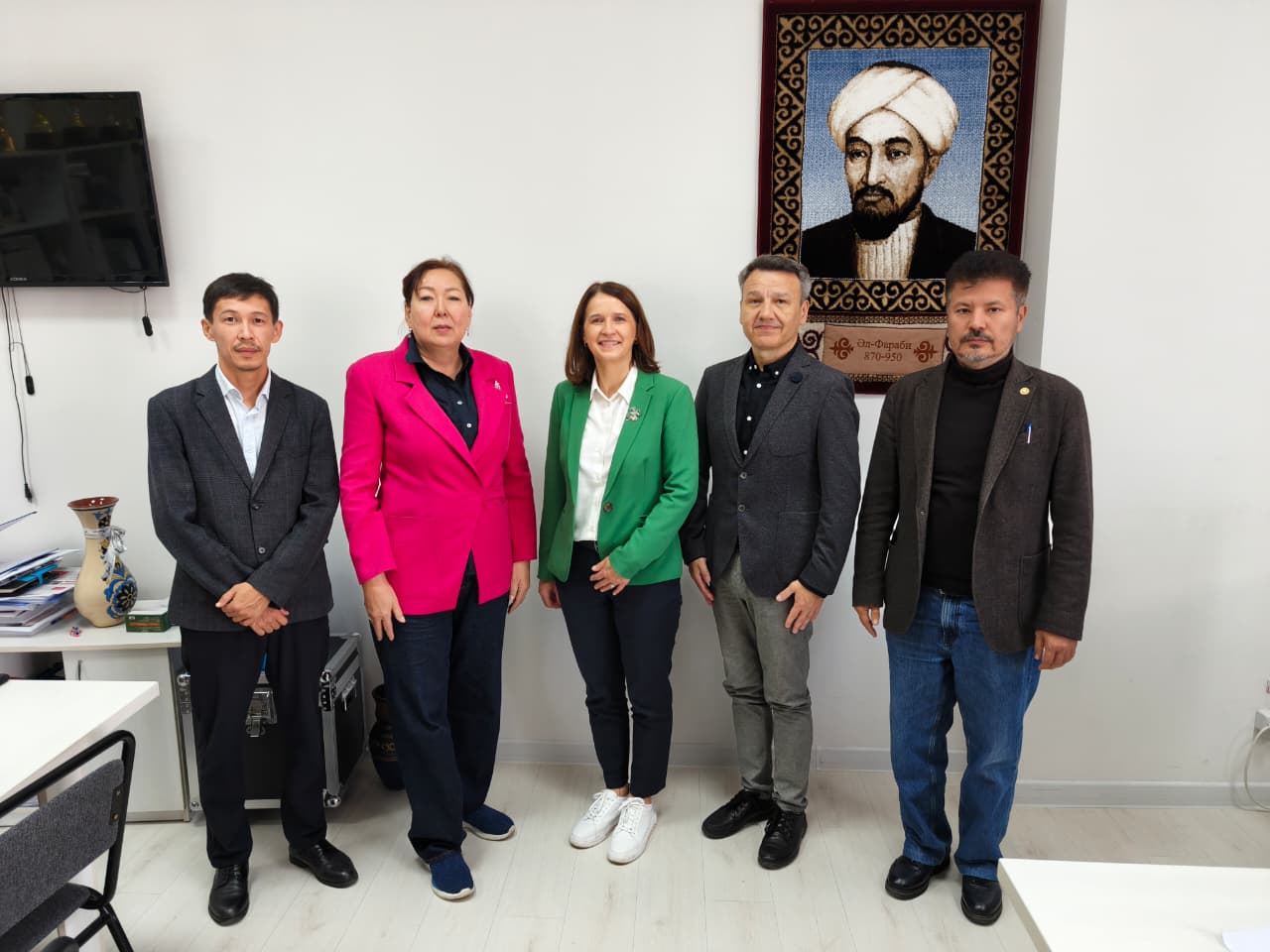
From October 5 to 9, 2026, the Faculty of Physics and Technology at Al-Farabi Kazakh National University (KazNU) welcomed Professor Grażyna Mrówka-Nowotnik from Rzeszów University of Technology, Poland, for an official academic visit. The visit took place within the framework of the Erasmus+ Staff Mobility for Teaching program and aimed to strengthen scientific and educational cooperation, facilitate the exchange of academic expertise, and establish new research partnerships between universities in Kazakhstan and Poland.
The Polish researcher was officially welcomed by Professor Nurzada Beissen, Dean of the Faculty of Physics and Technology. Organizational coordination and support for the visit were provided by Svetlana Leonidovna Peshaya, Vice Dean for Research, Innovation and International Relations.
The working meetings were attended by Yerzhan Mukhametkarimov, Head of the Department of Solid State Physics and New Materials Technology; Professor and Academician Medeu Abishev, Head of the Department of Theoretical and Nuclear Physics; and Professor Gulmira Yar-Mukhamedova, Doctor of Physical and Mathematical Sciences.
During the discussions, participants explored opportunities for expanding international scientific cooperation, organizing academic mobility programs for faculty members and researchers, preparing joint scientific publications, conducting research seminars, and participating in international research projects. Particular attention was given to identifying common research interests and potential areas of collaboration between the scientific teams of the two universities.
Professor Grażyna Mrówka-Nowotnik specializes in metallic materials and alloys, including aluminum alloys and high-temperature structural materials. Her research focuses on the influence of heat treatment on the microstructure, phase composition, and mechanical properties of materials, as well as the investigation of intermetallic phases and structural evolution processes.
Special attention was devoted to potential collaboration with the research group led by Professor Gulmira Yar-Mukhamedova, whose work focuses on the development of functional nanocomposite coatings, electrochemical deposition technologies, and the investigation of corrosion resistance in advanced materials. The overlap in scientific interests provides opportunities for joint research on protective coatings, metallic alloys, and materials with enhanced performance characteristics.
Andrzej Nowotnik, who visited Almaty in a private capacity independently of the Erasmus+ program, also participated in professional scientific discussions. His research interests include surface engineering, thermal barrier coatings, nickel-based superalloys, and technologies for protecting materials against high-temperature exposure.
An important component of the visit was a tour of the Institute of Nuclear Physics of the Republic of Kazakhstan, a scientific partner of the Faculty of Physics and Technology at KazNU. The visit to the institute's research facilities provided an opportunity to explore potential areas of cooperation in radiation materials science, functional coatings, and the evaluation of structural materials under extreme operating conditions. Combining the faculty's scientific expertise, the experience of Polish researchers, and the institute's experimental infrastructure offers significant potential for developing interdisciplinary research projects.
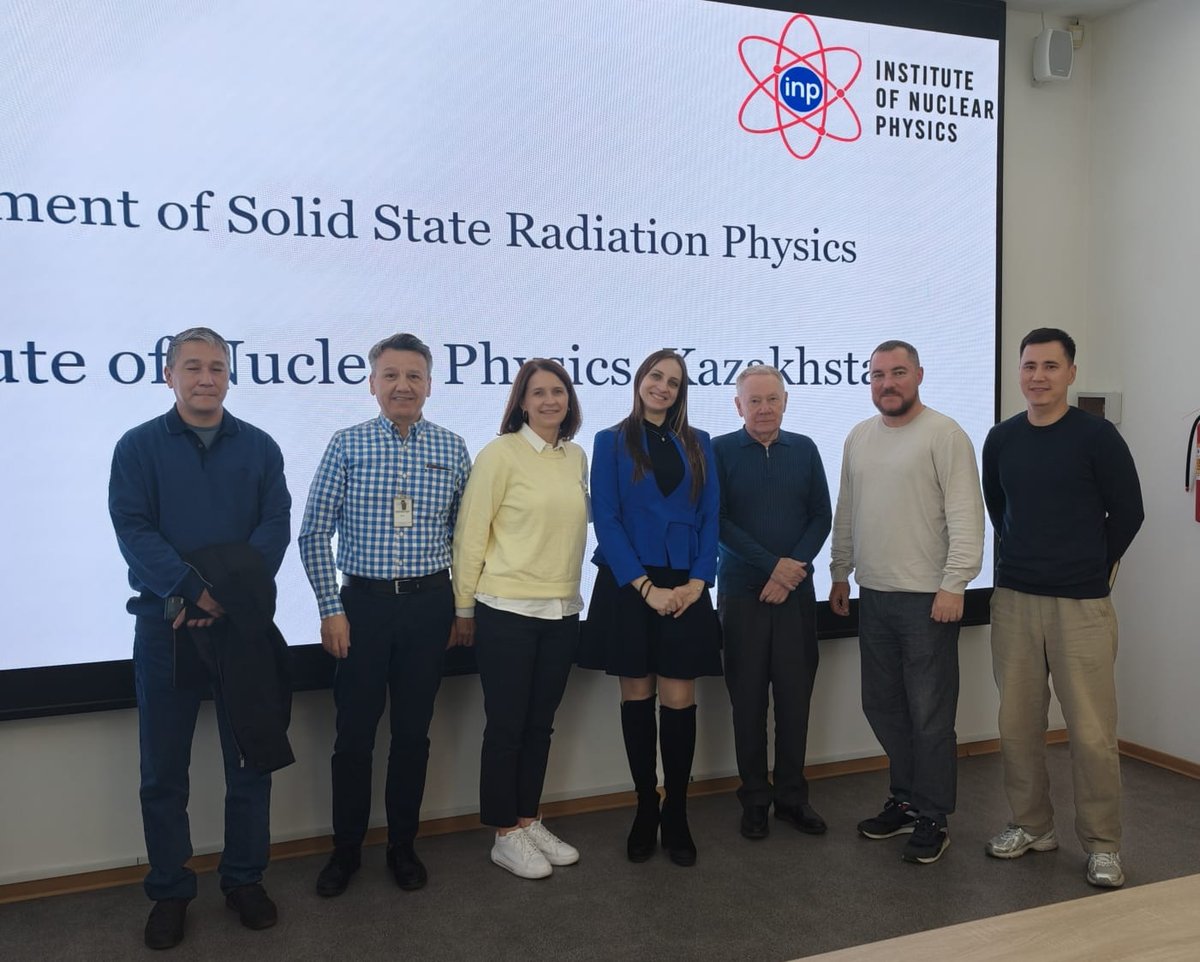
As part of the Erasmus+ program, Professor Grażyna Mrówka-Nowotnik's teaching mobility also included eight hours of academic instruction aimed at sharing advanced scientific knowledge and international academic experience.
The development of international cooperation aligns with the priorities of the United Nations Sustainable Development Goals (SDGs), particularly SDG 4: Quality Education, SDG 9: Industry, Innovation and Infrastructure, and SDG 17: Partnerships for the Goals. Such international initiatives contribute to strengthening research capacity, facilitating the exchange of advanced technologies and expertise, and integrating university research into the global scientific community.
The visit marked an important step toward strengthening scientific and educational ties between Kazakhstan and Poland and expanding the international activities of the Faculty of Physics and Technology. The meetings established a foundation for further academic exchanges, the development of joint research projects, and long-term cooperation in materials science, solid-state physics, nuclear technologies, and advanced engineering research.
Other news