In modern society, financial literacy is one of the essential skills that every individual needs. It is particularly important for students, as the university years are a crucial period during which young people learn to manage their personal finances, plan their income and expenses, build savings, and make informed financial decisions. At the same time, the development of digital technologies not only expands financial opportunities but also creates new risks, including online fraud, financial pyramids, and money muling (dropper activities).
One of the pressing issues among young people in recent years has been money muling. A money mule, commonly referred to as a “dropper,” is a person who transfers their bank card, bank account, or other payment instruments to third parties at their request or in exchange for a certain reward, potentially becoming involved in suspicious financial transactions. In some cases, young people may become participants in fraudulent schemes without fully understanding the unlawful nature of their actions. Therefore, alongside improving students’ financial literacy, it is essential to explain the nature of money muling and strengthen preventive measures to address this issue.
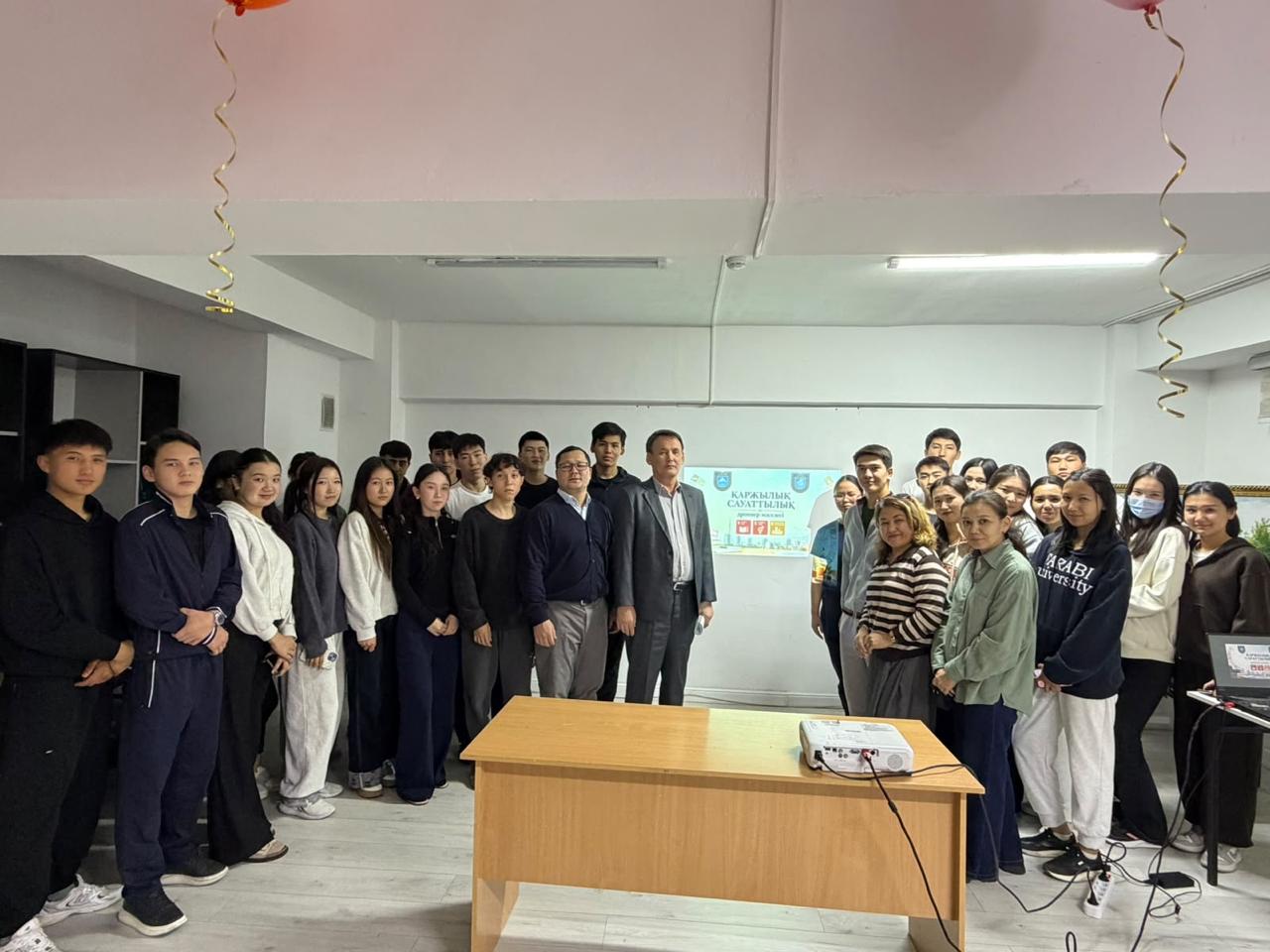
In response to the relevance of this issue, on October 13, 2026, the Department of Economics of the Higher School of Economics and Business at Al-Farabi Kazakh National University organized an educational event entitled “Financial Literacy and the Problem of Money Muling” for students of the faculty residing in Student House No. 16 (dormitory).

The event was organized in alignment with the United Nations Sustainable Development Goals (SDGs). Particular attention was paid to SDG 4: Quality Education, SDG 8: Decent Work and Economic Growth, and SDG 12: Responsible Consumption and Production.
The main objective of the event was to improve students’ financial literacy, develop their personal financial management skills, expand their understanding of financial security, and prevent involvement in money muling activities. In addition, the event aimed to provide students with information about different types of financial fraud, their consequences, and the importance of protecting personal data.
During the event, the importance of financial literacy in everyday life was explained. Students were introduced to the basic principles of income and expenditure planning, the efficient use of financial resources, personal budgeting, and responsible financial decision-making. Particular emphasis was placed on the safe use of bank cards and mobile banking applications, the importance of not sharing personal information with strangers, and the need to exercise caution when dealing with suspicious financial offers.
One of the key topics discussed during the meeting was the problem of money muling. Money muling involves transferring one's bank card, bank account, or other payment instruments to third parties to facilitate financial transactions. Such activities may be associated with fraud and the illegal circulation of funds. Students were informed that they should not make money transfers at the request of strangers, disclose their bank card details, or allow other individuals to use their bank accounts. It was also emphasized that participation in such schemes may result in financial losses and legal consequences, depending on the circumstances of each case.
The meeting also addressed issues related to the accessibility of financial education, equal opportunities for all students, and the creation of a safe social environment.
Students from all academic years actively participated in the event. During the meeting, they expanded their knowledge of financial security and received important information about the risks associated with money muling and ways to prevent financial fraud.
The event served as an important educational and awareness-raising initiative aimed at improving students’ financial literacy, fostering an understanding of legal responsibility, and preventing financial fraud.
Event organizers: S.K. Yessengaziyeva, G.K. Ilyashova, D.R. Turarov, T.P. Tabeyev, and D.T. Beizhanova.
Other news