SDG‑11 “Sustainable Cities and Human Settlements. Toponymy of the native land”
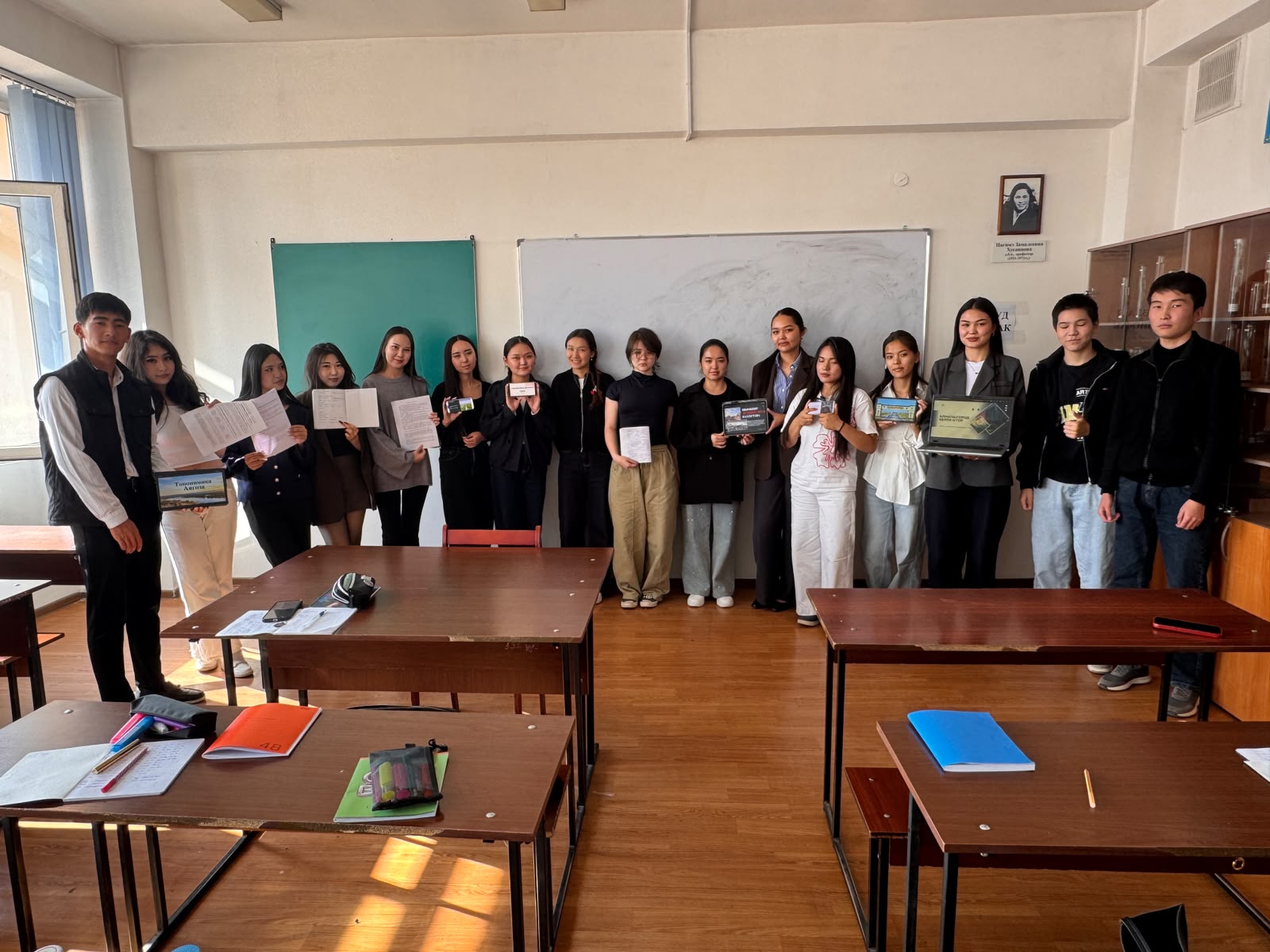
On October 13, 2026, Yekaterina Yevgenyevna Gunina, a lecturer at the Department of Russian Philology and World Literature, conducted a class for first‑year students of the “Genetics” specialty on the topic “Toponymy of the native region. History of renaming.”
The session was organized as part of the implementation of the tasks related to Sustainable Development Goal 11 “Sustainable Cities and Communities. Toponymy of the native region.” Students presented the results of their study of scientific literature related to the history of cities, villages, regions and their names, as well as the etymology of the names of architectural and natural monuments. Almaty, Kaskelen, Talgar, Taldykorgan, Shymkent, Kyzylorda, Semey, Atyrau, Aktau, Aktobe, Karaganda, Astana – this is by no means a complete list of the locations covered in the reports.
During the lesson, the role of toponyms (oikonyms, urbanonyms, hydronyms, choronyms, oronyms, etc.) in preserving the country’s cultural heritage was examined. It has been proven that the names of settlements, their landmarks, streets, districts, as well as nearby rivers, lakes, and mountains reflect the centuries‑old history of Kazakhstan, the customs, traditions, and values of the people, and immortalize the names of famous biys, batyrs, writers, composers, artists, and state and public figures. The students’ presentations were accompanied by photographs, videos, personal stories, and an analysis of the symbolism of populated areas and linguistic features (dialectisms, archaisms, and historicisms). The speeches became a single stream of the most valuable knowledge about defeats and victories, mistakes and achievements of the past and present.
The students demonstrated a high level of preparation for the class and a strong interest in studying the country’s toponymy. It was concluded that every settlement, regardless of its size and location, makes a significant contribution to the development of the country, its economy, and its spiritual culture.
Other news