- Main
- News
- Learning Chinese Through Tea Culture: A Cultural Event Hosted by the Silk Road Student Club
Learning Chinese Through Tea Culture: A Cultural Event Hosted by the Silk Road Student Club
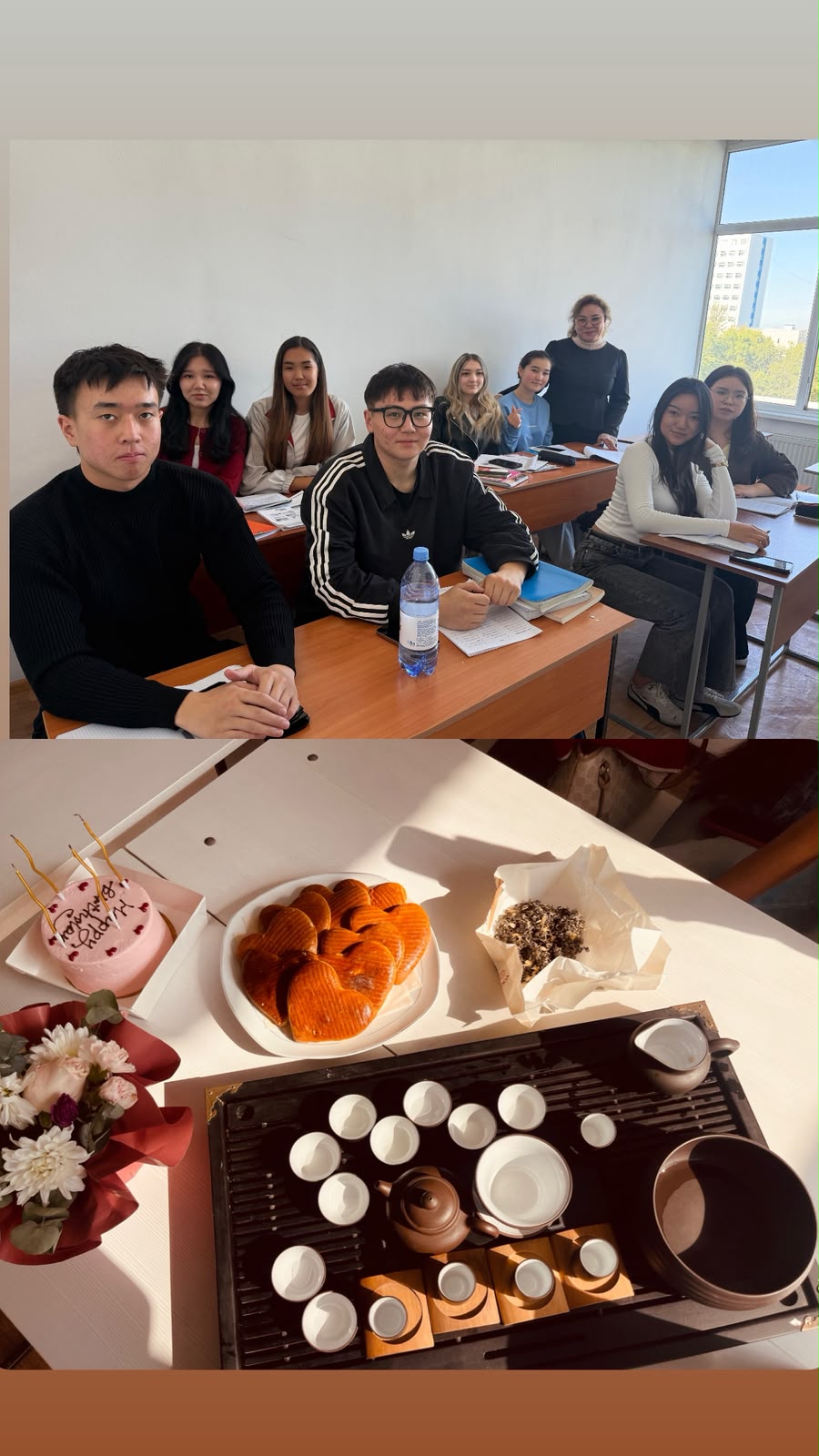
On October 16, 2026, the Silk Road student club, affiliated with the Department of Chinese Studies at the Faculty of Oriental Studies of Al-Farabi Kazakh National University, held a cultural and educational event entitled “Autumn Tea Tasting: Exploring Famous Chinese Teas and a Cultural Workshop in Chinese Language Learning for HSK.” The event was organized by the club’s head, Duisenbai Kulpynai.
The event was attended by second-year students majoring in Chinese Studies: Amantai Aқarys, Bisengali Aida Erzhanqyzy, Yerezhepova Ayaulym Zhenisovna, Erzhanova Zarina Erbolovna, Kuandykova Anel Galievna, Nurpeisqyzy Aruzhan, Serikzhan Orden, and Serikqyzy Ayaru.
During the event, students learned about the history of Chinese tea, its main varieties, and its cultural significance. They explored several popular types of Chinese tea, including green tea, black tea (known as “red tea” in Chinese tea terminology), and oolong, and had the opportunity to experience their distinctive aromas and flavors. Traditional Chinese tea preparation techniques were also demonstrated, and the unique characteristics of each tea were explained.
The tea-tasting experience was combined with Chinese language learning. Students practiced vocabulary appropriate to different HSK proficiency levels and strengthened their language skills by using words and sentences related to tea culture. This approach allowed them to learn Chinese in the context of everyday life and Chinese cultural traditions.
Participants shared their impressions of the event. Amantai Aқarys commented: “Previously, I had only a general understanding of Chinese tea. Today, I tasted several varieties and learned that each has its own distinctive aroma and flavor. Exploring tea culture also made it easier for me to remember Chinese vocabulary.”
Bisengali Aida Erzhanqyzy highlighted the educational value of the event: “This is a very interesting way to learn about Chinese culture. I realized how closely the history of tea is connected with the Silk Road. Cultural events like this also help students prepare for the HSK exam,” she noted.
The main objectives of the event were to increase students’ interest in learning Chinese, promote intercultural understanding, introduce participants to the cultural traditions of the Silk Road, and broaden their knowledge of Chinese culture as part of their preparation for the HSK examination.
The Silk Road student club will continue to organize engaging cultural and practical activities that combine Chinese language learning with an exploration of Chinese culture, helping students deepen their knowledge and strengthen their interest in Chinese Studies.
Other news