- Main
- News
- Foresight Session Held on “AI & Law: Legal Literacy in the Use of Artificial Intelligence”
Foresight Session Held on “AI & Law: Legal Literacy in the Use of Artificial Intelligence”
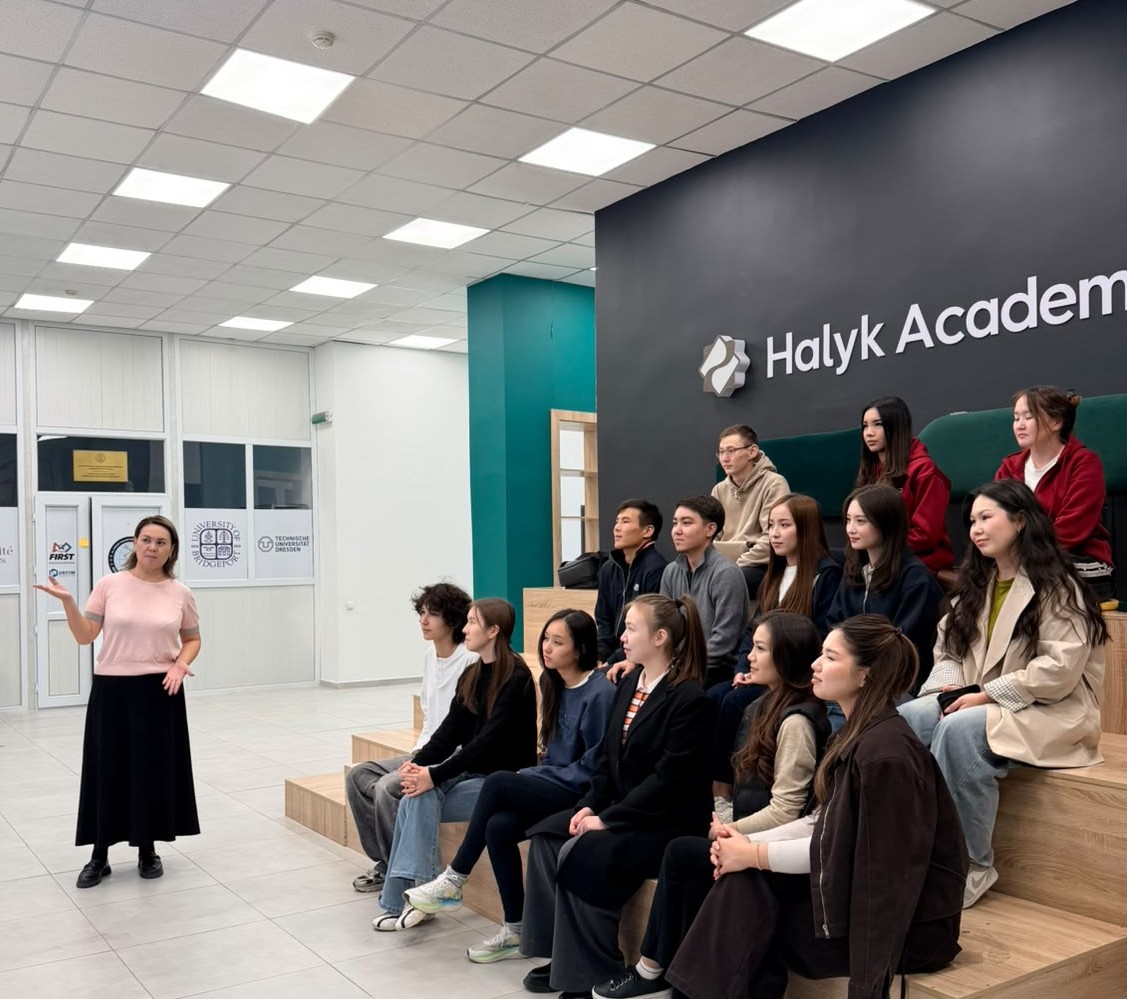
Nazgul Toiganbayeva, PhD, Senior Lecturer at the Department of Artificial Intelligence and Big Data, organized a foresight session for students on the topic “AI & Law: Legal Literacy in the Use of Artificial Intelligence.”
Artificial intelligence technologies are increasingly entering education, science, business and everyday life. At the same time, their use raises complex legal and ethical questions concerning copyright, personal data protection, the reliability of information and accountability. The main goal of the foresight session was to help students understand how to use artificial intelligence lawfully and responsibly, and to teach them to anticipate future legal challenges and be prepared for them.
The event opened with introductory remarks. Dr. Toiganbayeva gave an overview of current trends in AI regulation, citing the Law of the Republic of Kazakhstan “On Artificial Intelligence” and the national legislation on personal data, as well as international practice, in particular the European Union’s AI Act. She placed special emphasis not only on the opportunities the technology offers but also on the legal responsibility of its users.
The students then split into small groups and worked using foresight methodology. Each group analyzed a specific area and developed scenarios for the near future:
Copyright and intellectual property. Who owns a text, image or piece of code generated by AI? Where are the limits on using other authors’ work to train models?
Personal data protection. The risks of entering personal or confidential information into chatbots and AI services, and how to prevent data leaks.
Academic integrity. Using AI honestly in studies and research, and avoiding plagiarism and fabricated sources.
Deepfakes and disinformation. The impact of AI-generated fake videos, audio and texts on society, methods for detecting them, and legal liability.
Accountability. Who is responsible when AI makes a wrong decision: the developer, the company or the user?
Following their discussions, the groups presented their scenarios, potential risks and possible solutions. Each presentation was followed by an open discussion in which students asked one another questions and jointly refined the proposals.
At the conclusion of the foresight session, the students adopted a shared set of key principles for using artificial intelligence:
Always verify AI-generated output and evaluate it critically.
Be cautious when entering personal and confidential data into AI services.
Openly disclose the use of AI in academic and research work.
Respect the copyright of others.
Never use AI to deceive people or cause harm.
The event saw active student participation and lively discussion. Participants noted that meetings in this format help them recognize that future IT professionals need not only technical knowledge but also legal and ethical literacy.
At the close of the session, Dr. Toiganbayeva thanked the students for their engagement and encouraged them to continue exploring topics at the intersection of artificial intelligence and law.
Senior Lecturer, Department of Artificial Intelligence and Big Data
Nazgul Toiganbayeva, PhD
09.10.2026
Other news