Modern Advances in Genetics: From Genome Sequencing to Personalized Medicine
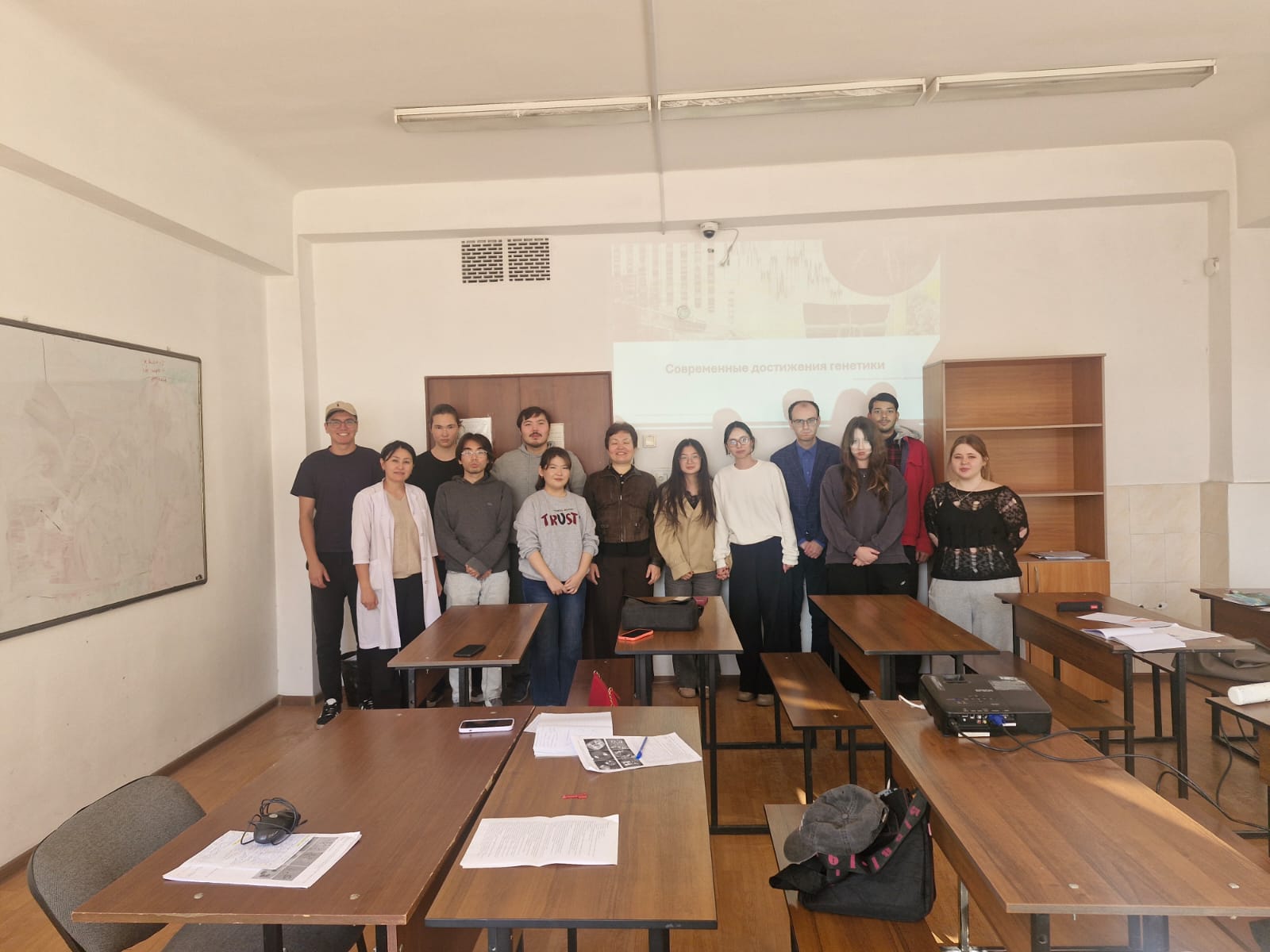
On 27 October 2026, the Department of Molecular Biology and Genetics, Faculty of Biology and Biotechnology, Al-Farabi Kazakh National University, held a curatorial educational event entitled “Modern Advances in Genetics.” The event was organized by academic curators A.I. Zhussupova and S.B. Dauletbayeva.
During the event, students explored major developments in contemporary genetics and discussed how advances in molecular biology, genomics, and bioinformatics are transforming the study of living systems. Particular attention was given to DNA sequencing technologies, the development of the human pangenome, the application of artificial intelligence to predict the regulatory effects of genetic variants, and emerging approaches to genome editing.
A key topic was the development of CRISPR technologies, base editing, and prime editing, which offer new opportunities to investigate the molecular mechanisms of genetic disorders and develop innovative therapeutic strategies. Using examples from recent research, students examined the importance of accurately identifying genetic variants, interpreting their functional consequences, and delivering molecular editing tools to target cells. The discussion also highlighted the need to assess safety, efficacy, accessibility, and ethical considerations before translating scientific advances into clinical practice.
The event contributed to students’ scientific literacy, critical thinking, and understanding of the interdisciplinary nature of modern genetic research. By connecting fundamental concepts of heredity and variation with current technological developments, the discussion demonstrated the relevance of genetics to personalized medicine, biotechnology, and agricultural innovation.
The educational initiative supports the United Nations Sustainable Development Goals. SDG 3: Good Health and Well-being is reflected in the discussion of genetic technologies for improving disease diagnosis, prevention, and treatment. SDG 4: Quality Education is advanced through opportunities to strengthen scientific literacy, research-oriented thinking, and the competencies required to interpret contemporary biological data responsibly.
The event also encouraged students to consider the broader implications of genetic innovation, including the relationship between scientific discovery, clinical application, and social responsibility. It reinforced the importance of evidence-based reasoning and lifelong learning in preparing future specialists for a rapidly evolving scientific landscape.
The curatorial event provided a platform for discussing the future of genetics and the role of the next generation of researchers in advancing biological science responsibly.
Department of Molecular Biology and Genetics
Other news